Living in Florida has its own kind of beauty — ocean views, warm weather, and coastal living. But if you’re a homeowner here, you also know the reality: hurricanes are not a matter of if, but when.
After every major storm, the same painful story repeats — roof damage, shattered windows, flooded interiors, and sometimes total home loss. Many families discover too late that their home simply wasn’t built to withstand hurricane forces.
Types of Hurricane-Proof Construction
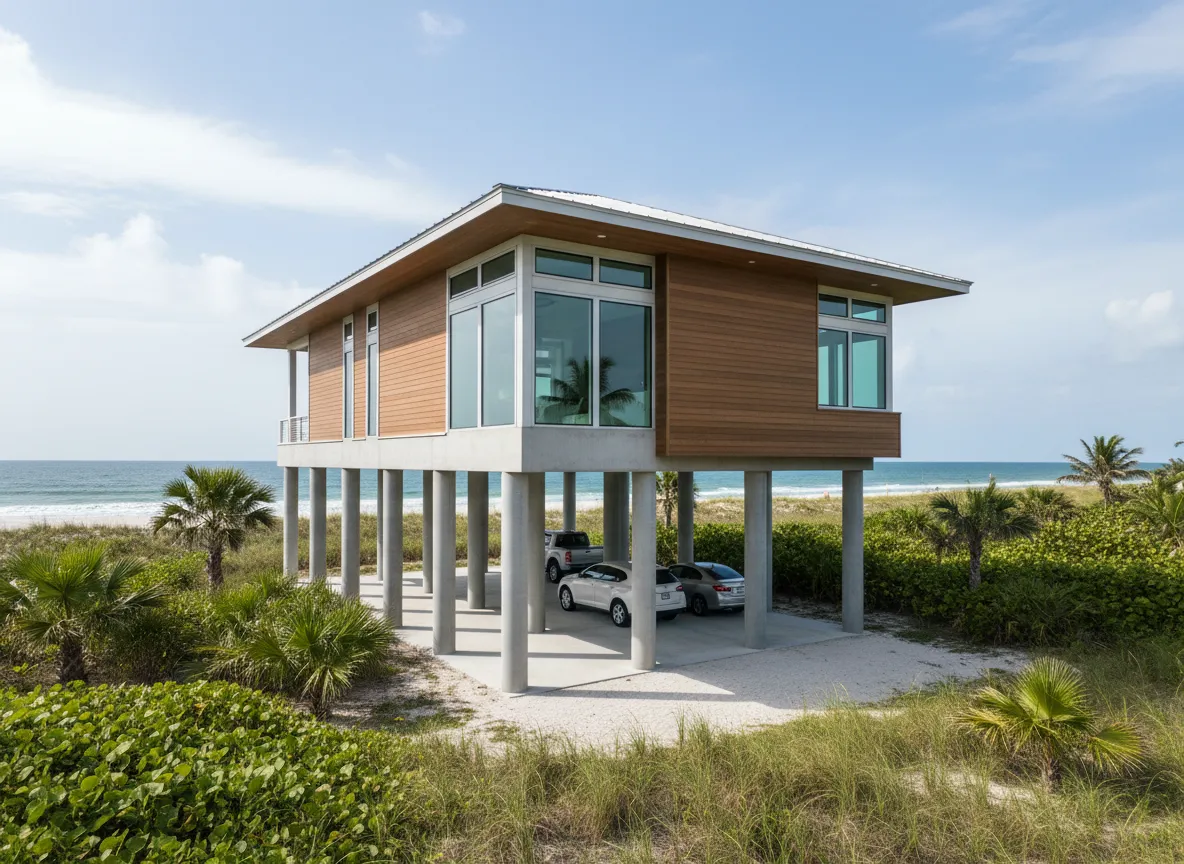
The good news? Modern hurricane-resistant construction has evolved dramatically. Today, there are multiple building systems designed specifically to survive extreme wind, debris impact, and storm surge conditions.
If you’re planning to build, rebuild, or upgrade in Florida, understanding the main types of hurricane-proof construction can help you make a smarter, safer investment.
Why Standard Homes Fail in Hurricanes
Before we look at construction types, it’s important to understand why many homes fail during storms.
Common weak points in typical houses:
Roof uplift from wind pressure
Wall collapse from lateral force
Flying debris breaking windows
Water intrusion after envelope breach
Foundation shifting from surge or soil erosion
Once wind enters a home through a broken window or roof edge, internal pressure builds, and the structure can fail rapidly. That’s why hurricane-resistant construction focuses on creating a continuous structural shell from foundation to roof.
1. Reinforced Concrete Construction
Reinforced concrete homes use poured concrete walls with embedded steel rebar reinforcement. This creates a monolithic structure capable of resisting extreme loads.
Why does it perform well in hurricanes
High mass resists wind pressure
Steel reinforcement prevents cracking failure
Strong connection between walls and foundation
Excellent debris impact resistance
Concrete structures are commonly used in commercial hurricane zones for this reason.
Limitations
Higher construction cost
Requires skilled formwork and curing
Thermal insulation must be added separately
Still, in terms of raw structural strength, reinforced concrete is one of the most hurricane-resistant systems available.
2. Insulated Concrete Form (ICF) Construction
ICF construction uses hollow foam blocks stacked like Lego, then filled with reinforced concrete. The result is a reinforced concrete core with permanent insulation layers.
Hurricane advantages
Reinforced concrete structural core
Continuous load path from roof to foundation
High debris impact resistance
Excellent energy efficiency
ICF homes can typically withstand winds of 200+ mph when engineered properly — exceeding Category 5 hurricane levels.
Why Florida builders choose ICF
Lower insurance premiums
Energy savings in hot climates
Strong storm performance
Quiet interior during storms
For homeowners wanting both safety and efficiency, ICF is one of the best modern options.
3. Steel Frame Construction (Hurricane-Resistant Steel Homes)
Steel framing replaces wood studs with galvanized steel structural members. When engineered for hurricanes, steel homes create a flexible yet extremely strong structure.
This is the system used by Florida Steel Homes for hurricane-resistant residences.
Why steel performs exceptionally in hurricanes
Steel does not rot, warp, or weaken from moisture
High strength-to-weight ratio
Flexible under wind load (absorbs energy)
Precise engineered connections
Resistant to termites and mold
Steel structures can be engineered for 180–200+ mph wind ratings, common in Florida coastal design standards.
Real Florida homeowner benefit
Many hurricane-damaged neighborhoods show a pattern: wood homes destroyed, steel homes still standing.
That difference often comes down to structural integrity and connection strength.
4. Concrete Block (CMU) Construction
Concrete masonry unit (CMU) block homes are very common in Florida. These are the typical “block houses” seen across coastal regions.
Blocks are stacked and filled with mortar, sometimes reinforced with steel and grout.
Hurricane resistance level
Better than wood frame homes
Moderate debris resistance
Good compressive strength
Widely accepted by Florida codes
However, CMU’s strength depends heavily on reinforcement quality. Poorly reinforced block walls can fail under extreme wind loads.
Key limitation
CMU block homes often fail at:
Roof-to-wall connections
Grout or rebar spacing issues
Window and door openings
So while block is stronger than wood, it’s generally less resilient than steel or ICF systems.
5. Elevated Coastal Construction (Flood-Resistant Design)
In storm surge zones, elevation is as important as wall strength. Elevated homes are built on piles, piers, or raised foundations above flood levels.
Why elevation matters
Storm surge — not wind — causes the most hurricane destruction in coastal Florida.
Elevated construction:
Keeps the living space above floodwater
Reduces structural damage
Meets FEMA flood zone requirements
Lowers flood insurance costs
Modern hurricane-resistant coastal homes combine elevation with steel or concrete structural systems.
Critical Elements That Make Any Home Hurricane-Proof
Regardless of wall material, a true hurricane-resistant home must include:
Continuous load path
All structural components are tied together:
Roof → walls → foundation
Anchors, straps, and connectors
Engineered fastening systems
Impact-rated openings
Hurricane windows
Impact doors
Storm shutters
Aerodynamic roof design
Hip roofs perform better than gable roofs
Reduced uplift pressure
Better wind deflection
Reinforced roof decking
Ring-shank nails or screws
Adhesive sealing
Secondary water barrier
These features often matter as much as the construction type itself.
Which Hurricane-Proof Construction Is Best for Florida?
For Florida coastal and hurricane zones, performance ranking typically looks like:
Steel frame hurricane-resistant homes
ICF reinforced concrete homes
Poured reinforced concrete homes
Reinforced CMU block homes
Wood frame homes with upgrades
That’s why many modern Florida rebuild projects are shifting toward steel or ICF systems after storm losses.
Choosing the Right System for Your Florida Home
The best choice depends on:
Wind zone rating
Flood zone elevation
Budget
Insurance requirements
Coastal proximity
Long-term durability goals
For coastal Florida homeowners, hurricane-resistant steel construction offers one of the best balances of strength, longevity, and rebuild protection.
Final Thoughts
Hurricanes will always be part of Florida life — but catastrophic home damage doesn’t have to be.
Today’s hurricane-proof construction methods allow homes to withstand extreme wind, debris, and surge forces that would destroy traditional houses. The key is choosing a structural system engineered specifically for hurricane zones.
For homeowners rebuilding after storms or planning new coastal homes, selecting the right construction type can mean the difference between total loss and lasting safety.
Florida Steel Homes
Hurricane-Resistant Steel Home Specialists
📞 786-610-6398
📧 info@FloridaSteelHomes.com
📍 16104 4th St E, Redington Beach, FL 33708