Clearwater sits right on Florida’s Gulf Coast, which means every homeowner here is building against the same three risks: hurricane-force winds, storm surge, and flood-prone soil. If you’re planning a new build or a major renovation in Pinellas County, understanding flood zones, permit requirements, and realistic costs isn’t optional — it’s the difference between a home that survives the next Cat 3 and one that doesn’t.
Storm-Resistant Home in Clearwater – Flood Zone Guide
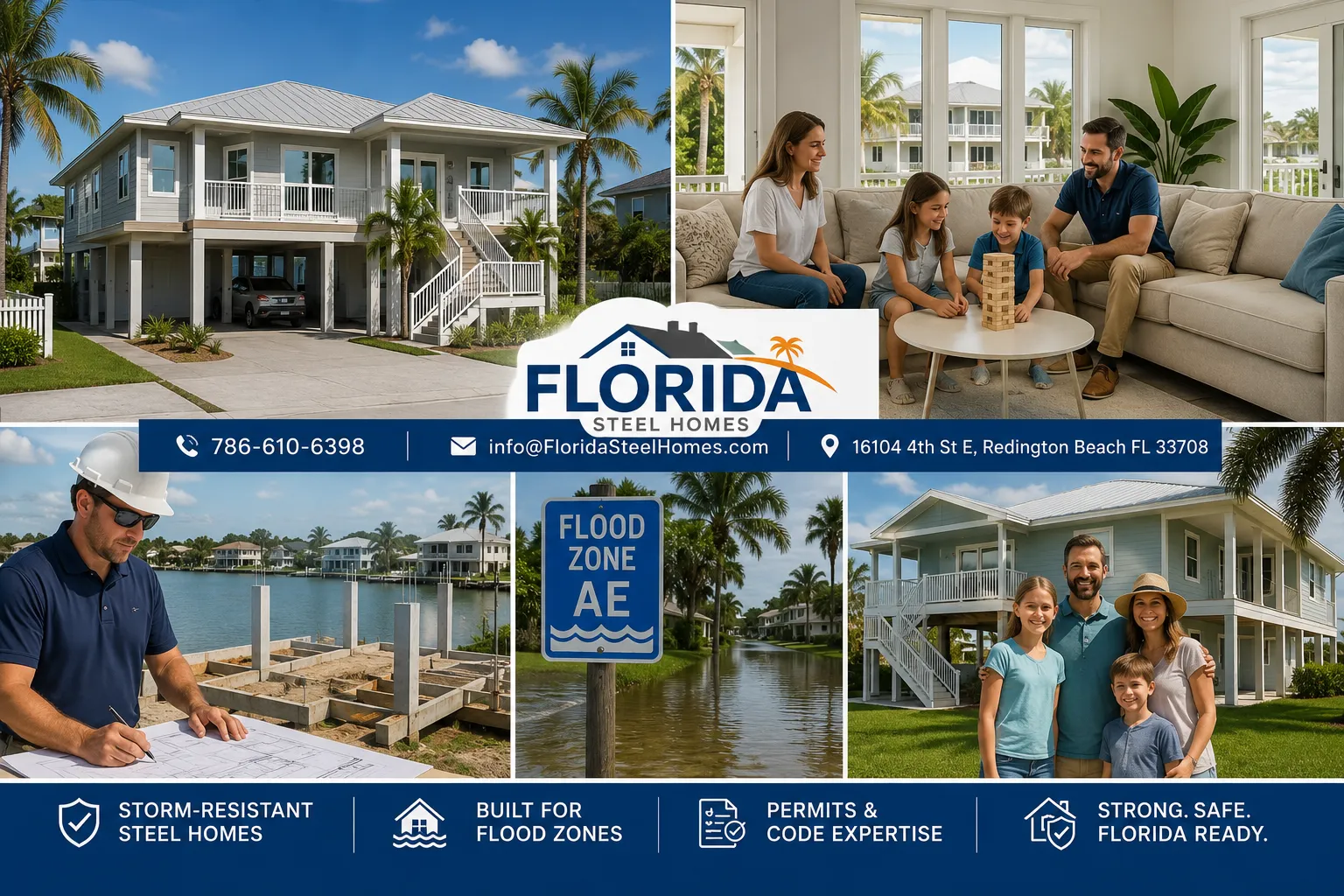
This guide breaks down exactly what you need to know before you break ground.
Not sure where to start? Florida Steel Homes has been engineering hurricane-proof steel structures across the Tampa Bay area for years. Call 786-610-6398 or email info@FloridaSteelHomes.com for a free site consultation.
1. Understanding Clearwater’s Flood Zones
Before you design anything, you need to know which FEMA flood zone your lot sits in. Clearwater has a mix of zones, and each one carries different building requirements and insurance implications.
- Zone AE – High-risk areas with a defined Base Flood Elevation (BFE). Common near the Intracoastal Waterway and low-lying neighborhoods.
- Zone VE – Coastal high-hazard zones subject to wave action, found along beachfront properties like Clearwater Beach and Sand Key.
- Zone X – Moderate-to-low risk areas, generally further inland, but still worth verifying since flood maps get updated periodically.
You can check your exact zone through the FEMA Flood Map Service Center or the Pinellas County GIS portal. But a zone designation only tells you the risk category — it doesn’t tell you how to actually build for it. That’s where elevation certificates, freeboard requirements, and structural material choices come in.
This is exactly where most homeowners get stuck. Florida Steel Homes handles the flood zone assessment as part of every project — reach out at 786-610-6398 before you finalize your lot purchase.
2. Permits You’ll Need in Clearwater & Pinellas County
Building in a flood zone triggers additional review layers beyond a standard residential permit. Expect to work through:
- Building Permit – Issued by the City of Clearwater Building Department or Pinellas County, depending on jurisdiction.
- Flood Development Permit – Required for any construction in a Special Flood Hazard Area (SFHA).
- Elevation Certificate – Confirms your finished floor height meets or exceeds the Base Flood Elevation plus local freeboard requirements (Clearwater typically requires BFE + 1 to 2 feet).
- Wind-Load Engineering Approval – The Florida Building Code requires structural plans to be engineered for the region’s wind speed zone (Clearwater falls in the 150+ mph design wind speed category near the coast).
- Impact-Resistant Window & Door Certification – Products must be rated for windborne debris per Florida Building Code, High-Velocity Hurricane Zone provisions where applicable.
Permit review timelines in Pinellas County typically run 4–8 weeks depending on project complexity, and flood zone properties often need an extra structural review pass.
Permit paperwork is where projects stall for months. Florida Steel Homes‘ team manages permitting end-to-end — text or call 786-610-6398 and we’ll walk you through your specific parcel requirements.
3. Why Structural Material Choice Matters More Than People Think
Wood-frame construction is still the default in much of Florida, but in flood- and wind-exposed zones like Clearwater, it’s increasingly the weak link. Here’s the comparison that matters:
| Factor | Wood Frame | Steel Frame |
|---|---|---|
| Wind resistance | Prone to racking/failure above 130+ mph | Engineered for 150–180+ mph loads |
| Flood/moisture resistance | Absorbs water, rots, mold risk | Non-porous, no rot or mold |
| Termite risk | High in Florida climate | None |
| Insurance premiums | Higher in high-risk zones | Often qualifies for wind-mitigation discounts |
| Long-term maintenance cost | Higher | Lower |
Steel-framed homes also tend to qualify for better wind-mitigation credits on your homeowner’s insurance, which can offset a meaningful chunk of the upfront cost difference over the life of the home.
Florida Steel Homes specializes exclusively in engineered steel structures built for exactly these conditions. Ask about wind-mitigation savings when you call 786-610-6398.
4. Realistic Cost Breakdown
Costs vary by lot, elevation requirements, and finish level, but here’s a general range for a storm-resistant build in the Clearwater area:
- Site & flood zone prep (piling, elevation, fill): $15,000 – $60,000+ depending on required elevation
- Engineered steel structural shell: $130 – $180 per sq. ft.
- Impact-rated windows & doors: $8,000 – $25,000 depending on home size
- Permitting & engineering fees: $5,000 – $15,000
- Roofing (hurricane-rated systems): $12,000 – $30,000
A 2,000 sq. ft. storm-resistant steel home in Clearwater typically lands somewhere between $350,000 and $500,000+ all-in, depending on elevation requirements and finish selections. Waterfront and VE-zone lots generally sit at the higher end due to piling and elevation costs.
Want an actual number for your lot instead of a range? Send your address to info@FloridaSteelHomes.com and we’ll put together a project-specific estimate.
5. Frequently Asked Questions
Do I need to elevate my home in Clearwater? If your property is in an AE or VE flood zone, yes — your finished floor must meet or exceed the Base Flood Elevation plus local freeboard, typically an additional 1–2 feet in Clearwater.
Are steel homes actually cheaper long-term than wood? Upfront costs can be comparable or slightly higher, but steel homes generally cost less over 20–30 years due to lower maintenance, no termite treatment, and better insurance rates in wind zones.
How long does permitting take in Pinellas County for a flood zone build? Plan for 6–10 weeks for flood zone properties, factoring in elevation certificate review and structural engineering sign-off.
Can steel-framed homes withstand a Category 4 or 5 hurricane? Properly engineered steel structures built to Florida Building Code wind-load standards for the region (150+ mph design speed) are built to withstand major hurricane conditions, including Category 4 storms, when combined with impact-rated openings and correctly engineered roof-to-wall connections.
Building Storm-Resistant in Clearwater Isn’t Just Code Compliance — It’s Peace of Mind
Every homeowner on the Gulf Coast makes the same bet every hurricane season. The difference between a home that rides out the storm and one that doesn’t usually comes down to decisions made at the permit and engineering stage — not repairs made after.
Florida Steel Homes builds engineered, hurricane-rated steel homes across Clearwater and the greater Tampa Bay area, handling flood zone assessment, permitting, and construction under one roof.
📍 16104 4th St E, Redington Beach, FL 33708
Reach out today for a free consultation on your lot and flood zone requirements.