Florida homeowners with solar panels face real risks during hurricane season, but modern systems are built tougher than most people think. Knowing how to prepare, what your warranty covers, and when to shut down your system can save you thousands. This article covers everything you need to make smart decisions before the next storm hits.
Solar Panels and Hurricane Season
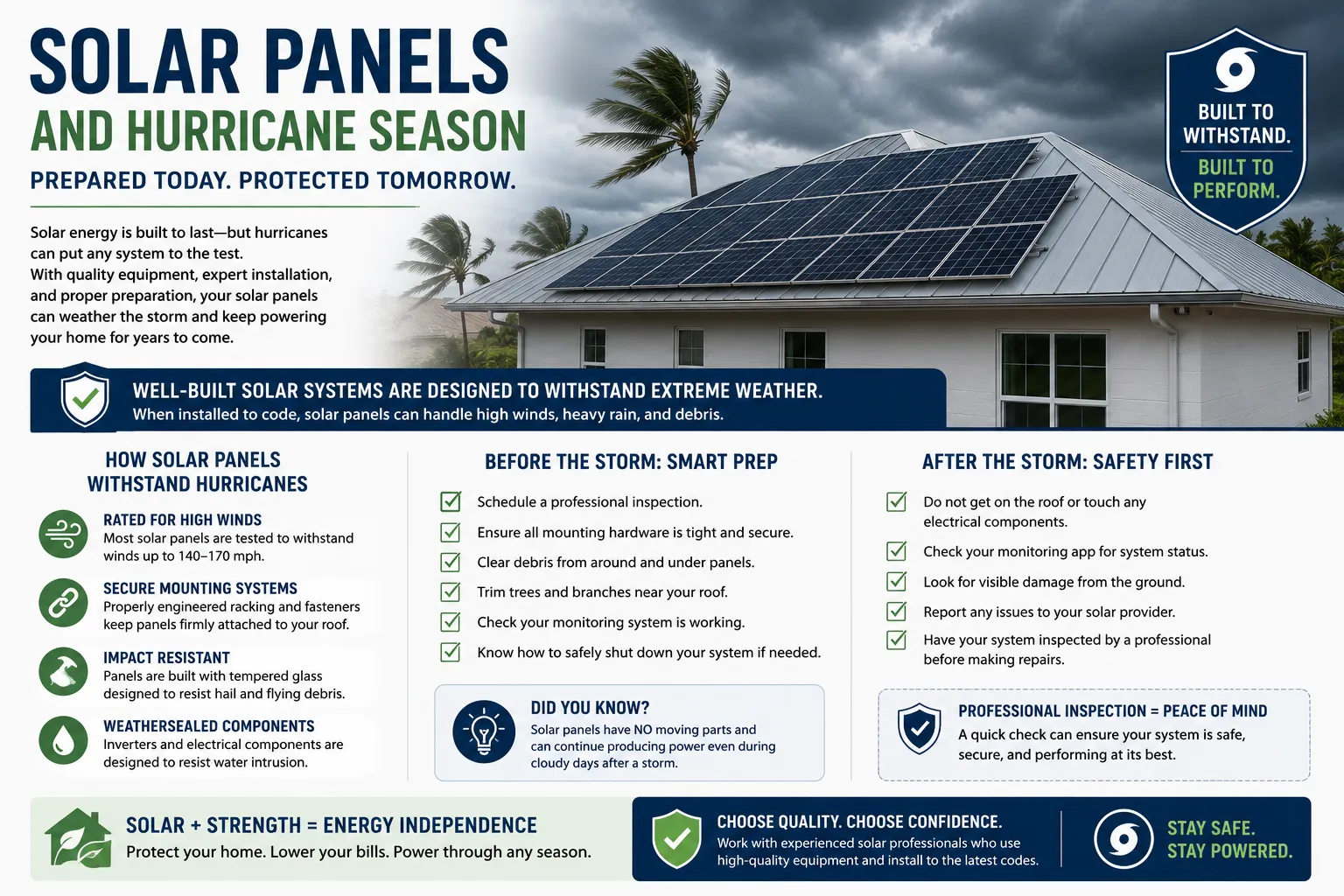
If you live in Florida, you already know the drill—June rolls around, and the Atlantic starts waking up. What’s different now is that more than 1.5 million Florida homes have solar panels installed, and that number keeps climbing every year.
So when a Category 3 or 4 is spinning in the Gulf, a lot of homeowners are asking the same question: What’s going to happen to my solar investment?
That’s exactly what this article is here to answer. Solar panels and hurricane season are two things that Florida forces you to think about together — and knowing the facts can save you from costly mistakes before, during, and after a storm.
Have questions about storm-resistant home construction and solar integration in Florida?
Reach out to the experts at Florida Steel Homes: info@FloridaSteelHomes.com 16104 4th St E, Redington Beach FL 33708
Are Solar Panels Built to Handle Hurricanes?
The short answer: yes, more than you’d expect.
Most residential solar panels sold in the U.S. today are rated to withstand wind speeds of 130 to 160 mph. Florida’s building code — one of the strictest in the country — requires solar installations to meet the same wind resistance standards as the roof itself.
What the Ratings Actually Mean
When a panel is rated for 130 mph winds, that means it’s been tested under simulated storm conditions. The mounting hardware and racking system matter just as much as the panels themselves. A properly installed system can outperform a poorly installed one by a wide margin.
The Role of Mounting Systems
Roof-mounted panels in Florida must be installed with hurricane-rated mounting brackets. These anchor directly into the roof structure — not just the decking. If you’re buying a new system in 2026, always ask your installer about the wind uplift rating on the racking hardware. Don’t assume it’s automatic.
What Florida Code Actually Requires
Since Hurricane Andrew in 1992, Florida has progressively strengthened its building codes. Solar installations in high-velocity hurricane zones (most of South Florida and the Gulf Coast) must meet HVHZ (High-Velocity Hurricane Zone) standards. That’s a meaningful layer of protection most homeowners don’t realize they have.
What Actually Happens to Solar Panels During a Storm
Most panels survive. That’s the truth.
After Hurricane Ian tore through Southwest Florida in 2022, damage reports showed that the majority of solar installations remained structurally intact. What failed more often were the roofs underneath them — not the panels themselves.
Flying Debris Is the Real Threat
A panel rated for 130 mph wind isn’t rated for a 2×4 flying at 80 mph. Debris impact is the most common cause of panel damage during major hurricanes. There’s no perfect fix for this, but panels with tempered glass (standard on most modern units) hold up significantly better than older designs.
Your Inverter and Battery Storage
The panels might survive, but your inverter — usually mounted on a wall in your garage or utility room — is more vulnerable to flooding. If storm surge is a risk in your area (as it is for many Gulf Coast Florida communities), your inverter’s location matters a lot.
Battery storage systems like the Tesla Powerwall or Enphase IQ Battery should be mounted well above potential flood lines. This is something worth discussing with your installer before the season starts.
Grid-Tied Systems Shut Down Automatically
Here’s something most people don’t know: if you’re connected to the grid and the power goes out, your solar system shuts off automatically. This is a safety requirement—lineworkers need to know lines are dead when they’re restoring power. You won’t have solar power during the outage unless you have battery backup.
How to Prepare Your Solar System Before Hurricane Season
Step 1: Schedule a Pre-Season Inspection
Every spring—before June 1—have a licensed solar technician check your mounting hardware, wiring connections, and panel condition. Florida’s heat and humidity accelerate wear on connectors and seals. Catching a loose bracket before a storm is far cheaper than repairing a panel that took flight.
Step 2: Review Your Insurance Policy
Florida homeowner’s insurance coverage for solar panels varies widely. Some policies treat them as part of the dwelling; others require a separate rider. Call your insurer now — not after a storm. Make sure you know your deductible and what “storm damage” actually covers in your specific policy.
Step 3: Know Where Your Shutoff Is
If a hurricane warning is issued, you may want to manually shut down your solar system before the storm arrives. Know where your main solar disconnect switch is and how to use it. Your installer should walk you through this—if they haven’t, ask.
Step 4: Document Everything
Take dated photos of your entire system every year before hurricane season. Panel condition, mounting hardware, inverter location — all of it. If you need to file a claim, this documentation is invaluable.
Pros and Cons of Solar Panels in Hurricane-Prone Areas
| Pros | Cons |
|---|---|
| Modern panels rated 130-160 mph wind resistance | Debris impact risk can’t be fully eliminated |
| Florida HVHZ codes add structural protection | Grid-tied systems go offline during outages without a battery |
| Potential energy independence with battery storage | Inverter and battery storage vulnerable to flooding |
| Long-term energy savings offset storm risk | Insurance requirements vary and can add cost |
| Steel-framed homes offer superior panel anchoring | The initial installation cost is significant |
Solar Panels vs. No Solar: A Quick Comparison
| Factor | With Solar Panels | Without Solar Panels |
|---|---|---|
| Post-storm power access | Possible (with battery backup) | Dependent entirely on grid restoration |
| Storm preparation needed | Yes – annual inspection recommended | Minimal |
| Energy bill savings | Significant (avg. 50-90% reduction in FL) | None |
| Home value impact | +3-4% average increase | Neutral |
| Hurricane damage risk | Low to moderate (code-compliant install) | N/A |
| Insurance considerations | Additional documentation needed | Standard policy usually sufficient |
After the Storm: What to Check and What Not to Touch
Once the storm passes, resist the urge to immediately inspect your panels. There are a few things to do in the right order.
First: Don’t walk on your roof. Even if panels look fine from the ground, post-storm roofs can be structurally compromised. Wait for a professional assessment.
Second: Look from the ground. Check for obvious panel damage, shifted racking, or exposed wiring. If anything looks off, keep your system off until it’s inspected.
Third: Call your installer. Most reputable Florida solar companies have post-storm inspection protocols. Get on their list quickly—after a major hurricane, wait times can stretch for weeks.
Fourth: File your insurance claim promptly. Florida law gives insurers specific response deadlines, but the earlier you file, the better.
Build Your Next Home to Withstand Whatever Comes
Hurricanes aren’t going away, and neither is solar energy’s rise across Florida. The good news is that a well-installed, code-compliant solar system is more storm-ready than most homeowners realize. Preparation, documentation, and the right professional support make all the difference.
If you’re thinking about combining solar energy with a steel-framed home—one of the most hurricane-resistant structures you can build in Florida—Florida Steel Homes can help you design a system built to last through whatever the Atlantic throws at it.
Build Smarter. Build Stronger. Florida Steel Homes specializes in storm-resistant construction designed for the Florida climate. info@FloridaSteelHomes.com 16104 4th St E, Redington Beach FL 33708