Not all of Florida faces the same hurricane risk. Inland cities like Orlando, Gainesville, and Ocala sit far from the coast and take far less direct hurricane damage. But location alone doesn’t make a home safe — how it’s built matters just as much as where it sits.
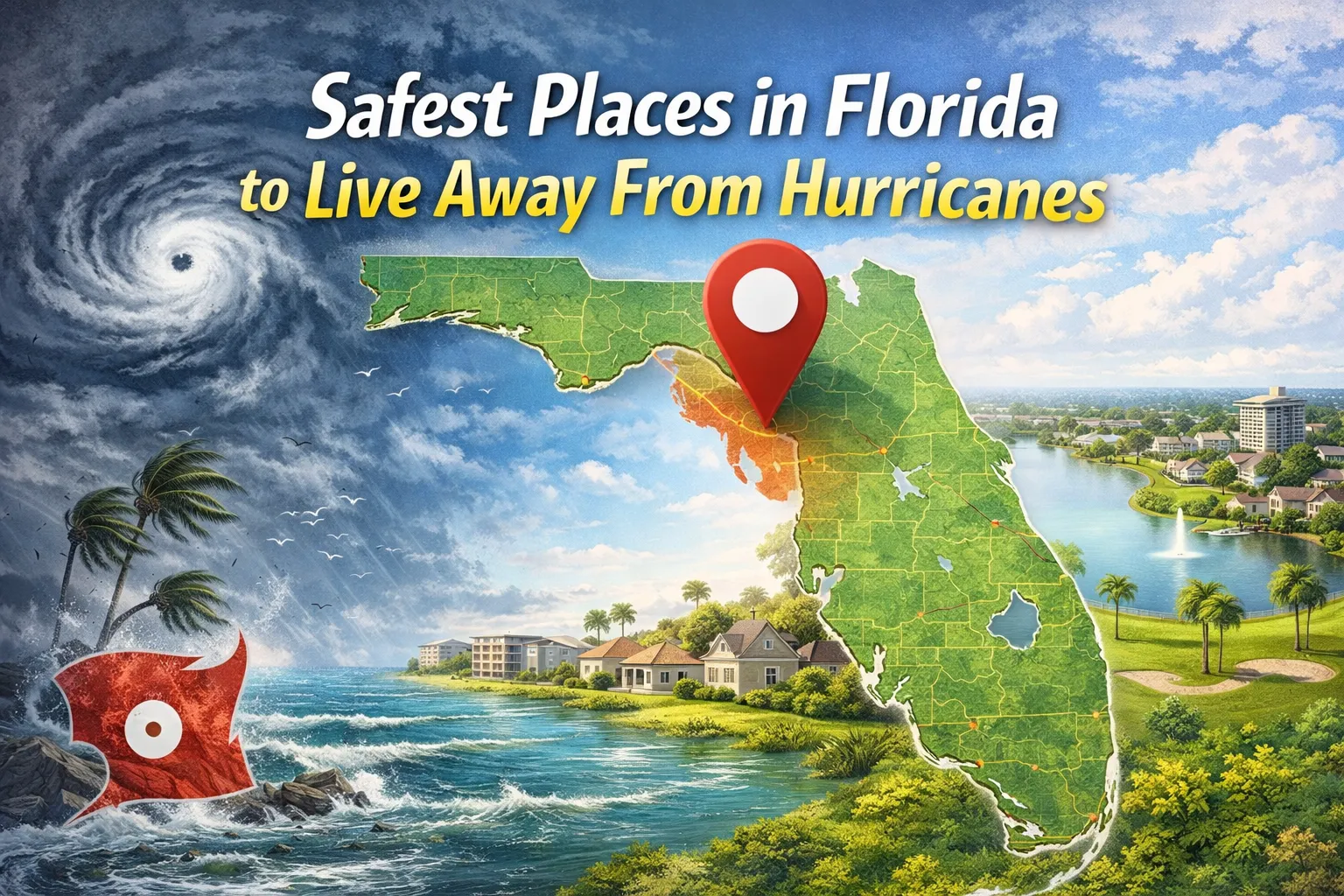
Safest Places in Florida From Hurricanes — 2026 Guide
The week after a hurricane passes through, you notice something strange driving through a Florida neighborhood: one house on the block is standing perfectly fine, its windows intact, its roof untouched. Right next door, the house is missing half its roof, and the garage door is caved in. Same storm. Same street.
Two completely different outcomes. That difference rarely comes down to luck — it comes down to where the house was built and how it was built. If you’re trying to figure out where the safest place to live in FL from hurricanes really is, the answer is part geography and part construction, and understanding both could save your family’s home.
Why Hurricane Risk in Florida Isn’t Equal Everywhere
Florida stretches roughly 500 miles from Pensacola to Key West, and the hurricane risk varies dramatically across that distance. Coastal areas — especially the Gulf Coast from Tampa Bay down through Naples and Fort Myers — face the most direct threat from storm surge, which is actually the deadliest part of a hurricane, not the wind.
The Atlantic Coast from Miami up through the Treasure Coast sees frequent storm activity, too. But once you move 50 to 100 miles inland, the picture shifts noticeably. Storms weaken over land, storm surge becomes a non-issue, and the wind speeds that reach inland communities are almost always lower than what coastal areas experience.
That said, “inland” doesn’t mean “safe from everything.” Central Florida gets its own serious threats — tornadoes spawned by hurricane bands, heavy inland flooding, and downed trees from sustained tropical-force winds. The key is understanding that different parts of Florida face different kinds of risk, and shopping for a home with that geographic reality in mind is the smartest starting point.
The Areas With the Lowest Hurricane Risk in Florida
North-Central Florida: Gainesville and Ocala
Gainesville sits about 60 miles inland from both coasts, giving it natural protection from storm surge and significantly reduced wind exposure. The University of Florida’s presence means the infrastructure here is well-maintained and the community is stable. Ocala, about 85 miles north of Orlando, shares similar geography — elevated terrain by Florida standards and real distance from the coast. Both cities have been largely spared from direct major hurricane landfalls over the past several decades, though no Florida city can claim total immunity from tropical impacts.
Central Florida: Orlando Metro Area
The Orlando metro area is one of the most popular destinations for Florida transplants, and its interior location is a genuine safety advantage during hurricane season. Storm surge is simply not a factor here. Winds from even major storms typically weaken to tropical-storm strength by the time they reach Central Florida. The tradeoff is flooding risk — particularly in low-lying areas near lakes and retention ponds — so the specific neighborhood and elevation of the home matter a lot. Not all of Orlando is created equal in terms of flood exposure.
North Florida: Tallahassee and Lake City
Tallahassee is far enough from the coast that storm surge isn’t a direct threat, though it sits in the Florida Panhandle, where storms tracking from the Gulf can still deliver serious wind damage. Hurricane Michael in 2018 reminded the Panhandle that no inland city is untouchable. Lake City, in the north-central part of the state, offers even more geographic buffer and consistently sees lower risk ratings on FEMA flood maps compared to coastal communities. Both cities offer a real cost-of-living advantage compared to South Florida as well.
What Actually Makes a Home Hurricane-Safe
Here’s the truth that most real estate articles skip over: even the “safest” Florida city can experience a damaging storm, and a home built to outdated standards will lose every time. Florida updated its building codes significantly after Hurricane Andrew in 1992, but millions of homes built before that era still exist throughout the state.
If you’re buying an older home — anything built before 1994 — you need a wind mitigation inspection before you close, full stop. That inspection will tell you exactly how the roof is connected to the walls, whether the windows are impact-rated, and how the structure is likely to perform in a major storm.
Steel frame construction is increasingly attractive to Florida buyers for exactly this reason. While traditional wood frame homes can flex, crack, and ultimately fail under extreme wind loads, steel framing maintains its structural integrity at wind speeds that would compromise standard construction.
Florida Steel Homes, for example, builds to Category 5 certification standards rated for 185+ mph winds — a level of protection that’s genuinely rare in the existing housing stock. For buyers who want to stop worrying about the next storm, building new with a hurricane-engineered design is the most direct path to actual peace of mind.
Buyer Psychology: Why People Are Moving Inland Right Now
Something shifted after Hurricane Ian devastated Fort Myers in 2022. Real estate agents throughout Central Florida reported a noticeable uptick in buyers specifically asking about inland locations—not because they wanted to leave Florida, but because they wanted to stay in Florida without spending every August through October anxious about what the next storm track might look like.
That emotional calculus is real, and it’s driving a genuine migration pattern inland. Buyers who’ve watched friends and family gut their coastal homes after flooding are making different decisions now. They want views, they want space, they want quality of life — but they’re also running the math on risk, insurance costs, and whether their home will still be standing in 20 years.
Expert Insight: What Hurricane Researchers Say
Dr. Kerry Emanuel at MIT has noted for years that while the raw frequency of Atlantic hurricanes hasn’t dramatically increased, the proportion of storms rapidly intensifying to Category 4 or 5 strength has grown meaningfully. That means the gap between a “manageable” hurricane and a catastrophic one is shrinking in terms of warning time.
Florida homebuyers today are essentially making a long-term bet on their home’s ability to handle storms that form and intensify faster than the forecasts of a decade ago could anticipate. Building to the highest available wind resistance standard isn’t overcautious—it’s catching up to the new reality of Atlantic storm behavior.
Pros and Cons of Choosing an Inland Florida Location
Pros:
- No storm surge exposure, which eliminates the deadliest hurricane hazard
- Lower wind speeds from storms that weaken over land
- Significantly lower homeowners’ insurance premiums in many inland zip codes
- Less competition and lower home prices compared to coastal markets
Cons:
- Inland Florida still gets tropical wind damage and tornadoes from storm bands
- Flooding from heavy rain is a real risk in low-lying inland neighborhoods
- Fewer walkable beach or waterfront lifestyle amenities
- Some inland areas have limited job markets compared to coastal metros
Step-by-Step: How to Buy a Hurricane-Safe Home in Florida
Step 1—Check the FEMA Flood Map first. Before you fall in love with any home, look it up on FEMA’s Flood Map Service Center. Zone X is low risk. Zones A and V are high-risk and carry mandatory flood insurance requirements. This one step eliminates a huge amount of future financial pain.
Step 2 — Research the home’s build year. Homes built after Florida’s 2001 building code updates have better hurricane construction standards meaningfully. Anything older requires more due diligence. Ask the seller for any wind mitigation reports already completed on the property.
Step 3 — Get a wind mitigation inspection. A licensed inspector evaluates your roof shape, roof-to-wall connections, shutter or impact-window status, and other features that directly affect insurance premiums and storm performance. This typically costs $75–$150 and can save you hundreds per year in insurance.
Step 4 — Talk to a local insurance agent before you close. Insurance rates vary wildly by zip code, flood zone, and construction type. Getting a real insurance quote before closing — not after — is non-negotiable. Some buyers have been genuinely blindsided by Florida’s current insurance market.
Step 5 — Consider new construction with hurricane-engineered specs. If you’re open to building, a steel frame home designed specifically for Florida’s climate gives you the highest level of storm protection available, with none of the uncertainty that comes with aging construction.
Area Spotlight: Why the Ocala-Gainesville Corridor Deserves Your Attention
The stretch of North-Central Florida between Ocala and Gainesville doesn’t get the real estate press that Miami or Tampa attract, but it offers something increasingly rare in this state: genuine affordability combined with genuine storm safety. Median home prices here run significantly below Florida’s coastal markets.
The landscape is green and hilly by Florida standards, with horse farms, state forests, and spring-fed rivers throughout the region. Gainesville’s economy is anchored by the University of Florida, which provides stability. Ocala has seen consistent population growth as retirees and remote workers price out of South Florida. For a first-time buyer or a family trying to stay in Florida without paying coastal risk premiums, this corridor is genuinely underrated.
Honest Budget Reality: What Hurricane Safety Costs
| Item | Approximate Cost |
|---|---|
| Wind mitigation inspection | $75–$150 |
| Impact windows (existing home) | $8,000–$20,000 |
| Hurricane shutters | $2,500–$10,000 |
| Roof replacement (post-2001 standards) | $15,000–$35,000 |
| New steel frame construction (turnkey) | Starting around $150/sq ft |
| Annual insurance savings (hurricane-rated home) | $1,000–$4,000/year |
The math on building or upgrading to hurricane standards is genuinely compelling over a 10–20 year horizon. Insurance savings alone often offset upgrade costs within a decade, and you get the less-quantifiable but very real benefit of not evacuating every time a storm appears in the Gulf.
Common Mistakes Florida Homebuyers Make Around Hurricane Risk
Buying based on where a storm hasn’t hit recently is one of the most common and costly errors Florida buyers make. Tampa Bay went nearly 100 years without a direct major hurricane hit before Hurricane Milton in 2024 — and that long quiet period lulled generations of buyers into underestimating the risk. Past storm history is not a reliable guide to future safety. Another frequent mistake is skipping flood insurance because the seller or agent suggests it isn’t required.
If you’re in a Zone X area without a flood insurance requirement, premiums are often surprisingly affordable, and the coverage is worth having in a state where tropical rainfall can dump 15 inches in 12 hours. Finally, too many buyers focus entirely on the purchase price and ignore the insurance market. Florida’s homeowners insurance landscape is genuinely challenging right now — some major carriers have left the state entirely — and building in a budget for realistic insurance costs before you buy can prevent serious financial stress after closing.
Ready to Stop Worrying About the Next Storm?
If you’re tired of doing hurricane math every August and wondering whether your home will still be standing in October, there’s a more direct solution than hoping for the best. Florida Steel Homes builds Category 5-rated steel frame homes designed from the ground up to handle what Florida’s storms actually deliver — not what insurance actuaries assume is the worst case.
With free solar panel packages, turnkey construction, and transparent pricing that doesn’t shift after the design is approved, the conversation starts with what you actually want to spend. Schedule a free consultation and find out what a home that’s genuinely built for Florida weather looks like — and what it actually costs.