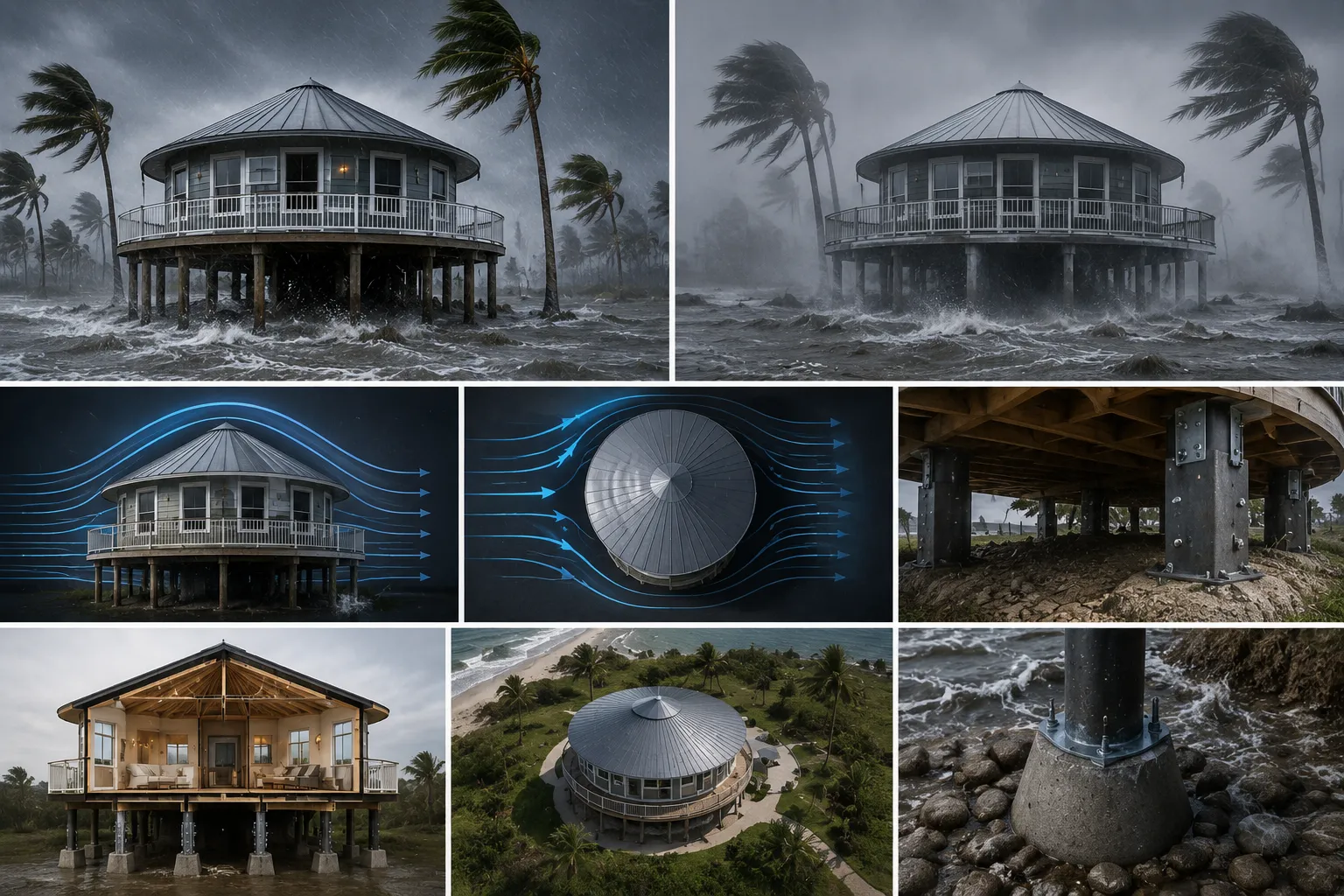
Round homes are becoming increasingly popular in Florida because their curved design helps them resist hurricane-force winds better than traditional square houses. Their aerodynamic shape reduces wind pressure, lowers structural weak points, and improves storm safety for families living in hurricane-prone areas.
From lower maintenance costs to better storm durability, these homes are changing how people think about hurricane-resistant living in 2026.
How these round homes survive hurricanes
Every hurricane season in Florida brings the same fear. Families board up windows, prepare emergency kits, and hope their homes survive another major storm. After recent hurricanes caused billions in damage across coastal communities, many homeowners started asking a serious question:
Why do some homes stay standing while others fall apart?
That question has pushed attention toward a surprising housing trend — round homes. Across Florida, more people are discovering how these circular structures handle hurricane winds far better than many traditional square houses.
The reason is not marketing hype. It comes down to physics, engineering, and smart design choices that many modern builders are finally embracing.
Why Do Round Homes Survive Hurricanes So Well?
The biggest advantage is simple: wind flows around a round home instead of crashing directly into flat walls.
Traditional houses have corners and flat surfaces that catch powerful wind gusts. During hurricanes, those corners become pressure points. Roof edges often lift first, which can lead to catastrophic structural failure.
Round homes reduce that problem dramatically.
How Aerodynamic Design Changes Everything
Wind Has Fewer Weak Points to Attack
A circular structure allows hurricane winds to move smoothly around the building. That reduces direct pressure on the walls and roof.
In many Florida storms, roof failure starts when wind gets trapped against flat surfaces. Round homes minimize that pressure buildup.
Roof Uplift Is Much Lower
One of the most dangerous parts of hurricanes is roof uplift. Strong winds create suction that can literally pull roofs upward.
Many round homes use dome-style or curved roofs that distribute pressure more evenly. That design makes them naturally harder to tear apart.
The Structure Shares Force More Efficiently
Instead of concentrating stress at corners, round homes spread force across the entire frame. Engineers often compare it to how airplane bodies or stadium roofs distribute pressure.
That small design difference can make a massive impact during Category 4 or Category 5 storms.
What Makes Traditional Square Homes More Vulnerable?
Most American homes were never designed specifically for extreme hurricane aerodynamics.
Flat Walls Catch Wind Like a Sail
Square homes create resistance points. When 120+ mph winds hit flat walls directly, the pressure increases sharply.
That force can damage:
- Roof connections
- Window systems
- Garage doors
- Exterior siding
Corners Create Structural Stress
Corners are often the first areas to weaken during hurricanes.
Once one section fails, wind can enter the structure rapidly, increasing internal pressure and causing major roof damage.
Debris Impact Is More Dangerous
Flying debris becomes deadly during hurricanes. Round homes often use reinforced materials and impact-resistant windows, which help reduce penetration risks.
That extra protection matters in coastal Florida communities where debris damage is common.
What Materials Make Round Homes Stronger?
The shape matters, but the materials matter too.
Many hurricane-resistant round homes use reinforced construction systems specifically designed for storm-prone regions.
Common Hurricane-Resistant Materials
Reinforced Concrete
Concrete dome homes are among the strongest residential structures available today.
They resist:
- Wind pressure
- Fire
- Moisture intrusion
- Flying debris impacts
Steel Framing Systems
Steel-framed circular homes are becoming more popular in Florida because they resist warping and structural shifting during storms.
According to Federal Emergency Management Agency hurricane safety recommendations, reinforced connections between roofs and walls significantly improve storm survival rates.
Impact-Resistant Windows
Modern round homes often include hurricane-rated windows tested for high-speed debris impacts.
That reduces one of the biggest causes of storm damage: broken windows allowing pressure into the home.
Are Round Homes Safer for Florida Families?
In many situations, yes.
No home is completely hurricane-proof, but round homes often perform better because they combine:
- Aerodynamic efficiency
- Stronger structural engineering
- Better pressure distribution
Families living near Florida coastlines are increasingly considering dome and circular homes for long-term storm resilience.
Real-World Florida Examples
Coastal Builders Are Seeing More Demand
After recent hurricane seasons, several Florida builders reported increased interest in:
- Dome homes
- Monolithic concrete homes
- Circular steel-frame homes
Homeowners are prioritizing durability over traditional appearance.
Insurance Interest Is Growing
Some insurers are paying closer attention to storm-resistant construction methods because stronger homes may reduce long-term claim risks.
That does not always guarantee cheaper insurance, but stronger structures can improve overall resilience evaluations.
Pros and Cons of Round Homes
| Feature | Round Homes | Traditional Homes |
|---|---|---|
| Wind Resistance | Excellent | Moderate |
| Roof Uplift Risk | Lower | Higher |
| Energy Efficiency | Often better | Standard |
| Construction Cost | Sometimes higher upfront | More common pricing |
| Interior Layout | Unique and unconventional | Familiar layouts |
| Hurricane Durability | Very strong | Varies greatly |
What Buyers Should Know Before Building One
Round homes are impressive, but they are not perfect for everyone.
They Can Cost More Initially
Custom engineering and specialized construction may increase upfront costs.
However, some owners believe long-term savings from storm durability and reduced repairs offset that investment.
Interior Design Feels Different
Furniture placement inside circular rooms can feel unusual at first.
Some people love the open design. Others prefer traditional layouts.
Local Building Codes Matter
Florida building codes vary by county and coastal risk zone.
Always work with licensed hurricane-resistant builders familiar with local regulations.
If you live in Florida and worry every hurricane season about roof damage, flooding, or expensive repairs, it may be time to explore smarter housing designs built for extreme weather.
Round homes are not just architectural experiments anymore. They are becoming practical storm-resilient solutions for families who want stronger protection and peace of mind.
For more information about hurricane-resistant home construction in Florida, you can contact:
Florida Steel Homes
16104 4th St E, Redington Beach FL 33708
Phone: 786-610-6398
Email: info@FloridaSteelHomes.com