The afternoon Hurricane Ian made landfall near Fort Myers in September 2022, thousands of families watched everything they owned get ripped apart in hours. Roofs peeled off. Walls buckled. Neighborhoods that had stood for decades were wiped clean. But scattered through the wreckage, a handful of homes stood almost untouched — not because they were lucky, but because they were built differently. More and more Florida buyers are paying attention to that difference. If you’re planning to build or buy a home in the Sunshine State, the most important decision you’ll make isn’t the floor plan or the finishes. It’s whether your home is genuinely built to survive what Florida throws at it.
Modular Hurricane Proof Homes Florida – Built to Last
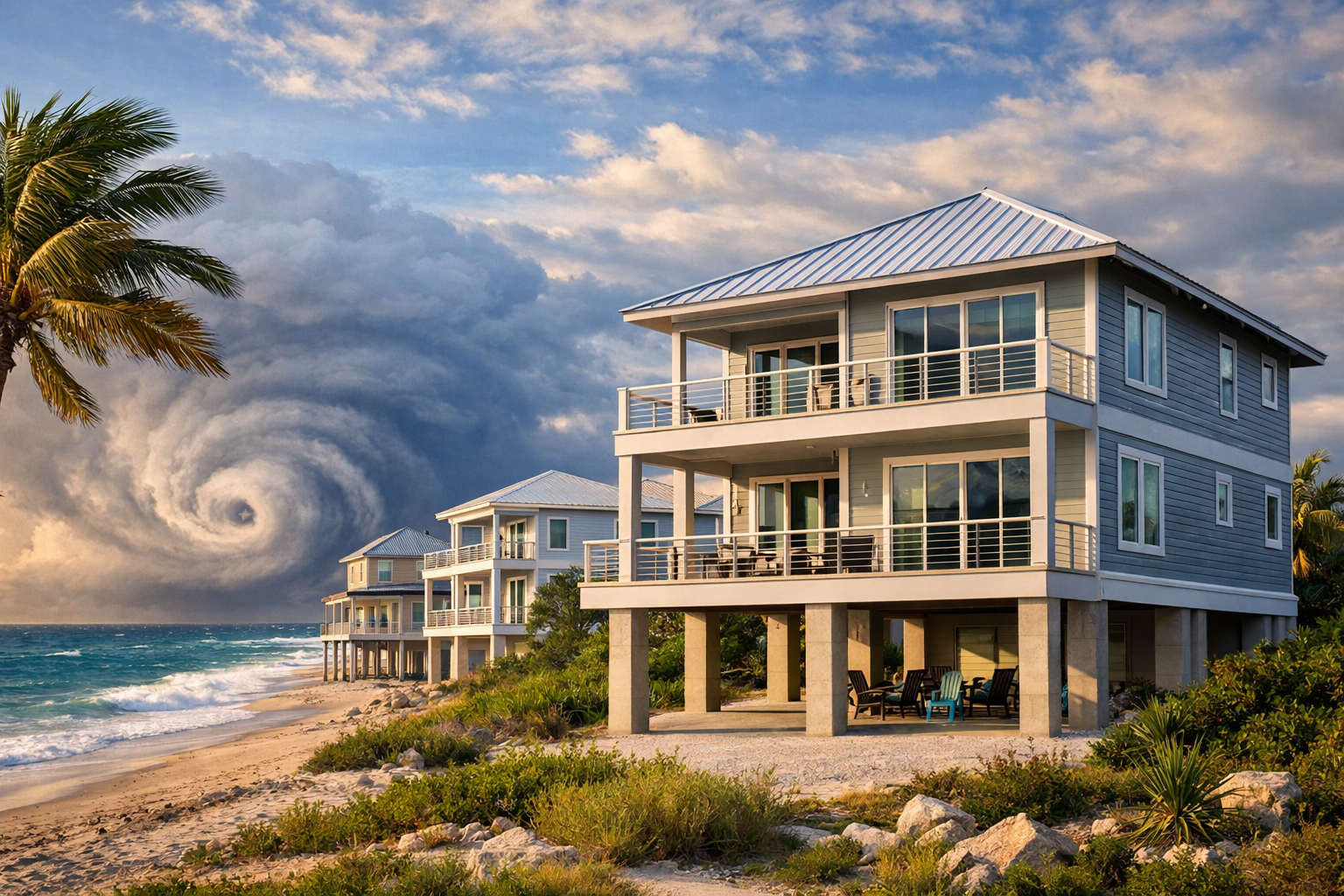
Why Buyers Are Genuinely Excited Right Now
There’s a particular kind of relief that comes with knowing your home can handle a storm. Florida families who went through Ian, Idalia, Helene, and Milton in recent years aren’t just emotionally scarred — many are rebuilding with a completely different mindset. They’re done gambling on traditional wood-frame construction that meets minimum code and hoping for the best. Today’s modular homes, built with insulated concrete forms (ICF), steel framing, and impact-rated glass, now rival or even exceed traditional homes in hurricane protection — and buyers have figured this out in a big way.
The excitement isn’t just about safety. Modular construction comes in at roughly $87 per square foot for manufactured housing versus $166 per square foot for conventional construction, a gap wide enough to fund significant storm-resistant upgrades and still come out ahead financially. Buyers are realizing they can get a safer, stronger, faster-built home for less money than a traditional stick-built house — and that combination is genuinely hard to beat. Add in the fact that Florida’s insurance market has become increasingly brutal for poorly constructed homes, and the case for going modular gets even more compelling.
What Actually Makes a Modular Home “Hurricane Proof”
No home is invincible—that’s worth saying plainly. But the phrase “hurricane proof” in the modular world refers to a specific set of engineering standards and materials that dramatically reduce the chance of catastrophic failure. Hurricane upgrades include impact-rated windows and doors tested to resist debris and pressure changes, fortified roofing systems with upgraded fasteners and underlayment, anchoring and strapping systems that tie the structure to the foundation, and storm-rated exterior finishes like fiber cement siding and waterproof sealants. When all of these work together, the result is a home that’s not just code-compliant—it’s genuinely resilient.
ICF walls resist wind, water, and mold, while steel frames from builders don’t warp, rot, or burn. Because modular homes are built indoors in a factory environment, they also avoid the weather-related shortcuts that can compromise quality on a traditional job site. Every wall panel, every roof truss, every connection point is assembled under controlled conditions and inspected before it ever reaches your lot. That consistency matters enormously when a Category 4 storm rolls in at 3 a.m.
Expert Insight: “Florida’s coastal areas demand structures that can handle wind speeds up to 200 mph. If the model you’re considering isn’t explicitly engineered for your zone, it may fail permitting or fail you when a hurricane hits. The structure is everything.” — Tri-Town Construction, Southwest Florida builders specializing in post-storm modular rebuilds.
Step-by-Step: How to Buy a Modular Hurricane Proof Home in Florida
Step 1: Identify Your Wind Zone and Flood Zone
Before you fall in love with a floor plan, you need to know what engineering requirements apply to your specific property. Florida’s coastal counties fall under High-Velocity Hurricane Zone (HVHZ) requirements, while inland areas have different but still strict standards. Check FEMA’s flood map service to determine whether your lot sits in an AE, VE, or X flood zone—this directly affects your foundation type and elevation requirements.
Step 2: Choose the Right Structure Type
ICF and steel framing significantly outperform wood in storm-prone regions. Steel-frame modular homes from builders like Florida Steel Homes are engineered specifically for coastal conditions. ICF-based homes from builders like Home Nation’s CAT 5 series use concrete-filled foam blocks that resist both wind and water infiltration. For waterfront lots, stilt-style modular homes elevate the living space above flood levels while keeping the footprint compact. Know which structure type fits your zone before talking to builders.
Step 3: Set a Realistic All-In Budget
The sticker price on a modular home covers the structure — not everything else. Land prices, site prep, soil testing, land clearing, foundation work, and utility hookups all add to your total. Budget for impact windows and doors, which can easily add $15,000 to $30,000 or more to a project. A detailed line-item quote from your builder before signing anything is non-negotiable.
Step 4: Vet Your Builder Carefully
Ask every builder you talk to for wind-load engineering specs, local permitting experience, and references from post-storm inspections. If a builder’s answer about structural specs is vague, that’s a red flag. National kit providers sometimes overlook the realities of coastal Florida—local permitting quirks, soil conditions unique to Southwest Florida’s sandy substrate, and the logistical complexities of building in flood zones. Local builders with a real track record in your specific county are worth the premium.
Step 5: Secure Permits and Begin Site Prep
Once permits are approved, delivery and on-site installation typically take one to two months. Site prep—clearing, grading, foundation work—runs parallel to factory production, which means your total timeline from contract to move-in can be significantly shorter than traditional construction. Modular construction cuts build time by up to 50% compared to stick-built homes.
Step 6: Final Inspection and Certification
Florida requires modular homes to meet the same Florida Building Code standards as site-built homes. Modular homes must meet the same tough Florida Building Code standards as custom stick-built homes, including all HVHZ requirements where they apply. Your builder should walk you through the inspection process and hand you a full certification package before you close.
Cost Breakdown: What You’re Actually Paying For
| Cost Category | Estimated Range |
|---|---|
| Base modular structure (per sq ft) | $87–$166 |
| Steel-frame prefab home (turnkey) | $388,500–$600,000+ |
| Impact windows and doors | $15,000–$30,000 |
| Reinforced roofing system | $8,000–$20,000 |
| Elevated/concrete foundation | $15,000–$40,000 |
| Site prep, land clearing, grading | $10,000–$25,000 |
| Permits and inspections | $3,000–$8,000 |
| Utility hookups (septic, electric, water) | $10,000–$30,000 |
| Estimated Total (1,500 sq ft home) | $250,000–$600,000+ |
Costs vary significantly by county, proximity to the coast, and level of customization. Always get three itemized quotes before committing.
Comparison: Modular vs. Traditional Construction in Florida
| Factor | Modular Hurricane-Resistant | Traditional Stick-Built |
|---|---|---|
| Build time | 3–6 months | 9–18 months |
| Cost per sq ft | $87–$166 | $166–$250+ |
| Storm engineering | Factory-controlled | Variable by crew |
| Insurance friendliness | High (certified specs) | Depends on age/build |
| Customization | High | Very high |
| Resale perception | Improving rapidly | Established |
| Post-storm repair costs | Significantly lower | Higher |
Area Spotlight: Where Florida Buyers Are Building
Southwest Florida (Cape Coral, Fort Myers, Naples): Ground zero for Hurricane Ian’s destruction, this region has seen an extraordinary surge in modular and prefab construction since 2022. The focus on resilient building here is more intense than anywhere else in the state—buyers aren’t just meeting minimum code; they’re actively looking for ways to build stronger, safer homes.
Tampa Bay Area: Builders like Seasafe Homes are gaining serious traction here. Their homes are built on reinforced concrete and steel foundations, engineered to withstand flood and hurricane conditions while supporting everyday comfort and coastal lifestyle. Tampa’s bay exposure makes elevation and wind engineering especially critical.
Florida Keys and South Florida (HVHZ): The most demanding wind zone in the country. Any modular home here must specifically meet HVHZ standards—verify this explicitly with your builder before anything else.
Central Florida (Ocala, Orlando region): Lower wind exposure than the coasts but still subject to strong hurricane-force winds from inland storm tracks. Modular options here tend to be more affordable, with land costs significantly lower than those for coastal lots.
Pros and Cons: The Honest Version
The genuine upsides:
- Faster construction timeline — factory production and site prep happen simultaneously
- More consistent build quality than many traditional contractors can deliver
- Engineered specifically for Florida’s wind load requirements when done right
- Lower cost per square foot than comparable stick-built construction
- Insurance companies increasingly reward certified storm-resistant features
The real trade-offs:
- The base price rarely includes foundation, site prep, or storm upgrades—your final number will be higher than the brochure
- Finding a quality local builder who truly understands Florida’s permitting is harder than it sounds
- Resale perception, while improving, still lags behind traditional construction in some markets
- Customization limits vary by builder—some modular systems have more flexibility than others
- Elevated foundations required in flood zones add meaningful cost and alter the home’s visual profile
Common Mistakes to Avoid
The biggest mistake buyers make is treating the quoted base price as the real price. Many prefab quotes cover only the structure, not the foundation, permits, delivery, or utility hookups—get an itemized breakdown before signing anything. Discovering these costs after you’ve committed to a builder is a painful and expensive surprise.
The second mistake is skipping the builder vetting process. Not every company that markets “hurricane-proof” modular homes in Florida has the local permitting experience, wind engineering credentials, or post-storm track record to back up its claims. Ask for specific wind-load ratings, examples of completed projects in your county, and proof that their designs have been third-party engineered for your specific wind zone.
Third, don’t underestimate the foundation. Once a modular home is properly assembled on-site and anchored to a solid, elevated foundation, it is every bit as storm-ready as any new home — but that “solid, elevated foundation” part is doing a lot of work in that sentence. A poorly designed or improperly built foundation is the single most common failure point in modular homes that don’t survive major storms.
Finally, don’t overlook the warranty. In hurricane territory, a one-year warranty won’t cut it — ask specifically what’s covered and for how long. Storm-related structural issues sometimes don’t show up until the second or third season.
FAQ: What Florida Buyers Ask Most
Can a modular home really survive a Category 5 hurricane? It depends entirely on how it’s built. Jacobsen-built homes went through four major hurricanes in 2004 and suffered no serious structural damage. Steel-frame and ICF modular homes engineered specifically for Florida’s coastal wind zones can absolutely withstand Category 4 and 5 conditions — but only when built to the right specifications and properly anchored to the foundation.
Are modular homes treated differently for insurance in Florida? Not anymore in most cases. Modular homes must meet the same tough Florida Building Code standards as custom stick-built homes. In fact, homes with certified storm-resistant features — impact windows, reinforced roofing, elevated foundations — often qualify for meaningful insurance discounts that traditional older homes don’t.
How long does it take to build a modular home in Florida? Production typically takes up to three months, then delivery, on-site installation, and inspections take one to two more months — significantly faster than traditional construction for comparable quality.
What’s the minimum wind speed rating I should require? Most builders follow the typical 150 mph code, but coastal homes in Tampa Bay and Southwest Florida benefit from designs engineered to endure wind speeds up to 180 mph. For HVHZ areas in South Florida and the Keys, ensure your builder’s specs meet or exceed 200 mph wind resistance.
Do I need to own land before approaching a modular builder? Yes. If you’re building a modular home in Florida, you’ll need to secure your own land — and there are critical costs and zoning restrictions to understand before signing anything. Some builders can help connect you with lots or assist with land evaluation, but the land purchase is always a separate transaction.
Your Next Step
Florida’s storm season doesn’t wait, and neither does the opportunity to build a home that’s genuinely ready for it. If you’re serious about buying a modular hurricane-proof home in Florida, start by mapping your specific wind and flood zone, then request itemized quotes from at least three local builders who can provide certified wind-load engineering specs for your county. Compare the full all-in numbers — not the brochure prices — and ask every builder to show you completed projects that have survived a real storm. The families who rebuilt smarter after Ian and Milton aren’t waiting for the next storm to test their choice. They already know their home will hold. You can too.