Round concrete homes — especially dome and monolithic designs — are among the most hurricane-resistant structures you can build in Florida. Their curved shape deflects wind, their thick walls resist impact, and many have survived Category 4 and 5 storms with little to no damage. While they cost more upfront, they offer lower insurance rates and repair bills in Florida’s high-risk climate.
Is a Round Concrete Home Florida Hurricane Proof? Real Results
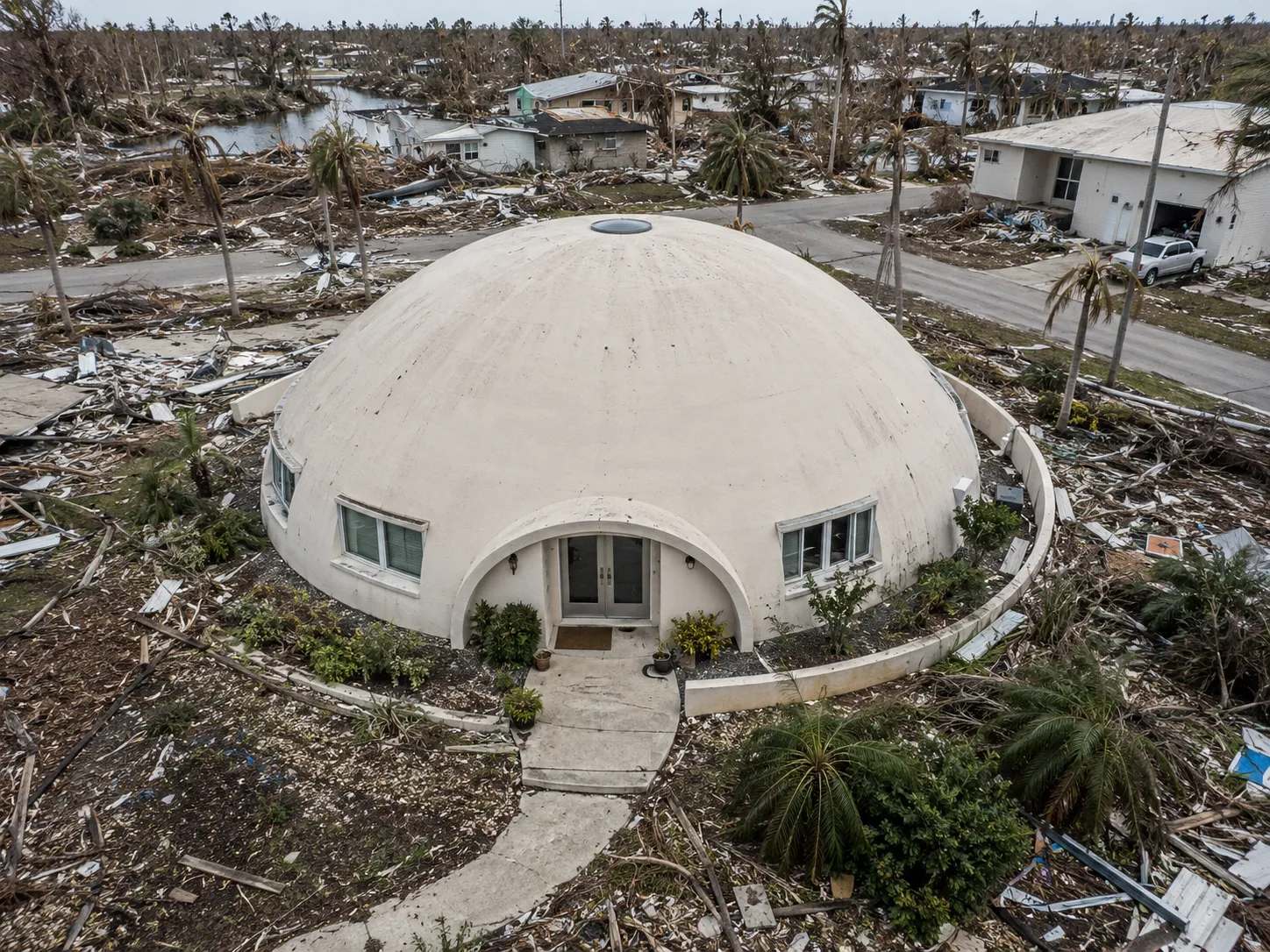
After every major hurricane that tears through Florida, the same story plays out — entire neighborhoods flattened, roofs peeled off, lives turned upside down. But a few homes stand almost completely untouched. Quite often, they’re round.
If you’ve been asking yourself whether a round concrete home is really hurricane proof in Florida, you’re asking exactly the right question. The short answer is yes — with some important nuance. Let’s get into what actually makes these homes work, why they outperform almost everything else in a major storm, and whether one makes sense for your situation.
Interested in a Hurricane-Resistant Home in Florida?
Florida Steel Homes specializes in engineered, storm-resilient construction across Florida. Get expert guidance tailored to your location and needs.
Email Us: info@FloridaSteelHomes.com
📍 16104 4th St E, Redington Beach FL 33708
Why Round Concrete Homes Are Generating Buzz in Florida
Florida is ground zero for hurricane risk in the United States. With Atlantic and Gulf storms threatening the coast every season, homeowners have increasingly looked beyond conventional wood-frame construction for something that will actually hold.
Round concrete homes — whether domed, cylindrical, or monolithic shell designs — have quietly been around since the 1970s. What’s changed is that after hurricanes like Ian (2022) and Idalia (2023), more people are connecting the dots: the homes still standing in their neighborhoods look different from the rest.
These structures aren’t just a novelty. They’re an engineering solution built around aerodynamics and material strength — two things that matter enormously when 150 mph winds hit your home.
The Science: Why a Round Shape Handles Wind Better
Aerodynamics — Wind Has Nowhere to Push
Flat walls create drag. A hurricane pushes against a rectangular home like a sail in a storm — the pressure builds on the windward side and creates suction on the leeward side. That pressure differential is what tears roofs off and blows out windows.
A round or domed shape changes the game completely. Wind flows around the curved surface instead of slamming into it. The structure experiences dramatically lower net pressure, which is why wind tunnel tests consistently show domed homes handle hurricane-force winds far better than conventional designs.
Monolithic Concrete — No Weak Joints
Traditional homes fail at their connections — where the roof meets the walls, where the walls meet the foundation. A monolithic concrete dome eliminates most of these joints. The shell is one continuous structure, which means there’s no seam for the wind to exploit.
The concrete itself — typically 3 to 5 inches thick and reinforced with rebar — can withstand wind speeds far above the Category 5 threshold of 157 mph. Some designs are rated for winds exceeding 250 mph.
Impact Resistance and Storm Surge
It’s not just wind you’re fighting in Florida — it’s debris, flooding, and storm surge. Concrete doesn’t flex, warp, or absorb water like wood. Round homes with properly sealed bases and elevated foundations have survived storm surge events with minimal structural damage.
Real-World Hurricane Performance in Florida
After Hurricane Andrew devastated South Florida in 1992, researchers and homeowners noted that a handful of dome homes in the area survived with little more than cosmetic damage. That became a turning point in awareness around alternative construction.
More recently, after Hurricane Ian made landfall in Southwest Florida in 2022 as a Category 4 storm, multiple concrete dome homes in the Fort Myers and Cape Coral areas were reported intact while surrounding wood-frame homes were destroyed. Homeowners shared photos that went viral — the contrast was striking.
This isn’t anecdotal coincidence. It aligns directly with what structural engineers have long known: curved, reinforced concrete shells perform exceptionally well under the lateral and uplift forces a hurricane produces.
Pros & Cons of Round Concrete Homes in Florida
Advantages
- Exceptional wind resistance — rated for 250+ mph in some designs
- No roof-to-wall joints — the biggest failure point in traditional homes
- Very low maintenance — concrete doesn’t rot, warp, or get termite damage
- Significantly lower homeowner’s insurance in Florida’s high-risk zones
- Energy efficient — dome shape reduces heating and cooling costs
- Long lifespan — well-built concrete domes can last 500+ years
- High resale appeal in post-hurricane Florida markets
Limitations
- Higher upfront construction cost than wood-frame homes
- Unconventional interior layout — curved walls can limit furniture placement
- Fewer contractors experienced in dome construction in Florida
- May require special permits or variances in some Florida counties
- Resale pool is smaller — not every buyer appreciates the aesthetic
Round Concrete vs. Traditional Home: How They Compare
| Feature | Round Concrete Home | Wood-Frame Home | Steel Frame Home |
|---|---|---|---|
| Wind Resistance | 250+ mph rated | 140 mph typical | 175–200 mph |
| Storm Surge Resistance | High | Low | Moderate |
| Insurance Cost (FL) | Much lower | Very high | Lower than wood |
| Build Cost | Higher upfront | Lower upfront | Moderate |
| Maintenance Over 20 Years | Very low | High | Low |
| Lifespan | 200–500+ years | 50–100 years | 100–200 years |
Who Should Consider a Round Concrete Home in Florida?
Great For:
If you live in a high-risk hurricane zone — coastal Pinellas County, Lee County, Charlotte County, or anywhere along Florida’s Gulf or Atlantic coasts — a round concrete home is worth serious consideration. The long-term savings on insurance and repairs often offset the higher build cost within 10–15 years.
It’s also an excellent choice if you’re building a primary residence you plan to stay in long-term, a vacation home that will sit empty during storm season, or a retirement home where structural safety is the top priority.
Think Twice If:
If you’re planning to sell within 5 years, the niche appeal of a dome home might complicate your exit. And if you’re working with a tight construction budget and need to build quickly, the specialized labor and materials can add time and cost that don’t fit every situation.
Florida Building Codes and Compliance
Florida has some of the most rigorous building codes in the country, especially after Hurricane Andrew. The Florida Building Code (FBC) requires homes in high-velocity hurricane zones (HVHZ) — including Miami-Dade and Broward counties — to meet extremely strict wind load standards.
The good news: well-designed round concrete homes typically exceed these requirements. However, you’ll want to work with a contractor familiar with Florida-specific permits, especially for dome or non-standard shapes that may require engineered drawings for local approval.
Always verify your builder has experience pulling permits for alternative construction types in your specific Florida county. Requirements can vary between Pinellas, Hillsborough, Sarasota, and other coastal counties.
Ready to Build a Hurricane-Resistant Home in Florida?
Florida Steel Homes designs and builds storm-resilient homes throughout Florida. Whether you’re exploring concrete, steel, or hybrid construction, their team can walk you through what makes the most sense for your location, budget, and lifestyle.
Email: info@FloridaSteelHomes.com
📍 16104 4th St E, Redington Beach FL 33708