Living in Florida comes with a lifestyle many people dream about—sunshine, beaches, and warm weather almost year-round. But for Florida homeowners, there’s one reality that can’t be ignored: hurricanes are not a matter of if, but when.
Every storm season, homeowners worry about roof damage, shattered windows, flooding, insurance claims, and the emotional stress of evacuations. Many people ask the same question after every major storm:
“Is my home really prepared for a hurricane?”
That’s exactly where hurricane resistant homes in Florida come into the picture.
This guide is written for Florida homeowners who want real answers—not fear tactics—about how hurricane-resistant homes work, what problems they solve, and how you can protect your investment long-term.
Hurricane resistant homes in Florida are designed to withstand extreme winds, flying debris, heavy rain, and storm surges. They use reinforced structures, impact-rated windows, stronger roofing systems, and smart construction techniques that dramatically reduce damage, repair costs, and safety risks during hurricanes.
Why Traditional Florida Homes Often Fail During Hurricanes
Many homes across Florida were built decades ago, long before modern hurricane building codes existed. While they may look solid, storms expose their weaknesses fast.
Common Problems Florida Homeowners Face
- Roofs lifting or peeling off in high winds
- Windows breaking due to flying debris
- Water intrusion leading to mold and structural rot
- Garage doors collapsing and pressurizing the house
- Massive repair bills after every major storm
These issues aren’t just expensive—they’re dangerous.
A single window failure can cause pressure changes that literally rip a roof off. Once water gets inside, damage spreads quickly, even after the storm passes.
What Makes a Home Hurricane Resistant?
A hurricane resistant home isn’t about one upgrade—it’s about a system working together to protect the structure.
Reinforced Structural Design
Hurricane-resistant homes are built with reinforced connections between the foundation, walls, and roof. This creates a continuous load path, allowing wind forces to travel safely into the ground instead of tearing the house apart.
Why this matters:
Many homes fail not because materials are weak, but because parts aren’t properly connected.
Impact-Resistant Windows and Doors
Impact-rated windows are tested to withstand high-speed debris without shattering. Even if cracked, they remain intact, keeping wind and rain outside.
Problem solved:
No more boarding up windows every storm season or worrying about broken glass during a hurricane.
Hurricane-Rated Roofing Systems
A hurricane-resistant roof uses:
- Stronger roof decking
- Enhanced fasteners and adhesives
- Wind-rated shingles or metal roofing
These roofs are designed to resist uplift forces that commonly destroy traditional roofs.
Real benefit:
Fewer insurance claims, less interior damage, and far lower repair costs after storms.
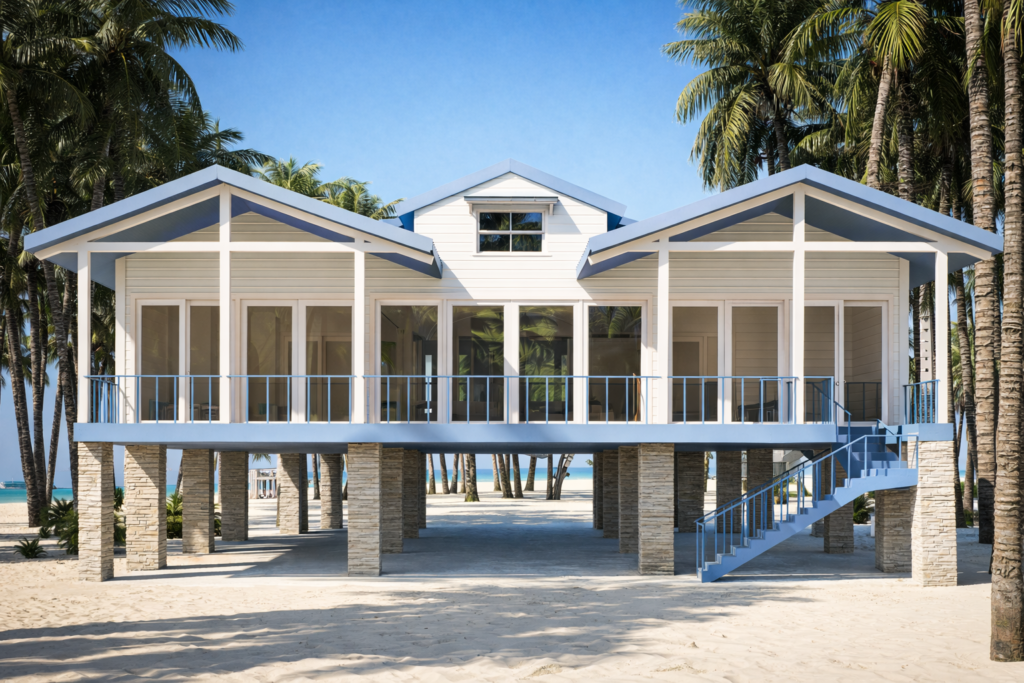
Flood-Resistant Construction (Especially for Coastal Homes)
Florida hurricanes often bring flooding along with wind. Hurricane-resistant homes address this by:
- Elevated foundations
- Proper drainage systems
- Flood-resistant materials in lower levels
This protects: flooring, walls, electrical systems, and long-term structural integrity.
Florida Building Codes: A Game Changer for Home Safety
After Hurricane Andrew, Florida introduced some of the strictest building codes in the country. Modern hurricane resistant homes are built to meet or exceed these standards.
What Florida Homeowners Gain from Newer Codes
- Higher wind resistance ratings
- Better material testing requirements
- Safer construction practices
Homes built or upgraded under these codes statistically experience less damage during major storms.
Cost vs Value: Are Hurricane Resistant Homes Worth It?
Many homeowners worry about cost upfront—but rarely calculate long-term savings.
Short-Term Costs
Yes, hurricane-resistant features can increase construction or renovation costs.
Long-Term Benefits
- Lower insurance premiums
- Reduced repair and maintenance costs
- Higher resale value
- Less downtime after storms
- Greater peace of mind
Over time, these homes often cost less to own than traditional homes repeatedly damaged by hurricanes.
Insurance Benefits for Hurricane Resistant Homes in Florida
Insurance companies reward safer homes.
Florida homeowners with hurricane-resistant features may qualify for:
- Wind mitigation discounts
- Reduced hurricane deductibles
- Faster claim approvals
These savings alone can offset a large portion of upgrade costs over the years.
Retrofitting an Existing Florida Home for Hurricane Resistance
Not every homeowner can rebuild from scratch—and that’s okay.
Smart Retrofit Options
- Install impact-resistant windows and doors
- Upgrade roof attachments and materials
- Reinforce garage doors
- Improve drainage and waterproofing
Even partial upgrades significantly reduce damage risk.
Important:
Start with the weakest points—windows, roof, and garage doors.
Emotional Safety Matters Too
Hurricanes don’t just damage buildings—they damage peace of mind.
Many Florida homeowners describe the constant anxiety before storms:
- Sleepless nights
- Stressful evacuations
- Fear of returning to a destroyed home
Hurricane resistant homes offer more than physical protection—they offer confidence. Knowing your home is built to stand strong changes how you experience storm season entirely.
Are Hurricane Resistant Homes the Future of Florida Living?
With stronger storms becoming more frequent, the future of Florida housing is clear.
- Buyers are actively seeking storm-resistant properties
- Builders are shifting toward resilient construction
- Local governments are tightening safety regulations
Hurricane resistant homes are no longer a luxury—they are becoming a necessity.
Final Thoughts for Florida Homeowners
Owning a home in Florida is a major investment. Protecting that investment means planning for hurricanes, not hoping they miss you.
Whether you’re building new, buying, or upgrading an existing property, choosing hurricane-resistant features is one of the smartest decisions you can make—for your safety, finances, and long-term peace of mind.
Storms may be unavoidable—but devastating damage doesn’t have to be.