A hurricane proof house in Florida isn’t a luxury anymore — it’s the only smart buy. This guide walks you through what real storm-resistant construction looks like, what you’ll spend, and how to find a home that protects your family when the next big one hits.
The photos from Hurricane Helene were the kind you don’t forget. Slabs where houses used to be. Swimming pools full of debris. And then, every few blocks, one home was still standing—roof intact, windows unbroken, like the storm had decided to go around it. The difference wasn’t luck. It wasn’t the location. It was how the house was built. If you’re shopping for a home in Florida right now, that image is worth holding onto. Because the question isn’t whether another major storm is coming. The question is whether your home will be there when it passes.
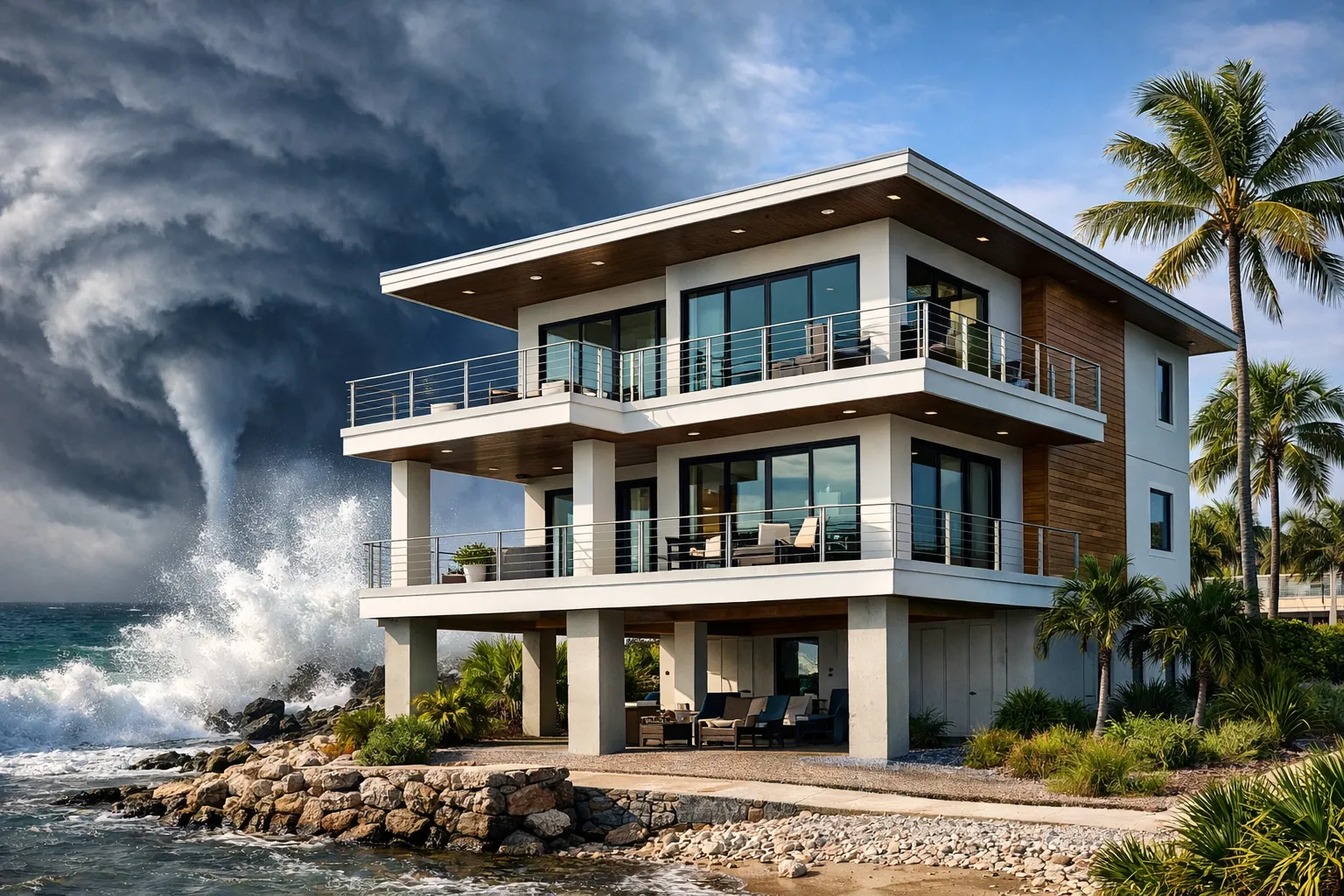
Florida is the most hurricane-exposed state in the country. Since 1851, more than 120 hurricanes have made landfall here — more than any other state. And the pace isn’t slowing. If you’re buying a home—especially if this is your first—understanding what “hurricane resistant” actually means in construction terms is the difference between a sound investment and a liability that could cost you everything.
Why Florida Buyers Are Rethinking Everything About Home Construction
There’s a shift happening among Florida homebuyers that didn’t exist ten years ago. A growing number — especially millennials who watched their parents rebuild after Charley, Irma, or Ian — are coming into the buying process with one hard requirement before they even look at square footage: Is this house actually built for what Florida throws at it?
That instinct is financially smart, not just emotionally driven. Traditional wood-frame homes in Florida carry higher insurance premiums, require more maintenance against moisture and termites, and — critically — face real structural risk above Category 3 wind speeds. Steel-frame construction, by contrast, has been engineered and field-tested to withstand winds exceeding 180 mph with Category 5 certification. When buyers understand that difference, the emotional calculus changes fast. You stop thinking about the granite countertops and start asking about the framing system. That’s a mature way to shop for a home in this state.
What Actually Makes a House Hurricane Proof in Florida
The phrase “hurricane-proof” gets used loosely in real estate listings, so let’s be precise. A genuinely hurricane-resistant home in Florida has to perform across three threat categories simultaneously: wind, water, and debris impact. Miss any one of them, and you have a vulnerability.
Wind resistance comes down to the structural frame and connection points. Steel frame construction outperforms wood and concrete block here because steel doesn’t snap, splinter, or separate at joints under high-load wind conditions. Look for homes engineered to meet or exceed current Florida Building Code requirements, which are among the strictest in the nation following post-Andrew revisions in the 1990s.
Flood and storm surge protection requires elevation. Florida’s coastal and flood-zone properties need foundations built above base flood elevation—ideally with engineered elevation options that keep living space above dangerous surge levels. This isn’t optional in FEMA flood zones; it’s required. But even outside those zones, smart buyers add a buffer.
Impact resistance means windows, doors, and roof systems that won’t fail under flying debris. Hurricane-impact glass, reinforced entry doors, and roof-to-wall connections rated for uplift pressure all matter here. A home can have a great frame and still lose its roof if the connectors aren’t engineered for it.
Step-by-Step: How to Buy a Hurricane Proof House in Florida
Step 1: Know Your Flood Zone Before You Fall in Love
Pull the property address through FEMA’s Flood Map Service Center before you schedule a showing. Understanding whether a home sits in Zone A, AE, VE, or X changes your insurance costs, your mortgage requirements, and your actual risk profile dramatically. Zone VE properties on the coast face velocity wave action—the most destructive category. Zone X doesn’t require flood insurance but still carries risk. Know what you’re walking into.
Step 2: Lock Down Your Budget with Storm-Resistance in Mind
Here’s where most buyers go wrong: they set a budget for the house and forget to model the true cost of ownership, including insurance. A standard wood-frame home in a coastal Florida county might carry a wind + flood insurance premium of $8,000–$14,000 per year or more, depending on age, location, and construction type. A certified hurricane-resistant steel home in the same area can qualify for significant premium discounts — sometimes reducing that number by 20–40% annually. Factor that into your budget math from day one, not after you’ve already fallen for a place.
Step 3: Ask the Right Construction Questions
When you’re evaluating a new build or a resale, ask specifically the following: What is the frame material? What is the wind speed certification? What impact rating do the windows carry? Is the roof system rated for uplift? Has the home been inspected under Florida’s wind mitigation program? Sellers and builders who can’t answer these clearly are telling you something important about what they built.
Step 4: Understand the Build Timeline for New Construction
If you’re going the new construction route with a company specializing in hurricane-resistant homes, most steel-frame builds are complete in 4–6 months—faster than many people expect and faster than traditional construction methods in many cases. Get a detailed timeline in writing before you commit, and confirm that permitting is included in the project management scope.
Step 5: Verify Solar and Energy Systems
A true storm-ready home isn’t just about surviving the hurricane—it’s about functioning during the aftermath. Extended power outages following major storms can last weeks. Homes built with integrated solar and battery backup systems can maintain power independently, which is both a comfort factor and a genuine safety consideration for families with medical equipment, refrigerated medications, or young children.
Cost Breakdown: What a Hurricane Proof Home in Florida Actually Costs
| Item | Estimated Cost Range |
|---|---|
| Steel-frame new construction (base) | $180,000 – $320,000+ depending on size/model |
| Solar panel system (if not included) | $15,000 – $30,000 |
| Impact windows and doors (upgrade) | $8,000 – $20,000 |
| Elevated foundation (flood zone) | $10,000 – $25,000 additional |
| Annual insurance (hurricane-resistant) | $4,000 – $9,000 estimated |
| Annual insurance (standard wood frame) | $8,000 – $15,000+ estimated |
| Monthly electricity with solar | As low as $35/month |
| Monthly electricity standard | $180–$300/month average FL |
The upfront numbers look higher than a comparable traditional build, but the 10-year ownership math often tells a completely different story once you factor in insurance savings, near-zero termite and moisture maintenance costs, and dramatically reduced energy bills.
Pros and Cons: The Honest Trade-Off
What you gain with a hurricane proof steel home:
- Category 5 wind protection that no wood-frame home can match
- Insurance premium discounts that compound year after year
- 150+ year structural lifespan with minimal maintenance
- Natural termite and fire resistance — no costly treatments
- Energy independence with solar integration
- Real peace of mind during hurricane season, not just marketing language
What you should know going in:
- Upfront construction costs are comparable to or slightly above traditional builds, not dramatically cheaper
- Not all steel home builders are equal—contractor experience and Florida licensing matter enormously
- Custom design options may be more limited with some prefab steel systems versus those of custom architects
- The resale market for steel-frame homes is growing, but not yet universal—some buyers in certain markets may be unfamiliar with the product category
- Permitting in some Florida counties can add complexity, so working with an experienced local builder matters
Expert Insight
“After Hurricane Andrew, Florida completely rewrote its building codes. But code minimum and genuinely storm-proof are not the same thing. The homes that consistently perform in Category 4 and 5 events share three things: steel or reinforced concrete framing, impact-rated openings, and engineered roof connections. Everything else is a conversation about finishes.” — Florida licensed contractor with 20+ years in hurricane-resistant construction
Area Spotlight: Where Florida Buyers Are Building Storm-Resistant Homes
Pinellas County and the Gulf Coast have seen some of the fastest adoption of hurricane-resistant new construction, partly because Helene’s surge damage made the stakes undeniable. Communities like Redington Beach, Madeira Beach, and Treasure Island sit in some of Florida’s most storm-exposed coastal zones—and buyers there are demanding more than code minimum.
South Florida (Miami-Dade, Broward, and Palm Beach) has led the state in impact-rated building requirements since the post-Andrew code overhaul, so buyers there are more accustomed to evaluating storm resistance as a baseline, not a premium feature.
The Florida Keys represent the most extreme category—located in the direct path of storms tracking through the Straits of Florida, with elevation requirements that make standard construction impractical. Elevated steel construction is essentially the only rational building choice in Monroe County.
Common Mistakes Florida Homebuyers Make — And How to Avoid Them
The most expensive mistake is shopping by price per square foot without modeling insurance costs. A cheaper wood-frame home in a flood zone can cost $6,000–$10,000 more per year to insure than a certified storm-resistant alternative, which means you pay back the price difference in insurance premiums within a few years, while getting zero additional protection.
The second mistake is trusting “hurricane-resistant” marketing language without asking for the certification details. Every serious hurricane-resistant builder should be able to hand you a wind speed rating, a building code compliance document, and a licensed contractor’s credentials without hesitation.
The third mistake — and this one is subtle — is optimizing for the perfect floor plan and ignoring the flood map. The most beautiful home in the wrong elevation zone can become uninsurable or catastrophically expensive to maintain as FEMA reassesses flood maps, which they’re doing across Florida with increasing frequency.
Ready to Build a Home That Storms Can’t Touch?
Florida Steel Homes builds Category 5-certified steel homes across Florida’s most storm-exposed regions — from the Pinellas Coast to South Florida and the Keys. Their process starts with a free consultation where they get your budget locked in before the designs are finished, so you never end up staring at a number that doesn’t match the plan. Every home comes with transparent, no-surprise pricing, licensed Florida contractors, and optional solar panel installation that can get your monthly electric bill down to around $35.
If you’re serious about owning a home that is genuinely built for what Florida delivers, schedule a consultation with Florida Steel Homes today. Call (786) 610-6398, email info@FloridaSteelHomes.com, or visit their team at 16104 4th St E, Redington Beach, FL 33708. The next storm isn’t asking for your opinion on its timing — but you still get to decide what kind of house it runs into.