Florida Steel Homes

Hurricane-Proof House Cost in Florida (2026 Guide)

In 2026, the cost to build a hurricane-proof house in Florida typically ranges from $250 to $500 per square foot. Most homeowners end up spending anywhere from $400,000 to $750,000 or more, depending on size, materials, and location. While the upfront cost is higher, the long-term savings and protection often make it a smarter financial decision.


Hurricane-Proof House Cost in Florida
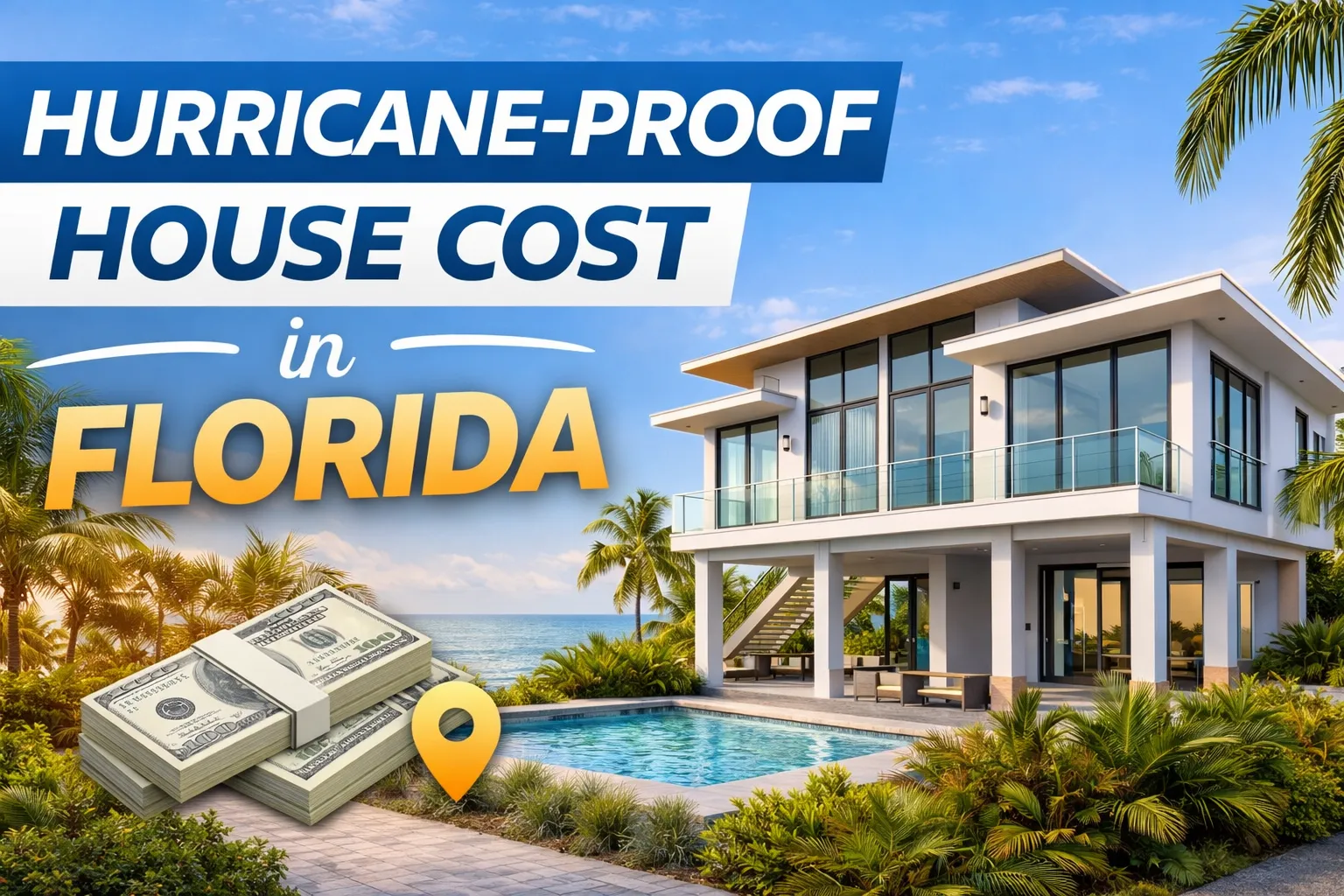
Hurricane-Proof House Cost in Florida


Why Hurricane-Proof Homes Are in High Demand in 2026

If you’ve been following recent hurricane seasons, you already know one thing—storms are getting stronger, and the damage is getting more expensive. I’ve personally seen homeowners go through this cycle again and again. A storm hits, repairs cost a fortune, insurance premiums jump, and the stress keeps building every year. It’s not just about property anymore—it’s about security and peace of mind.

That’s exactly why more people in Florida are now asking a very practical question: how much does it cost to build a home that can actually survive a hurricane?

In 2026, hurricane-proof homes are no longer a niche idea. They’re quickly becoming the standard for smart homeowners.

What Does “Hurricane-Proof” Really Mean?

Before talking about cost, it’s important to understand what you’re paying for.

A hurricane-proof home isn’t just a stronger version of a regular house. It’s designed from the ground up to handle extreme conditions.

These homes are typically built to withstand wind speeds of 150 to 185+ mph, resist flying debris, prevent water intrusion, and remain structurally stable even under intense pressure. Most of them use steel framing, reinforced concrete, impact-resistant windows, and specially engineered roofing systems.

In simple terms, it’s not just about surviving a storm—it’s about staying functional after it.

2026 Cost Breakdown of Hurricane-Proof Homes

Average Cost Per Square Foot in Florida

In 2026, pricing has slightly increased due to rising material and labor costs. Based on current trends, here’s what most buyers are paying. Basic hurricane-resistant homes usually cost between $250 and $350 per square foot. These homes meet building codes but may not include premium upgrades. Mid-range homes, which include steel framing, better finishes, and stronger structural systems, typically range from $350 to $450 per square foot.

High-end homes designed for maximum protection, often rated for Category 5 hurricanes, can cost $450 to $500 or more per square foot. So if you’re planning a 1,500 square foot home, your budget will likely fall somewhere between $375,000 and $675,000. A larger 2,000 square foot home can easily reach $500,000 to $900,000, depending on customization.

Real Examples from Florida Home Models

Looking at real-world examples makes things much clearer. Smaller homes around 1,400 square feet can start just above $400,000. Mid-sized homes with three bedrooms and upgraded finishes usually range between $440,000 and $460,000. Larger homes with more space and premium features can reach $600,000 or even go beyond $700,000.

These homes are typically turnkey, meaning everything from structure to finishes and appliances is included.

What Actually Increases the Cost?

A lot of people assume the price is higher just because of branding or design, but that’s not the case. The real difference comes from engineering and materials.

Steel framing is one of the biggest cost factors. Unlike wood, steel doesn’t rot, warp, or get damaged by termites. It also provides flexibility under pressure, which helps the structure survive strong winds.

Concrete is another major component. Reinforced concrete walls create a solid barrier against both wind and debris, adding an extra layer of safety.

Elevation also plays a critical role. In flood-prone areas, homes are built above ground level to protect against storm surge. This adds to construction costs but significantly reduces future damage risk.

Then there are impact-resistant windows and reinforced roofs. These aren’t optional in hurricane-proof homes—they’re essential. They prevent structural failure and protect the interior during extreme weather.

The Hidden Costs You Avoid (This Matters More Than You Think)

Most homeowners focus only on the upfront cost, but the real story is in what you avoid later.

Traditional homes often come with repeated repair costs after storms. Even minor damage can cost thousands, and major storms can lead to six-figure repairs. On top of that, insurance premiums for standard homes in Florida are rising every year.

With hurricane-proof homes, the situation is very different. Insurance companies often offer lower premiums because the risk is lower. Maintenance costs are also reduced because materials like steel and concrete last longer and require less upkeep.

Energy efficiency is another hidden advantage. Many modern hurricane-resistant homes are designed to stay cooler, reducing electricity bills. If solar panels are included, monthly energy costs can drop dramatically.

Over time, these savings can easily offset the higher initial investment.

Is It Worth the Cost in 2026?

Let’s be honest—this is the question that really matters.

Yes, hurricane-proof homes cost more upfront. There’s no way around that. But when you compare that cost to the potential losses from storm damage, the decision becomes much clearer.

A home is more than just a financial asset. It’s where your family lives, where you feel safe, and where you build your life. In a place like Florida, where hurricanes are a real and recurring threat, investing in a stronger home isn’t just smart—it’s responsible.

Smart Ways to Reduce Your Budget Without Compromising Safety

If you’re worried about cost, there are still ways to make it manageable.

Starting with a smaller home is one of the best strategies. A well-designed 1,400 to 1,600 square foot home can provide everything you need while keeping costs under control. Planning your budget early also helps avoid overspending. Many people make the mistake of designing their dream home first and worrying about cost later, which often leads to frustration.

Choosing the right materials matters as well. Steel-frame homes, while slightly more expensive upfront, offer better long-term value due to lower maintenance and longer lifespan. Adding solar systems can also reduce monthly expenses, making the home more affordable over time.

Final Cost Overview for 2026

In 2026, a realistic starting budget for a hurricane-proof home in Florida is around $400,000. Most mid-range homes fall between $450,000 and $600,000, while larger or luxury homes can exceed $750,000. For many buyers, the most practical range sits between $420,000 and $550,000, where cost, safety, and value are well balanced.

Ready to Build a Hurricane-Proof Home?

If you’re planning to build a storm-resistant home in Florida and want expert guidance, you can connect directly:

Phone: 786-610-6398
Email: info@FloridaSteelHomes.com
Address: 16104 4th St E, Redington Beach, FL 33708

About Del Malam

Picture of Del Malam

Del Malam

Experience

Del Malam co-founded Florida Steel Homes after personally losing his home to hurricane flooding. His firsthand experience navigating the rebuilding process, dealing with government red tape, and collaborating with Florida contractors has shaped his mission to help others build hurricane-resilient homes. His family-run company has over 20 years of construction experience, with a strong focus on storm-resistant building methods.

Expertise

Del Malam – Facebook
Co-founder of Florida Steel Homes – Specializing in steel-frame construction, hurricane-proof home design, and residential project management. Del & his team have 20+ years working with licensed Florida contractors and builders.

Authoritativeness

Featured in Florida community publications for hurricane recovery support.
Speaker at local home safety events and hurricane-preparedness expos. Recognized for leadership in resilient homebuilding practices across coastal Florida communities.

Trustworthiness

About Us
Family-owned.  Extensive experience working Licensed Florida Builders who have transparent practices.