Hurricane-proof homes are specially engineered houses built to withstand extreme winds, flying debris, flooding, and storm surge. For Florida homeowners and coastal buyers, they offer unmatched safety, lower insurance costs, and long-term peace of mind. Steel-frame structures, impact-resistant windows, elevated foundations, and reinforced roofing systems are key features that help these homes survive major hurricanes, while conventional houses often fail.
Hurricane Proof homes in Florida
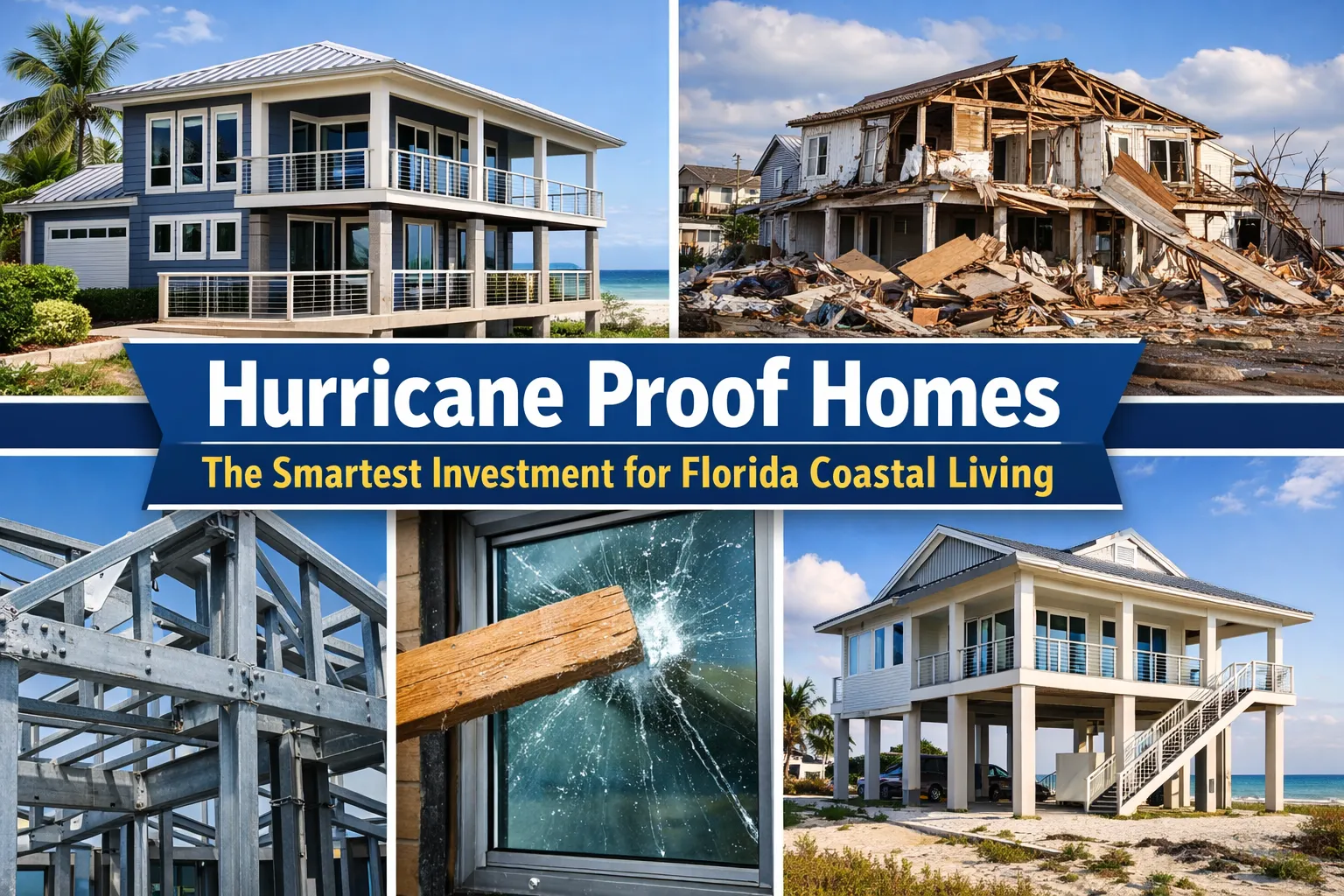
Why Hurricane-Proof Homes Matter in Florida
If you live in Florida, hurricanes aren’t rare events — they’re part of life. Every storm season, homeowners watch the news and see the same heartbreaking scenes: roofs torn off, walls collapsed, entire neighborhoods flooded. And naturally, one question keeps coming up:
Why do some homes survive while others are destroyed?
In most cases, the answer is construction quality and materials. Traditional wood-frame homes, which make up the majority of coastal housing, were never designed for Category 4 or 5 hurricane forces. When exposed to 150+ mph winds and debris impact, they simply can’t hold together. Hurricane-proof homes are different. They’re engineered from the ground up for extreme weather survival.
What Is a Hurricane-Proof Home?
A hurricane-proof home (also called a hurricane-resistant or storm-resistant home) is a structure specifically designed to withstand:
Extreme hurricane-force winds
Flying debris impact
Heavy rainfall intrusion
Storm surge flooding
Roof uplift pressure
Structural shifting
These homes don’t just meet building codes — they exceed them.
In coastal regions like Florida, modern hurricane-resistant construction often follows standards similar to High-Velocity Hurricane Zones (HVHZ), ensuring maximum structural integrity.
Key Features of Hurricane-Proof Homes
1. Steel Structural Frame
The most important difference between hurricane-proof and conventional homes is the structural skeleton. Wood framing can warp, crack, or snap under extreme wind loads.
Steel framing, however:
Resists bending and breaking
Maintains structural integrity
Handles higher wind loads
Does not rot or weaken from moisture
This makes steel-frame homes dramatically stronger during hurricanes.
2. Impact-Resistant Windows and Doors
Standard glass windows are one of the first failure points in hurricanes.
Once a window breaks:
Wind enters the home
Internal pressure rises
Roof uplift increases
Structural failure begins
Impact-rated hurricane windows prevent this chain reaction.
They are tested against flying debris traveling at hurricane speeds.
3. Reinforced Roofing System
Roof failure is the most common cause of total home destruction during hurricanes. Hurricane-proof homes use:
Reinforced roof decking
Hurricane straps & clips
Steel or concrete roof structures
Wind-rated roofing materials
These systems keep the roof anchored to the walls even under extreme uplift forces.
4. Elevated and Flood-Resistant Foundations
Coastal flooding and storm surge are as dangerous as wind. Hurricane-resistant homes often include:
Elevated foundations
Pile or pier systems
Flood-resistant base materials
Proper drainage design
This prevents structural damage from rising water levels.
5. Continuous Load Path Engineering
One of the most advanced hurricane-resistant design principles is the continuous load path. This means every part of the home — roof, walls, floors, and foundation — is physically connected and reinforced to transfer wind forces safely into the ground. Without this, homes fail at weak connection points.
Why Conventional Homes Fail in Hurricanes
Many Florida homes were built before modern hurricane standards or using cost-focused materials.
Common failure reasons include:
Weak roof-to-wall connections
Wood frame structural limits
Non-impact windows
Poor uplift resistance
Low elevation in flood zones
Aging construction materials
When hurricane forces exceed these limits, collapse becomes likely.
Benefits of Hurricane-Proof Homes for Florida Buyers
For coastal homeowners and property investors, hurricane-resistant homes offer major advantages beyond safety.
Safety and Peace of Mind
The biggest benefit is obvious: protection for your family. Knowing your home can withstand major storms changes how you experience hurricane season.
Lower Insurance Costs
Insurance companies recognize risk reduction.
Hurricane-resistant construction often qualifies for:
Wind mitigation discounts
Lower premiums
Better coverage availability
Reduced deductibles
Over time, savings can be substantial.
Higher Property Value
Storm-resistant homes are increasingly desirable in Florida’s coastal market.
Buyers prioritize:
Safety
Insurance savings
Long-term durability
Disaster resilience
This increases resale appeal and value.
Reduced Maintenance and Repairs
Stronger materials mean fewer problems:
No wood rot
Less structural shifting
Better moisture resistance
Longer lifespan components
Maintenance costs drop significantly over the decades.
Are Hurricane-Proof Homes Worth the Cost?
Many buyers initially assume hurricane-resistant homes are much more expensive.
In reality:
Insurance savings offset the cost
Repair avoidance saves thousands
Property value increases
Lifespan is longer
When viewed long-term, hurricane-proof construction is often financially smarter than conventional building in coastal zones.
Hurricane-Resistant Construction in Florida
Florida has some of the strictest hurricane building standards in the U.S., especially in coastal counties.
Modern hurricane-resistant homes in Florida typically follow:
Wind-load engineering standards
Impact opening protection
Elevated flood design
Reinforced structural systems
Coastal exposure requirements
Homes built to these standards dramatically outperform older structures during storms.
Choosing the Right Hurricane-Proof Home Builder
Not all builders specialize in storm-resistant construction.
When evaluating a builder, Florida homeowners should look for:
Steel or reinforced structural systems
Hurricane engineering expertise
Coastal construction experience
Wind-resistant certifications
Proven hurricane-zone projects
Experience in Florida coastal conditions is critical.
Hurricane-Proof Homes in Redington Beach and Coastal Florida
For homeowners in Redington Beach and surrounding coastal communities, hurricane resilience is not optional — it’s essential.
Storm surge, coastal winds, and salt exposure create some of the toughest building conditions in the country.
Specialized hurricane-resistant construction ensures homes remain safe and structurally sound even in severe weather.
Florida Steel Homes — Hurricane-Resistant Living Experts
If you’re planning to build or buy a hurricane-proof home in Florida, working with a specialized builder makes all the difference.
Florida Steel Homes focuses on hurricane-resistant residential construction designed specifically for coastal environments.
Contact Information
Florida Steel Homes
16104 4th St E, Redington Beach, FL 33708
Phone: 786-610-6398
Email: info@FloridaSteelHomes.com
Their steel-frame hurricane-resistant homes are engineered for maximum wind resistance, structural durability, and long-term coastal performance.
Final Thoughts: Building for the Reality of Florida Living
Hurricanes are not going away. But catastrophic home loss doesn’t have to be inevitable. The difference between destruction and survival often comes down to how a home is built. For Florida homeowners and coastal buyers, hurricane-proof homes represent the safest, smartest, and most future-ready investment in coastal living.