Miami’s hurricane season is no joke — and wood-frame homes simply weren’t built to survive it. This article breaks down what makes a home truly hurricane-proof, why steel and concrete construction is the gold standard in South Florida, and what real buyers are experiencing when they make the switch. Whether you’re building new or researching options, this guide covers everything you need to know.
Miami is one of the most beautiful cities in the world. The ocean breeze, the vibrant culture, the year-round sunshine — it’s no wonder people from across the country dream of calling it home.
But there’s a side of Miami that no one puts on a postcard. And if you’ve lived here through even one serious hurricane season, you know exactly what we’re talking about. The question isn’t if a storm will hit. It’s when and whether your home will still be standing afterward.
Hurricane Proof Homes in Miami
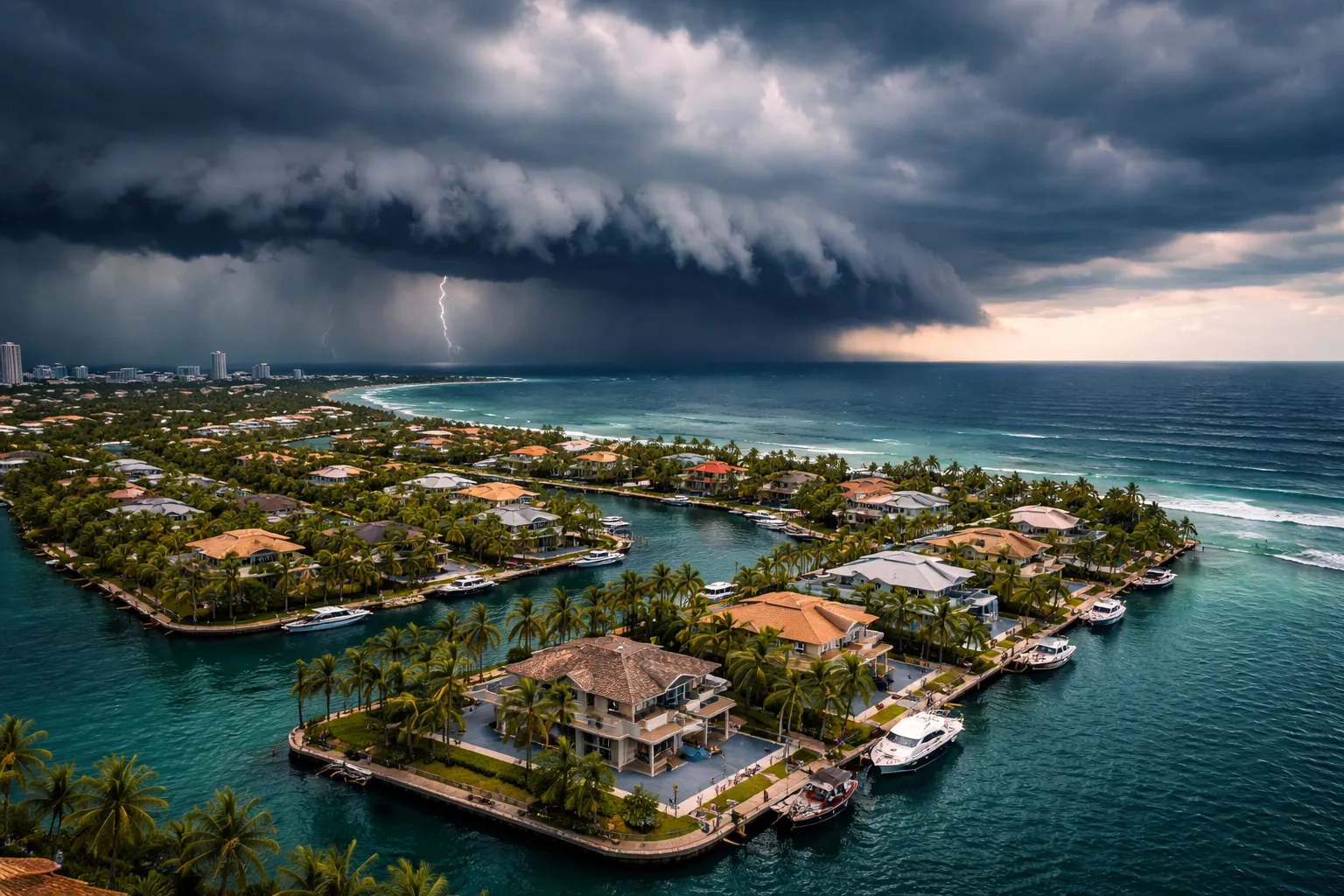
What Exactly Is a Hurricane Proof Home?
Let’s be honest — no home is 100% immune to every force nature can throw at it. But a hurricane-proof home, or more accurately a hurricane-resistant home, is engineered to survive the worst that South Florida’s hurricane season can deliver.
The engineering standards behind the label
A genuine hurricane-grade home is designed to withstand sustained wind speeds exceeding 150 mph. That’s the kind of force that can peel a traditional roof off like a tin can. These homes are also built to resist projectile impacts — because during a Category 4, that piece of lumber flying through your neighborhood becomes a missile.
In Miami-Dade County specifically, building codes are among the strictest in the country — largely because of the lessons learned from Hurricane Andrew in 1992, which caused over $27 billion in damage and reshaped the region forever.
Why wood-frame construction falls short in Miami
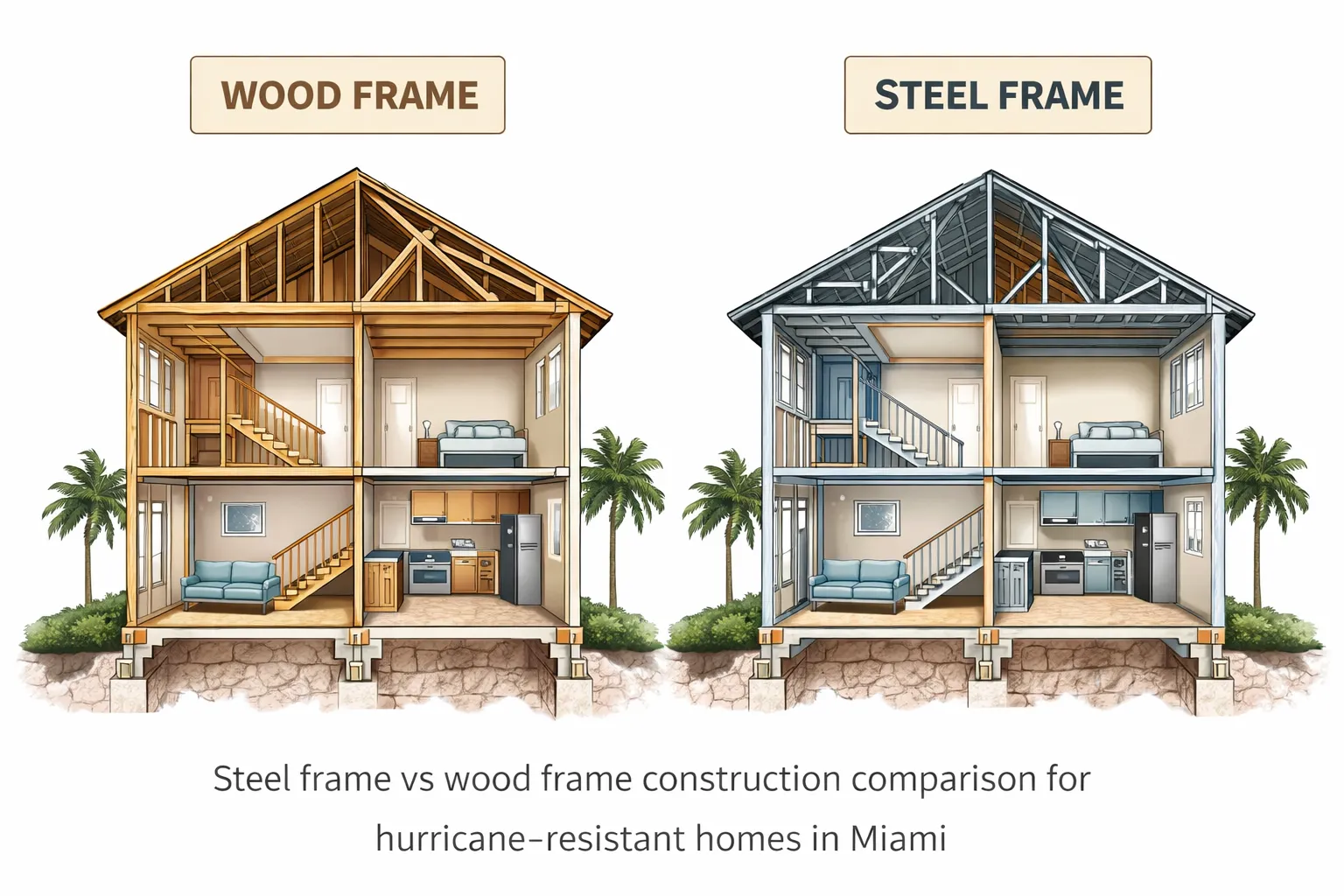
Most American homes are built from wood. It’s cheap, it’s fast to work with, and builders have used it for over a century. But wood has a critical flaw — it’s vulnerable to moisture, rot, termites, and most importantly, wind.
When a hurricane makes landfall, wood-frame structures flex, shift, and can fail catastrophically if any single structural connection gives way. One broken bolt becomes a chain reaction.
Steel and concrete don’t work that way.
What sets steel and concrete homes apart
Steel has an exceptional strength-to-weight ratio. It can flex under extreme pressure and return to its original shape — much like a tall building sways in the wind without falling. Steel doesn’t rot, it doesn’t warp, and termites have no interest in it.
Concrete, on the other hand, is dense and monolithic. Reinforced concrete walls create a near-impenetrable barrier against wind-driven debris. Pair that with impact-resistant windows and a properly engineered roof system, and you have a home that’s genuinely built to last.
Why Miami Is Ground Zero for Hurricane-Proof Construction
The geography problem no one can fix
Miami sits at the southern tip of Florida, surrounded by warm Atlantic waters on one side and the Gulf of Mexico on the other. This geography makes it a natural target for tropical storms forming in the Caribbean and the Atlantic basin. Warm ocean water is essentially fuel for hurricanes. And Miami’s water is reliably warm.
The flood zone reality
A huge portion of Miami-Dade County falls within FEMA-designated flood zones. If you’re building or buying a home in a coastal area, flood risk isn’t a theoretical concern — it’s a daily reality that affects your insurance premiums, your resale value, and your family’s safety.
Hurricane-resistant construction addresses both wind and water intrusion, because in a major storm, it’s often the combination that causes the most damage.
Insurance costs that are getting out of hand
Florida’s home insurance market has been in crisis mode for years. Carriers have been pulling out of the state, and premiums have skyrocketed for homes that don’t meet modern hurricane-resistant standards.
Here’s the flip side: homes built with impact-rated materials and reinforced construction often qualify for significantly lower insurance rates. In some cases, the savings on annual premiums help offset the initial cost of building stronger.
Steel Homes vs Concrete Homes: Which Is Right for You?
Both materials offer superior hurricane protection compared to traditional wood-frame construction. But they’re not identical — and the right choice depends on your priorities, your lot, and your budget.
| Feature | Steel Frame Home | Concrete Home | Wood Frame Home |
|---|---|---|---|
| Wind resistance (150+ mph) | Yes | Yes | No |
| Termite-proof | Yes | Yes | No |
| Fire resistance | Yes | Yes | No |
| Design flexibility | High | Moderate | High |
| Energy efficiency | High | Very High | Moderate |
| Mold/rot resistance | Yes | Yes | No |
| Build speed | Fast | Moderate | Fast |
| Insurance savings potential | Significant | Significant | Minimal |
At Florida Steel Homes, the approach combines the best of both — steel framing integrated with concrete elements to create a structure that exceeds Florida Building Code requirements on every dimension.
Why Buyers Are Genuinely Excited About Hurricane-Proof Homes
“The first time a major storm passed through after we moved in, we slept through it. Not because we were reckless — because we finally felt safe.”
That’s the emotional reality for homeowners who make the switch to hurricane-resistant construction. It changes your relationship with storm season entirely.
Peace of mind is worth more than you think
Ask anyone who’s gone through a serious hurricane in a traditional home. The weeks of anxiety leading up to landfall. The plywood over the windows. Wondering whether to evacuate or stay. Checking weather apps every hour at 2 AM.
None of that fully goes away — but it changes. When your home is built to withstand 150+ mph winds with impact-rated windows and a reinforced roof system, your decisions during storm season come from preparation, not panic.
Long-term financial protection
Hurricane damage to traditional homes can run into the hundreds of thousands of dollars — and that’s when insurance actually pays out. Deductibles are high. Claims take time. And the disruption to your family’s life is incalculable.
A well-built hurricane-resistant home dramatically reduces that financial exposure. Add the potential savings on insurance premiums and energy bills, and the math starts to look very different from what it first appears.
Energy efficiency that Miami homeowners actually notice
Concrete’s natural thermal mass keeps indoor temperatures stable even when Florida’s summer heat is brutal. Steel-framed homes with proper insulation perform similarly well.
Some Florida Steel Homes buyers report electricity bills under $100 per month — a remarkable figure in a state where air conditioning runs nearly year-round.
What Does a Hurricane-Proof Home in Miami Actually Cost?
The real price conversation
Hurricane-resistant construction does cost more upfront than a standard wood-frame building. That’s honest and straightforward. The materials are stronger, the engineering is more rigorous, and the build process takes more expertise.
Florida Steel Homes offers turnkey homes starting around $419,000 — that includes premium finishes, all appliances, and optional solar. For a 2-bed, 2-bath home in a hurricane-prone coastal market, that price point includes protection and quality that a comparable wood-frame home simply can’t match.
The 12-month build promise
One of the frustrations Miami buyers face is construction timelines that stretch on indefinitely. Florida Steel Homes commits to a 12-month delivery — fully turnkey, with crystal-clear pricing and no hidden surprises baked in at the end.
For a family planning a move or a buyer managing a budget, that predictability matters enormously.
Financing and the total cost picture
When comparing sticker prices, it’s important to factor in what’s not in a traditional home’s price tag: higher insurance costs year after year, the risk of storm damage deductibles, termite treatments, rot repairs, and the inevitable renovation after a major weather event.
Over a 20-year horizon, the gap between a hurricane-resistant home and a traditional wood-frame build often narrows significantly — and in high-risk zones, it can actually reverse.
The Most Common Questions Miami Buyers Ask
Can a steel home actually withstand a Category 5 hurricane?
Steel and concrete construction, properly engineered and built to current Florida Building Code standards, is designed to resist the wind speeds associated with major hurricanes. No structure carries a guarantee against every possible weather event, but the engineering gap between a hurricane-resistant home and a standard wood-frame build is substantial and well-documented.
Do hurricane-proof homes look different from regular houses?
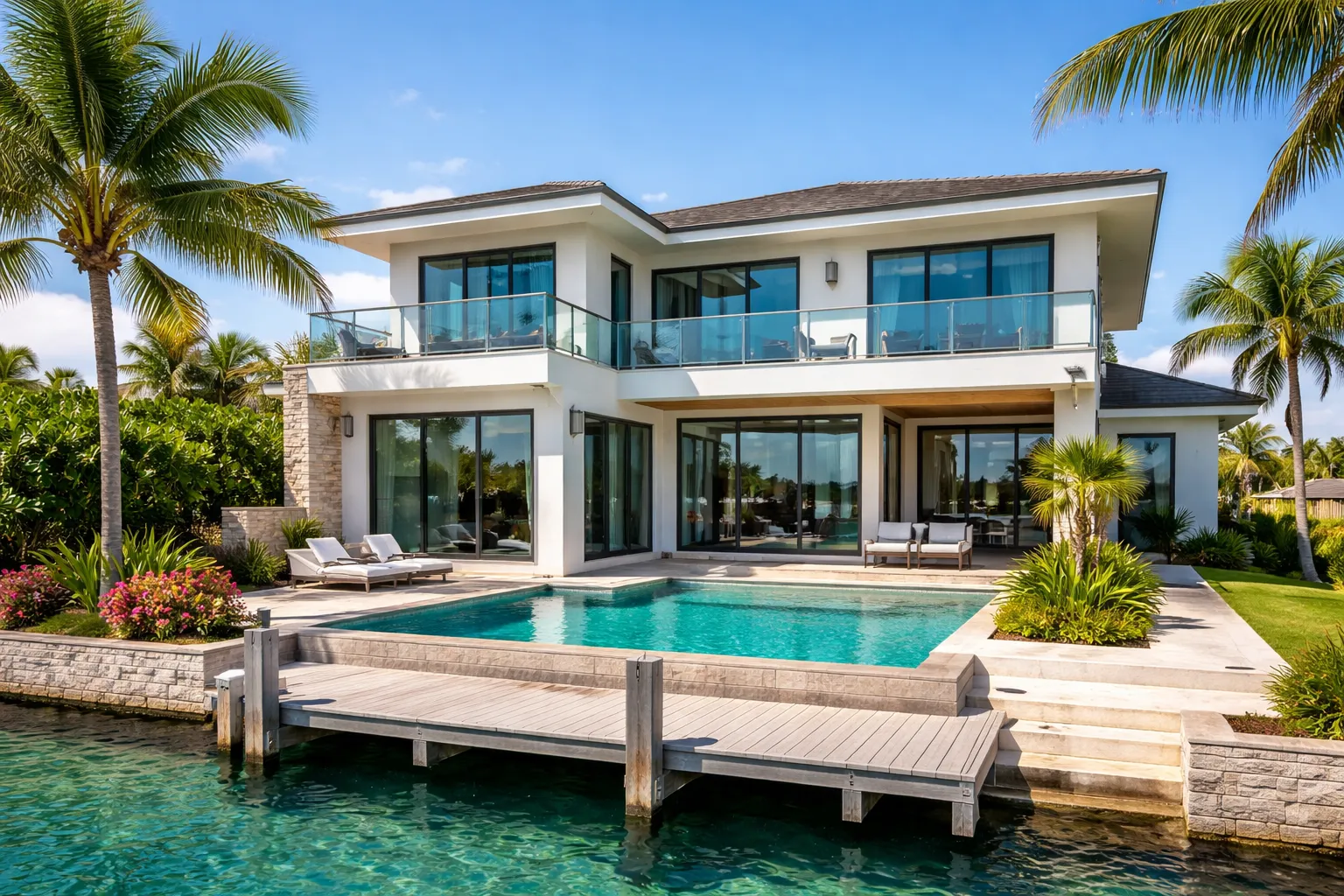
Not at all — and this surprises a lot of buyers. The exterior finishes, layouts, and aesthetics of hurricane-resistant homes can be just as varied and beautiful as any other construction style. The strength is in the structure, not the surface. Models like the Sunrise (2,000 sq ft, 3 bed/3 bath) or the Oceancrest (2,500 sq ft, 4 bed/4 bath) look like premium coastal homes — because that’s exactly what they are.
What about flood protection specifically?
Hurricane-resistant construction addresses both wind and water. Proper foundation design, elevated construction where code requires it, and water-resistant materials all play a role. Buyers in flood zones should also check FEMA’s flood zone maps as part of their planning — Florida Steel Homes provides resources and guidance on this as part of the building process.
How to Get Started Building a Hurricane-Proof Home in Miami
Step 1: Know your zone
Before anything else, check your flood zone designation through FEMA’s interactive maps. This determines what building requirements apply to your lot and gives you a clear picture of your risk profile.
Step 2: Understand your lot and local codes
Miami-Dade County has some of the strictest building codes in the country. A builder experienced with Florida’s coastal construction requirements — like Florida Steel Homes — navigates this on your behalf, so you’re not caught off guard by permits, setbacks, or wind load requirements.
Step 3: Choose your model and lock in your price
From the compact Lighthouse (1,412 sq ft) to the spacious Oceancrest (2,500 sq ft), there are models designed for different family sizes, lot configurations, and budgets. Pricing is transparent from the start — no mystery quotes that balloon once construction begins.
Ready to Build a Home That Actually Protects Your Family?
Explore hurricane-resistant home models, get transparent pricing, and talk to a team that builds for Florida’s real conditions — not the national average.
Explore at FloridaSteelHomes.com →
📞 (786) 610-6398 · Redington Beach, FL