Hurricane Proof Homes are no longer just luxury coastal properties. In Florida, more families are choosing elevated foundations, reinforced concrete walls, impact windows, and solar backup systems to protect their homes from storms and rising insurance costs. This guide explains how these homes work, what features actually matter, and why Florida Steel Homes is becoming a serious option for storm-resistant living.
Hurricane Proof Homes in Florida
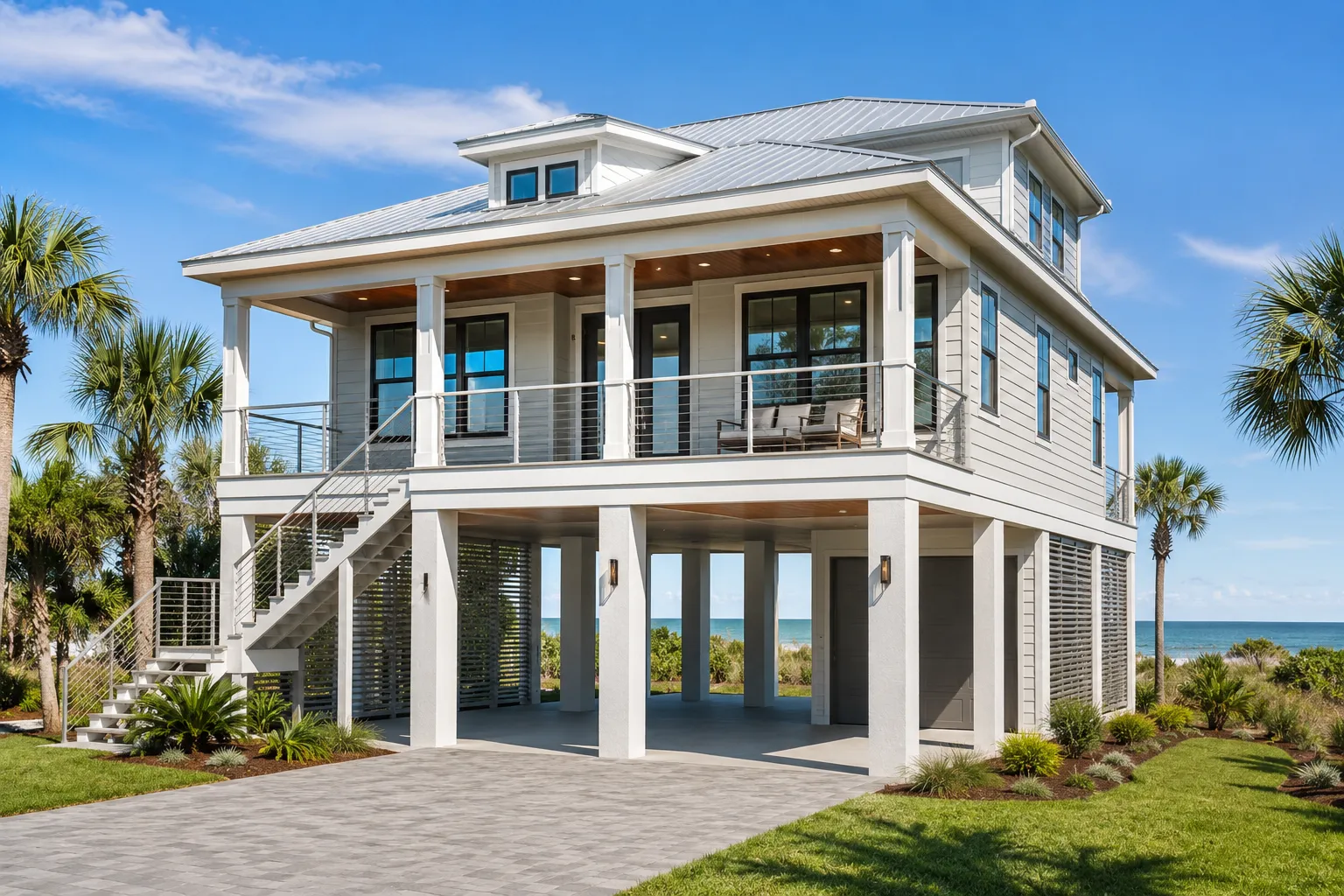
The moment a hurricane warning appears on TV, most Florida homeowners think about the same thing: “Will my house survive this one?”
That fear is real. After storms like Ian, Helene, and Milton, thousands of families discovered that standard construction simply wasn’t enough anymore. Flooded living rooms, torn roofs, weeks without electricity — people across Florida are rethinking what a safe home should look like in 2026.
That’s exactly why interest in Hurricane Proof Homes has exploded across coastal Florida. Buyers are no longer focused only on appearance or square footage. They want homes designed to resist wind damage, storm surge, flooding, and long power outages.
And honestly, after seeing entire neighborhoods destroyed while a few specially built homes remained standing, it’s hard to blame them.
What Makes a Home Hurricane Resistant?
A true hurricane-resistant home is not built around one “magic feature.” It’s the combination of smart engineering, durable materials, and flood-aware design that creates real protection.
Reinforced structural systems matter most.
Many Florida homes still rely heavily on wood framing. While modern wood homes can meet code requirements, steel-framed and reinforced concrete structures often perform better during extreme wind events.
Homes designed with:
- Reinforced steel framing
- Concrete walls
- Roof tie-down systems
- Impact-resistant windows
- Elevated foundations
usually experience far less structural failure during Category 4 and 5 hurricanes.
One thing many articles miss? Roof failure is often where the real destruction begins. Once wind enters the structure, pressure builds fast inside the house.
Impact Windows Are No Longer Optional
In many parts of coastal Florida, impact-rated windows have become essential rather than optional upgrades.
Good impact windows:
- Reduce wind penetration
- Protect against flying debris
- Lower insurance risks
- Improve energy efficiency
Some homeowners still rely on shutters alone, but after recent storms, many buyers prefer permanent protection built directly into the home.
Flooding Causes More Damage Than Wind
This surprises people every year.
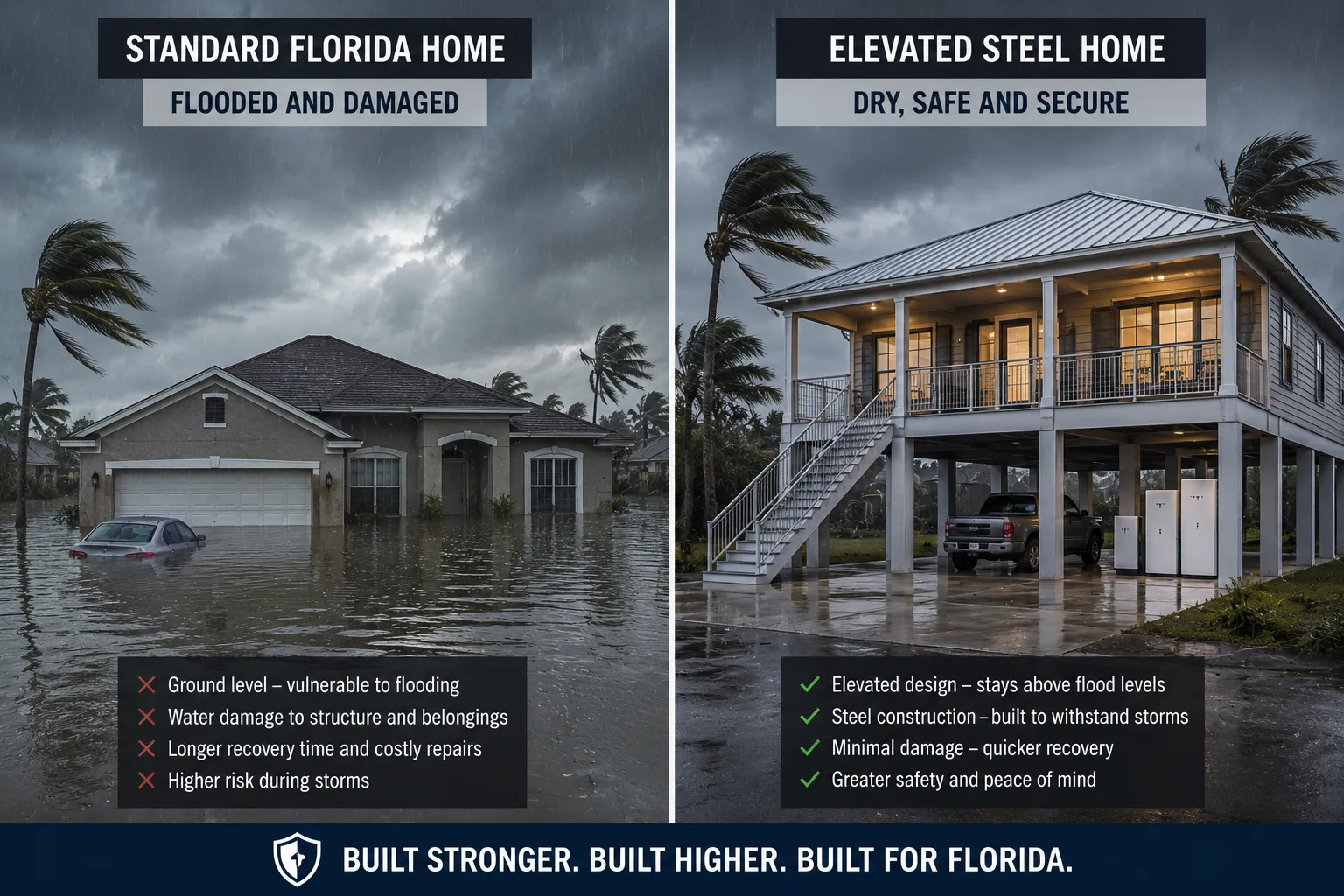
A house may survive hurricane winds perfectly but still become unlivable because of floodwater. That’s why elevated foundations are becoming one of the biggest trends in Florida construction.
Step-by-Step: How to Choose the Right Hurricane-Proof Home
Buying or building one of these homes can feel overwhelming at first. Here’s the process experienced Florida buyers usually follow.
Step 1: Check Flood Zone Maps First
Before looking at floor plans or finishes, check FEMA flood zone maps.
A beautiful coastal property may carry the following:
- Higher flood risks
- Expensive insurance
- Stricter building requirements
This single step can save tens of thousands of dollars later.
External Reference: FEMA Flood Map Service Center
Step 2: Focus on Roof Design
Simple roof shapes often survive hurricanes better than complicated architectural roofs.
Hip roofs usually perform better because wind flows around them more smoothly compared to large flat surfaces or steep gables.
This is one reason many modern Florida Steel Homes use cleaner roof geometry instead of decorative complexity.
Step 3: Choose Elevated Construction When Possible
Homes built on:
- Stilts
- Pilings
- Raised foundations
Typically, elevated homes handle storm surge far better than slab-on-grade construction near the coast.
Communities in Florida that survived recent hurricanes successfully often shared one thing in common: elevation.
Step 4: Ask About Backup Power Systems
One underrated feature in modern hurricane-proof homes is energy independence.
Solar systems with battery storage can
- Keep refrigerators running
- Power medical equipment
- Maintain internet access
- Reduce evacuation stress
After Hurricane Ian, many Florida residents realized that surviving the storm was only half the battle. Living without power for days or weeks became the bigger issue.
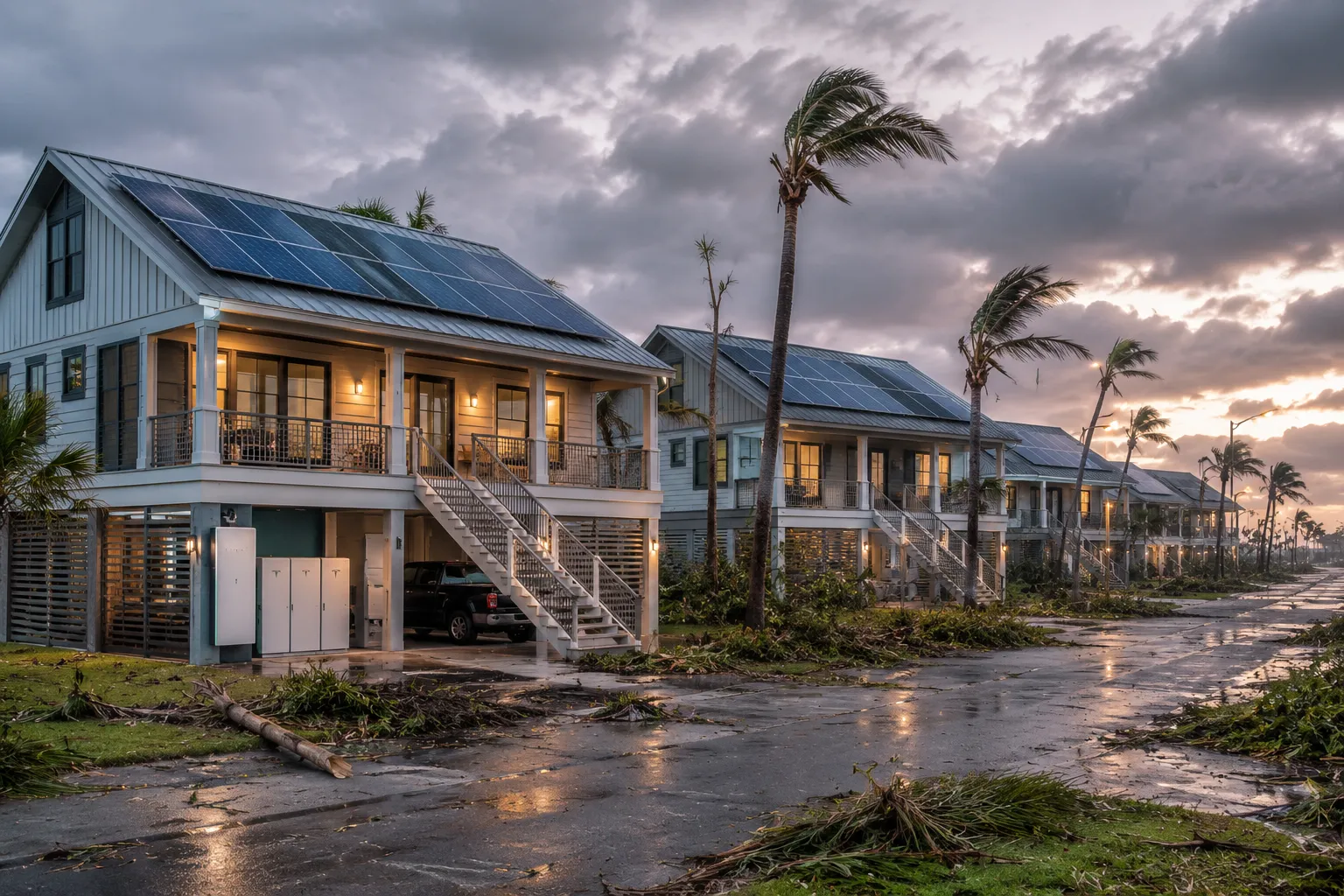
Why Elevated Homes Perform Better in Florida
Florida’s biggest threat is often water, not just wind.
That’s why elevated homes are becoming increasingly popular across Gulf Coast communities.
Water Needs Somewhere To Go
When homes are raised:
- Floodwater passes underneath
- Living areas stay dry
- Structural damage decreases
- Mold risks drop significantly
This design has been used successfully for decades in coastal regions vulnerable to storm surge.
Insurance Costs Can Improve
Many homeowners are shocked by rising insurance premiums in Florida.
But elevated hurricane-resistant homes may qualify for the following:
- Better flood insurance rates
- Wind mitigation discounts
- Lower long-term repair costs
The upfront investment can feel high initially, but long-term savings often balance things out.
Steel vs Traditional Wood Construction
This debate has become much bigger after the recent hurricanes.
| Feature | Steel Homes | Traditional Wood Homes |
|---|---|---|
| Wind Resistance | Excellent | Moderate |
| Moisture Damage | Very Low | Higher Risk |
| Termite Resistance | Excellent | Vulnerable |
| Long-Term Durability | High | Moderate |
| Maintenance | Lower | Higher |
Florida Steel Homes are gaining attention because steel framing resists warping, termites, and moisture better than traditional lumber.
That doesn’t mean wood homes are automatically unsafe. But buyers in hurricane-prone regions are increasingly prioritizing structural strength over older building methods.
Features Most Florida Buyers Forget To Check
Garage Doors
A weak garage door can fail early during a hurricane and create dangerous internal pressure.
Look for:
- Reinforced tracks
- Wind-rated doors
- Heavy-duty anchoring systems
Roof-to-Wall Connections
Metal hurricane straps are incredibly important but rarely discussed during normal home tours.
Without strong roof connections, even good roofing materials may fail.
Drainage Design Around the Property
Some neighborhoods flood simply because drainage planning was poor.
Pay attention to:
- Water flow patterns
- Retention ponds
- Elevation grading
- Stormwater systems
Cost vs Long-Term Savings
Yes, hurricane-proof homes usually cost more upfront.
But many Florida homeowners now see storm-resistant construction as a financial protection strategy rather than a luxury upgrade.
A stronger home may help reduce the following:
- Major repair costs
- Insurance claims
- Evacuation stress
- Property value declines after storms
And honestly, peace of mind matters too. That’s difficult to calculate on paper, but families who have lived through major hurricanes understand it immediately.
FAQ
What is the best material for hurricane-proof homes?
Steel and reinforced concrete are considered among the strongest materials for hurricane-resistant construction because they resist wind pressure, moisture, and structural shifting better than many traditional materials.
Are hurricane-proof homes completely storm-proof?
No home is 100% disaster-proof. However, properly engineered homes can dramatically reduce damage during major hurricanes.
Do elevated homes reduce flood risk?
Yes. Elevated homes are specifically designed to keep living spaces above floodwater levels during storm surge events.
Are hurricane-resistant homes worth it in Florida?
For many homeowners, yes. Lower repair risks, potential insurance savings, and better storm protection make them increasingly attractive in 2026.
Final Thoughts
Florida’s weather isn’t becoming gentler. Buyers know that now.
The conversation has shifted from “Does this home look nice?” to “Will this home protect my family when the next storm hits?”
That’s why modern hurricane-proof homes are no longer niche construction projects. They’re becoming part of the future of Florida housing.
Builders focusing on reinforced steel framing, elevated foundations, flood-aware engineering, and backup power systems are setting a new standard for safer coastal living.