Hurricane proof homes in FL are built with impact-resistant materials, reinforced concrete or steel frames, and code-compliant designs that can withstand Category 4 and 5 storms. Florida’s strict post-2002 building codes require specific wind resistance standards—but going beyond code is what truly protects your home. This guide covers every key design element, material choice, and structural feature you need to know.
Hurricane Proof Homes in FL
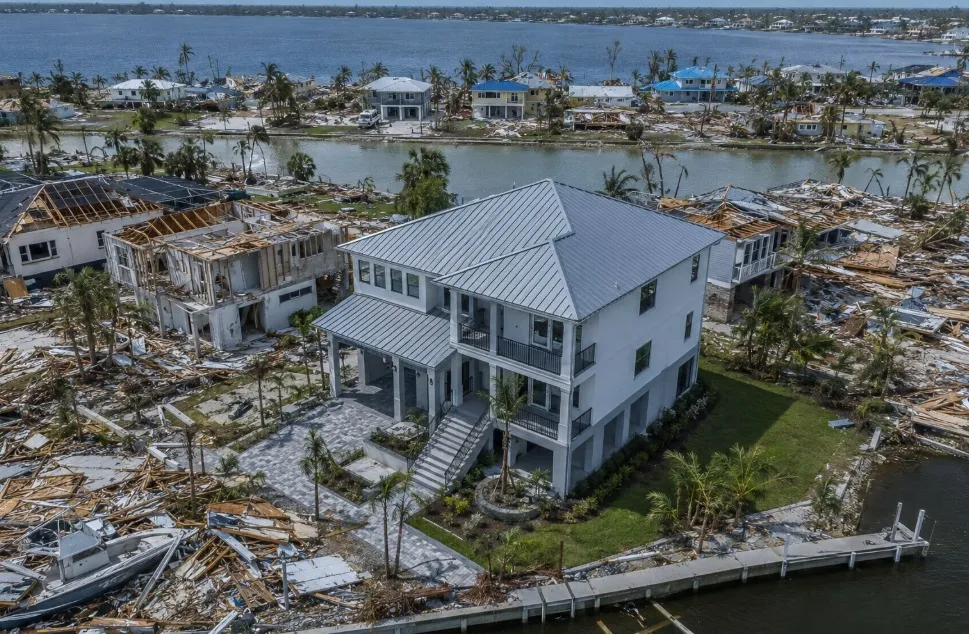
Every year, Floridians watch the same news footage—roofs torn off, windows shattered, houses reduced to rubble. If you live here, you already know the stakes. What you may not know is that hurricane proof homes in FL are far more achievable than most people think, and the gap between a home that survives and one that doesn’t often comes down to a handful of design decisions made before the first brick is laid.
This isn’t about spending a fortune on a bunker. It’s about building — or buying — smart.
Why Hurricane-Proof Homes Matter in Florida
Florida gets hit harder and more often than any other U.S. state. According to NOAA data, over 40% of all U.S. hurricane landfalls since 1851 have struck Florida. And with sea surface temperatures rising through 2025 and into 2026, storm intensity is tracking higher year over year.
The financial toll is staggering. After Hurricane Ian in 2022, insured losses exceeded $60 billion in Florida alone. Thousands of homeowners discovered their standard-built homes simply weren’t designed to survive a major storm — even with insurance, recovery took years.
Building to a hurricane-resistant standard isn’t just peace of mind. It’s a genuinely sound financial decision, especially given escalating insurance premiums across South and Central Florida right now.
Florida Building Codes: The Baseline You Must Know
Post-Andrew and Post-Irma Reforms
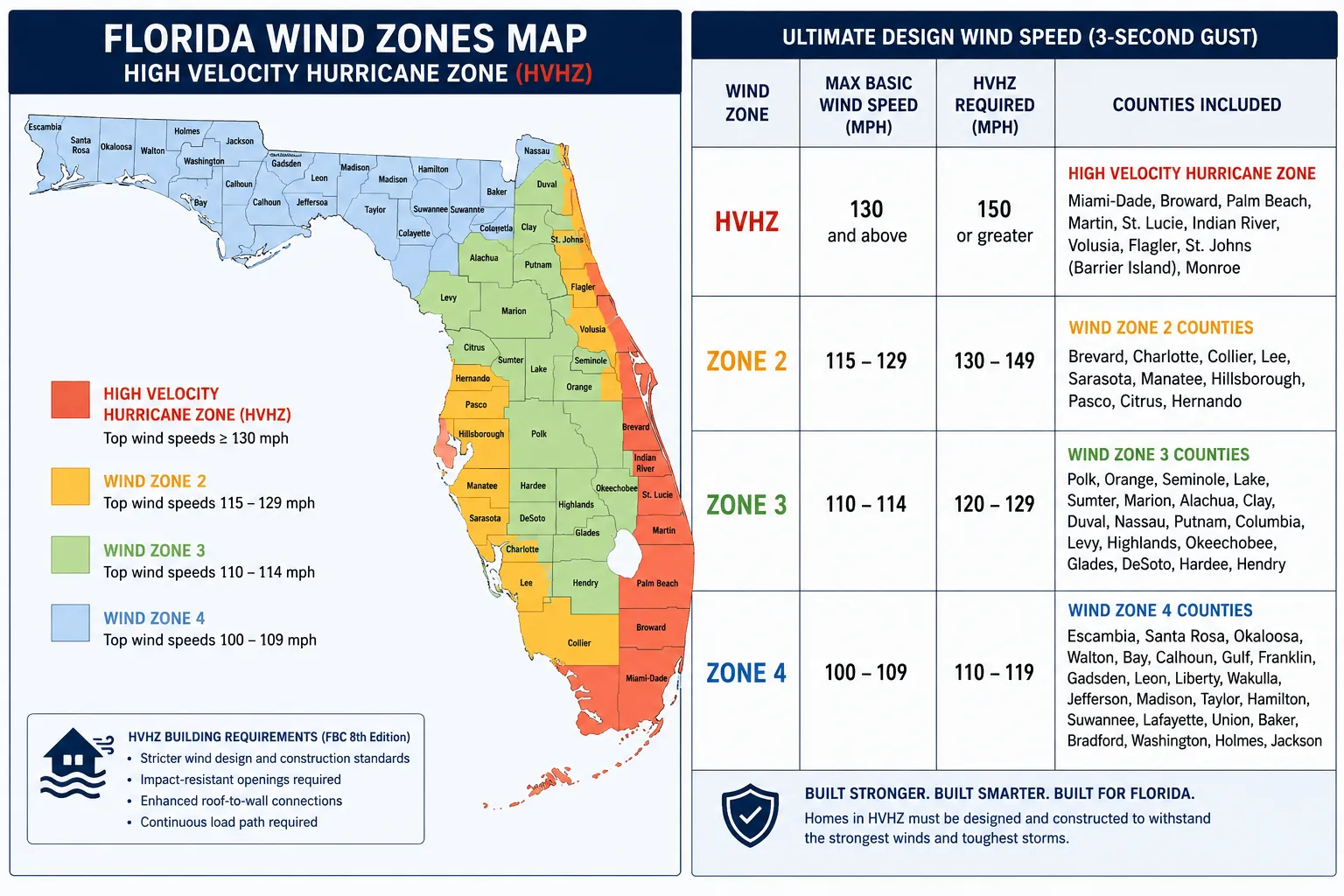
After Hurricane Andrew devastated South Florida in 1992, the state completely overhauled its building code. The Florida Building Code (FBC), updated most recently in 2023, requires homes to withstand wind speeds of 130–170+ mph depending on the coastal zone. High Velocity Hurricane Zones (HVHZ), which include Miami-Dade and Broward counties, have the strictest requirements in the country.
What “Up to Code” Really Means
Meeting the code is the minimum. In practice, homes built exactly to code perform significantly worse than those built 10–20% above code thresholds. Experienced Florida builders know this. If your contractor is only talking about code compliance and nothing beyond it, ask more questions.
Best Materials for Hurricane-Resistant Construction
Reinforced Concrete
Poured concrete with rebar reinforcement is one of the most time-tested hurricane-resistant materials available. Concrete block construction, known as CBS (Concrete Block Structure), has been the standard in South Florida for decades. It handles wind pressure well and offers excellent impact resistance when properly constructed.
Steel Frame Construction
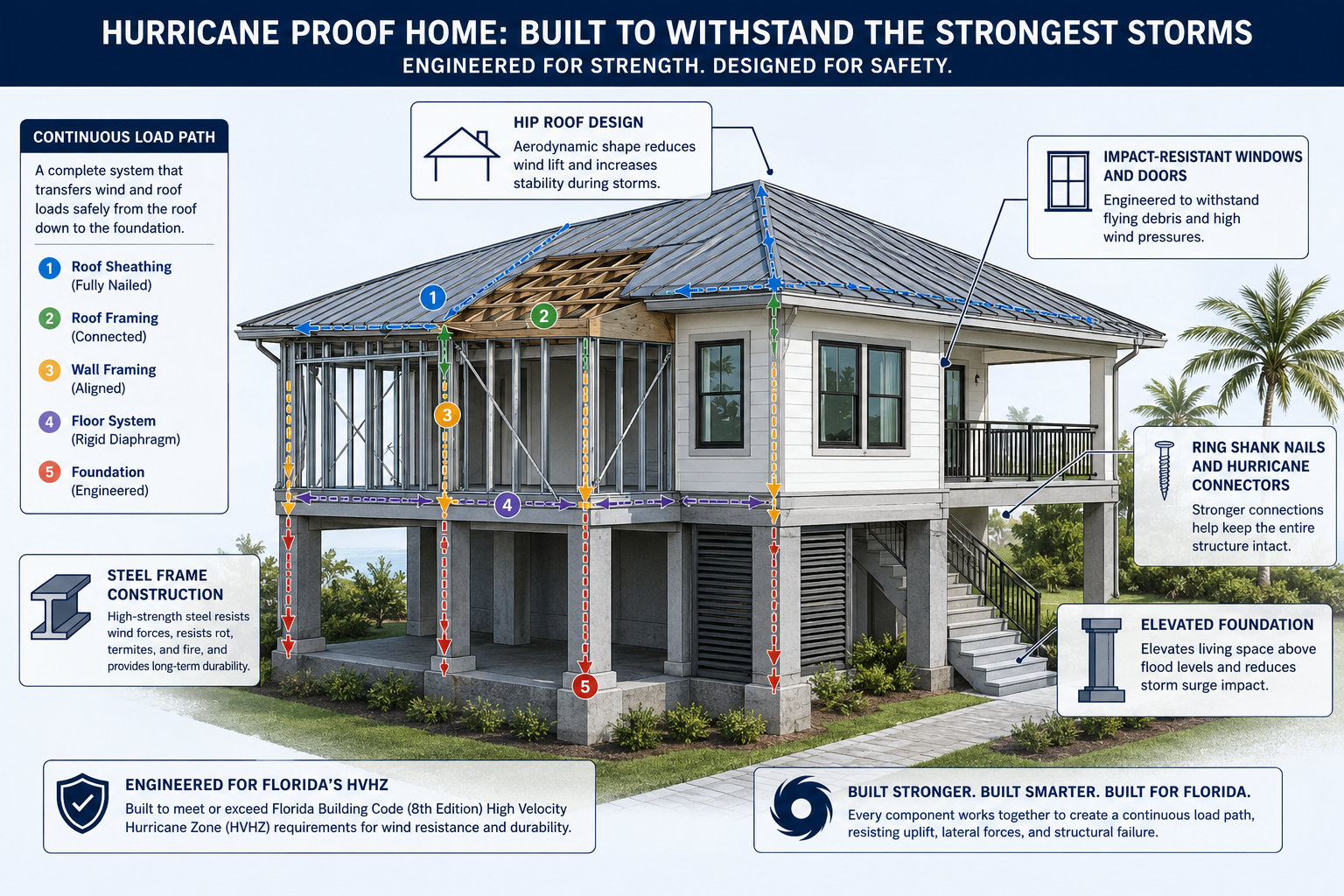
Structural steel framing is gaining significant traction in Florida’s residential market. Steel doesn’t rot, warp, or get eaten by termites (a real consideration in Florida’s humid climate). More importantly, a properly engineered steel frame can be designed to exceed wind load requirements by substantial margins. Florida Steel Homes, based in Redington Beach, specializes in exactly this type of construction—engineering homes that go far beyond what the code requires.
Impact-Resistant Windows and Doors
The envelope is everything. A home with the strongest walls in the world is compromised the moment a window fails—once pressure gets inside, the roof can lift off. Impact windows and doors rated for 200+ mph debris impact are non-negotiable for genuine hurricane protection in Florida.
Metal Roofing Systems
Standing seam metal roofs — when properly attached with hurricane straps and a continuous load path — dramatically outperform traditional asphalt shingles in high winds. The roof is the most vulnerable part of any home in a hurricane. Don’t underinvest here.
Key Structural Features of a True Hurricane-Proof Home
Continuous Load Path
This is the engineering concept most homeowners have never heard of—and it matters more than almost anything else. A continuous load path means every structural element, from the roof to the foundation, is mechanically connected so that wind forces transfer cleanly down to the ground rather than pulling the structure apart. Homes without a continuous load path fail at connection points even when individual components are strong.
Hip Roof Design
Gable roofs look beautiful on bungalows. They also catch the wind like a sail. Hip roofs — where all four sides slope down to the walls — are aerodynamically superior in hurricane conditions. If you’re building in a high-wind zone, this single design choice can make a significant difference in roof performance.
Storm Shutters vs. Impact Glass
Storm shutters are affordable and effective. Impact glass is more convenient and provides year-round protection without deployment. For permanent Florida residents, impact-rated glass is generally the better long-term investment — especially given how quickly storms can intensify and make shutter installation impossible.
Elevated Foundation
In coastal and low-lying areas of Florida, storm surge is often more destructive than wind. Homes built on elevated pilings or stem walls with proper flood zone ratings reduce storm surge damage dramatically and typically lower flood insurance premiums, too.
Comparing Construction Types: Steel vs. Concrete vs. Wood
| Feature | Steel Frame | Concrete Block (CBS) | Wood Frame |
|---|---|---|---|
| Wind Resistance | Excellent (engineered) | Very Good | Moderate |
| Termite Risk | None | Low | High |
| Moisture/Mold Risk | Low | Moderate | High |
| Design Flexibility | High | Moderate | High |
| Lifespan | 50–100+ years | 50–75 years | 30–50 years |
| Insurance Premiums | Typically lower | Lower than wood | Higher in FL |
| Ideal For | Coastal, high-risk zones | Most of Florida | Lower-risk inland areas |
What Does It Cost to Build Hurricane-Proof in Florida?
Expect to spend roughly 10–25% more upfront compared to standard wood-frame construction in Florida. For a 2,000 sq ft home, that might mean an additional $40,000–$80,000 in construction costs depending on materials and location.
Here’s the part most calculators miss: that premium pays back. Homeowners with certified hurricane-resistant homes in Florida routinely save $3,000–$8,000+ per year on homeowners’ insurance premiums. Over 10 years, the math often works in favor of the stronger build — before you even factor in avoided storm damage.
FEMA’s Hazard Mitigation Grant Program also offers financial assistance for eligible Florida homeowners retrofitting existing homes for wind resistance. Worth exploring before you assume you’re bearing the full cost alone.
Practical Tips Before You Build or Buy
- Verify the wind rating of every component — windows, doors, and roofing — not just the frame.
- Check the flood zone designation for any property on FEMA’s flood map before purchasing.
- Ask for the wind mitigation report when buying an existing home — it directly impacts your insurance rate.
- Don’t skip the garage door. It’s the largest opening in most homes and a common failure point in hurricanes.
- Get a builder with Florida-specific hurricane experience — not just general contractors who’ve built in other states.
Frequently Asked Questions
Can a home truly be 100% hurricane-proof?
What are the best counties in Florida to build hurricane-resistant homes?
How do hurricane-proof homes affect homeowners’ insurance in Florida?
Significantly. A home with documented wind mitigation features—impact windows, a hip roof, hurricane straps, and reinforced doors—can qualify for discounts of 20–50% on windstorm insurance. In today’s Florida insurance market, this is not a minor consideration.
Is steel frame construction common in Florida residential buildings?
What’s the most important single upgrade for an existing Florida home?
Impact windows and doors. Protecting the home’s envelope — preventing wind and debris from breaching the structure — is the most critical factor in hurricane survival. If the shell stays intact, the rest of the home typically stays intact too.
Ready to Build a Home That Survives Florida’s Worst Storms?
Florida Steel Homes designs and builds steel-frame hurricane-resistant homes across Florida. From engineering to final inspection, every home is built to exceed code — not just meet it.
Whether you’re planning a new build or want to explore what’s possible for your coastal property, get in touch. The conversation is free. The peace of mind is priceless.