The August sky turns a color you don’t forget — that yellowish-green that tells you something’s coming before the news does. You’re standing in a house you bought two years ago, watching a category 4 track your zip code, and all you can think is, Did I build this thing right? That feeling—the kind that keeps parents awake at 2 am while kids sleep—is exactly why hurricane-proof homes for sale in Florida aren’t a niche anymore. They’re the only conversation serious buyers are having.
Hurricane Proof Homes for Sale in Florida — Buyer Guide
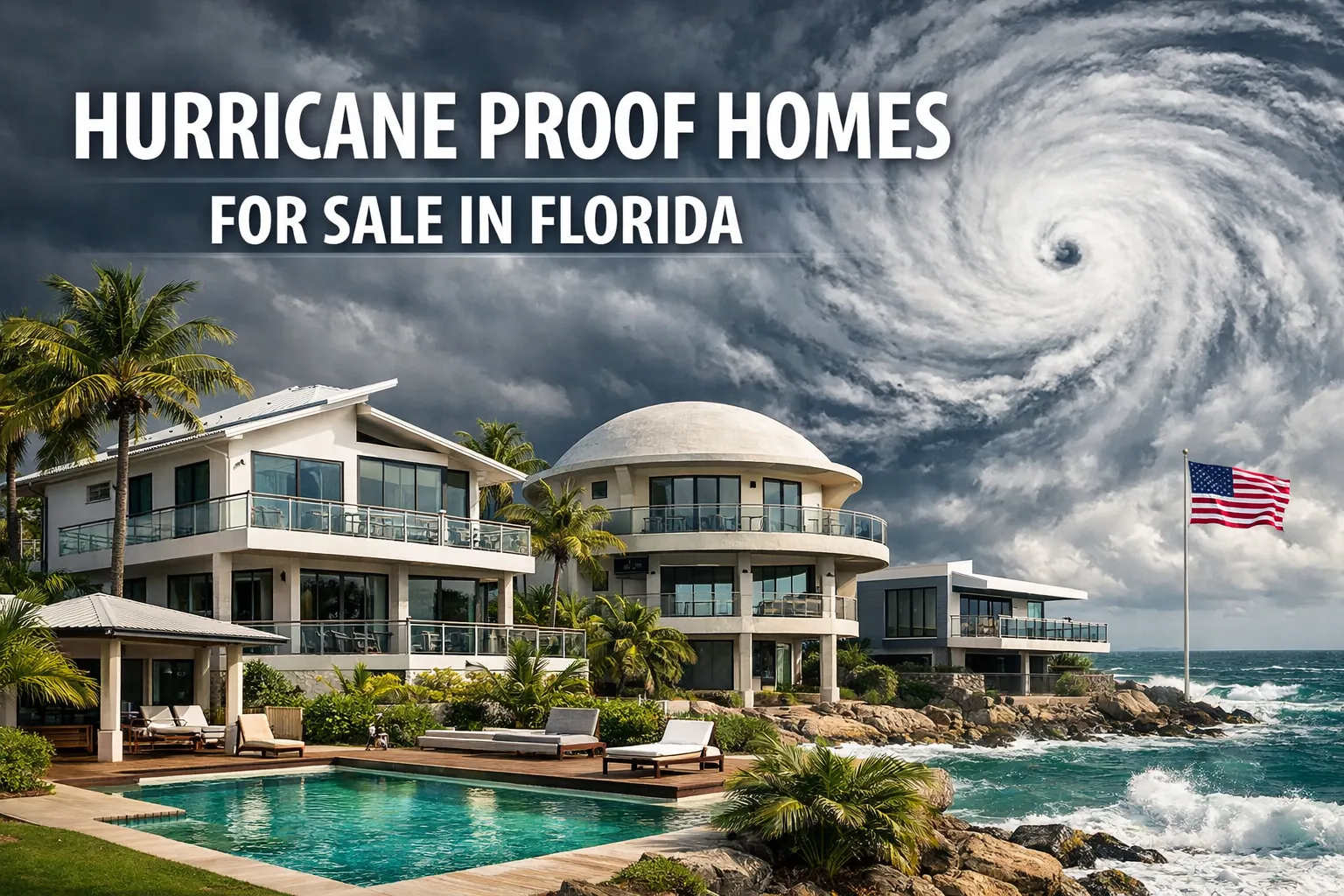
Florida gets hit harder than almost any state in the country. Since 2000, major hurricanes have caused over $300 billion in insured losses across the Gulf and Atlantic coasts. Yet every year, thousands of families still buy standard wood-frame houses with traditional rooflines and single-pane windows and then spend years paying for that decision. The smart buyers — the ones who researched, asked the harder questions, and bought storm-resistant construction — are the ones sleeping easier every September.
This guide is for those smart buyers.
Why Buyers Are Actually Excited About This — Not Just Scared
There’s a real psychology shift happening in the Florida housing market. For years, buyers treated storm resistance as a checkbox—something the inspector mentioned, something the agent glossed over. Today, especially among millennial buyers and young families relocating from out of state, hurricane-resistant construction is a selling point, not a footnote.
Part of that excitement is financial. Insurance premiums in Florida have exploded — some coastal homeowners are paying $8,000 to $15,000 a year on standard homes. A certified hurricane-proof home, built with impact glass, reinforced roofing, and steel or concrete framing, can cut that number dramatically. Buyers do the math quickly: if storm-resistant construction saves you $4,000 a year in insurance, over 10 years, that’s $40,000 back in your pocket—and you haven’t even counted avoided repair bills.
The other part is emotional. First-time buyers, especially those with kids, want to stop renting and address anxiety, as well as square footage. They want to buy a home once, build equity, and not evacuate every August, wondering if they’ll have a home to return to. That’s not paranoia — that’s practical. And the market is finally catching up.
What “Hurricane Proof” Actually Means (And What It Doesn’t)
Let’s be honest about something most listings won’t tell you: no structure is 100% hurricane-proof under every possible condition. What the term really means—in engineering terms—is that the home is designed and built to withstand sustained wind speeds of 150 mph or more, resist windborne debris impact, and prevent catastrophic structural failure during a Category 4 or 5 storm.
The two gold standards in Florida right now are steel-frame construction and reinforced concrete construction—or a hybrid of both. Steel homes are built around a structural frame that can flex slightly under wind load and return to form without cracking or splintering. Concrete homes — whether ICF (insulated concrete form), poured, or concrete block — create dense monolithic walls that stop debris and resist sustained pressure. Both exceed standard Florida Building Code requirements, which have themselves been significantly strengthened after Hurricane Andrew in 1992 and updated again after Irma in 2017.
What makes the real difference beyond the frame: impact-resistant windows rated for wind and debris, reinforced roof-to-wall connections (the number one failure point in storm damage), elevated foundations in flood zones, and proper water management to handle the rainfall that accompanies wind events.
Real Prices: What Hurricane-Proof Homes in Florida Actually Cost Right Now
Here’s what you actually came for. Below is a realistic cost breakdown based on current new construction from specialized builders in the Florida market.
| Model | Bedrooms/Baths | Square Footage | Starting Price |
|---|---|---|---|
| Lighthouse | 2 Bed / 2 Bath | 1,412 sq ft | From $419,364 |
| Breeze | 3 Bed / 2 Bath | 1,500 sq ft | From $445,500 |
| SeaMist | 3 Bed / 3 Bath | 1,550 sq ft | From $460,350 |
| Sunrise | 3 Bed / 3 Bath | 2,000 sq ft | From $594,000 |
| Oceancrest | 4 Bed / 4 Bath | 2,500 sq ft | From $742,500 |
These are turnkey prices from Florida Steel Homes, which include premium finishes, all appliances, and optional solar systems that can bring your electric bill under $100/month. The delivery timeline is approximately 12 months from contract to keys.
For context, comparable square footage in a standard wood-frame new build in coastal Florida runs $350,000–$550,000—often without impact windows, storm-rated roofing systems, or the insurance savings that come with certified construction. The premium for hurricane-proof construction is real but far smaller than most buyers assume once you factor in ongoing costs.
Budget planning note: Expect to add $15,000–$30,000 for land preparation, site utilities, and permitting, depending on the county. Flood zone elevation requirements can add another $20,000–$40,000 for proper foundation work in high-risk zones. Always verify your specific parcel’s flood zone status before signing anything.
Step-by-Step: How to Buy a Hurricane-Proof Home in Florida
Step 1: Check Your Flood Zone First
Before you fall in love with any property, look up the FEMA flood map for that parcel. Zone X is minimal risk. Zones AE, VE, and coastal A zones carry federal flood insurance requirements and additional building code overplays. Your builder and your insurance agent both need to know this number before you commit.
Step 2: Verify the Builder’s Storm Rating Claims
Not all “hurricane-resistant” marketing is equal. Ask specifically for Florida product approval numbers on windows and doors; wind uplift ratings on the roof system; and confirmation that the structure meets or exceeds Miami-Dade County standards—the toughest in the state. A builder who can’t provide those documents clearly isn’t one you want.
Step 3: Understand What’s Included in the Price
Turnkey pricing should spell out exactly what’s included: foundation type, window impact ratings, roofing system, appliances, and any smart home or solar features. Get it in writing. A low base price that doesn’t include site prep, permits, or finish upgrades can balloon $80,000 to $100,000 by closing.
Step 4: Talk to an Insurance Agent Before You Finalize
Contact a Florida-licensed homeowner’s insurance specialist before you’re in contract — not after. Describe the construction type, the wind rating, and the flood zone, and ask for a premium estimate. The difference between a standard frame home and a certified steel or concrete home can be $3,000 to $6,000 per year in premiums. That changes your math on affordability.
Step 5: Inspect the Lot for Water Management
The most overlooked factor in storm damage isn’t the wind — it’s the water. Inspect site drainage, proximity to retention ponds or canals, and natural grade slope. A beautifully built home on a lot that pools water after heavy rain is a mold risk and a flood risk, regardless of the construction type above ground.
Expert Insight
“The number one mistake buyers make is focusing only on the roof and ignoring the connections — where the roof meets the walls, where the walls meet the foundation. Those transition points are where structures fail. In a properly engineered steel or concrete home, those connections are engineered as a continuous system, not assembled from parts that hope to stay together under 140 mph wind.” — Structural engineer perspective, Florida coastal construction
Where Are These Homes Being Built? Area Spotlight
Florida Steel Homes operates out of Redington Beach on the Pinellas County coast—one of the most hurricane-exposed strips of Gulf shoreline in the state. That location isn’t incidental. It’s where the demand is highest and where buyers understand storm risk most personally. Pinellas, Hillsborough, Sarasota, Charlotte, and Lee counties are all active markets for hurricane-resistant new construction right now, driven by post-Ian rebuilding and a steady stream of buyers from the Northeast and Midwest who want coastal Florida life without the sleepless storm seasons.
Inland areas like Orlando’s exurbs and the I-4 corridor are also seeing demand, particularly from families who want the Florida lifestyle but are willing to trade beachfront proximity for lower flood zone exposure. If you’re flexible on location, going 10 to 15 miles inland from the coast can save you significantly on land cost and insurance simultaneously.
Pros and Cons: The Honest Trade-Offs
Pros:
- Dramatically lower storm damage risk and repair costs over time
- Potential savings of $3,000–$8,000 per year on homeowner’s insurance
- Steel and concrete resist mold, rot, termites, and fire—not just wind
- Energy efficiency from concrete thermal mass means lower cooling bills
- Peace of mind that isn’t available in a standard wood-frame house
Cons:
- Higher upfront purchase price than comparable standard construction
- Longer build time — typically 10–14 months for custom hurricane-rated new builds
- Fewer resale comps in the market, which can complicate appraisals
- Land acquisition adds cost, especially in desirable coastal zones
- Solar and smart features, while valuable, add to the initial budget
Common Mistakes to Avoid
The biggest mistake buyers make is treating “hurricane-resistant windows” as a synonym for “hurricane-proof home.” Impact-rated windows are one component of a system. A house with great windows and a poorly attached roof is still going to lose that roof at 120 mph. Buy the whole system, not a list of features.
The second mistake is skipping the flood zone research until after they’re emotionally attached to a property. Flood zone designation affects your insurance cost, your mortgage requirements, and your foundation design. Finding out your dream lot is Zone VE after three weeks of excitement is an avoidable heartbreak.
Third: don’t assume the builder’s timeline is padded. Turnkey hurricane-rated construction genuinely takes 10–14 months because of the engineering, permitting, and inspection requirements. Buyers who rush that process or pressure builders to cut corners on inspections are trading short-term convenience for long-term structural risk. Be the buyer who asks more questions, not fewer.
Your Next Step Starts With One Conversation
If you’re serious about buying a hurricane-proof home in Florida, the most valuable 20 minutes you can spend right now is a direct conversation with a builder who can walk you through real floor plans, real prices, and a real timeline for your specific situation. Florida Steel Homes builds steel-core, storm-rated homes starting at $419,364, delivers them fully turnkey in approximately 12 months, and publishes pricing with the kind of transparency that’s genuinely rare in this industry.
Call them at (786) 610-6398, email info@FloridaSteelHomes.com, or explore the full model lineup — from the 2-bedroom Lighthouse at 1,412 square feet to the 4-bedroom Oceancrest at 2,500 square feet — at FloridaSteelHomes.com. The storm season doesn’t wait, and neither does the right inventory. Make the call before someone else makes it for you.