Picture this: It’s August, a Category 3 storm is 48 hours out, and your neighbors are frantically boarding up windows, renting trucks, and loading the dog into the car at midnight. You’re watching the radar from your living room, coffee in hand, because your house was built to handle exactly this. The shutters are integrated. The roof is strapped. The windows are impact-rated. You’re not going anywhere, and you don’t have to.
Hurricane Grade Homes in Florida Save You Thousands
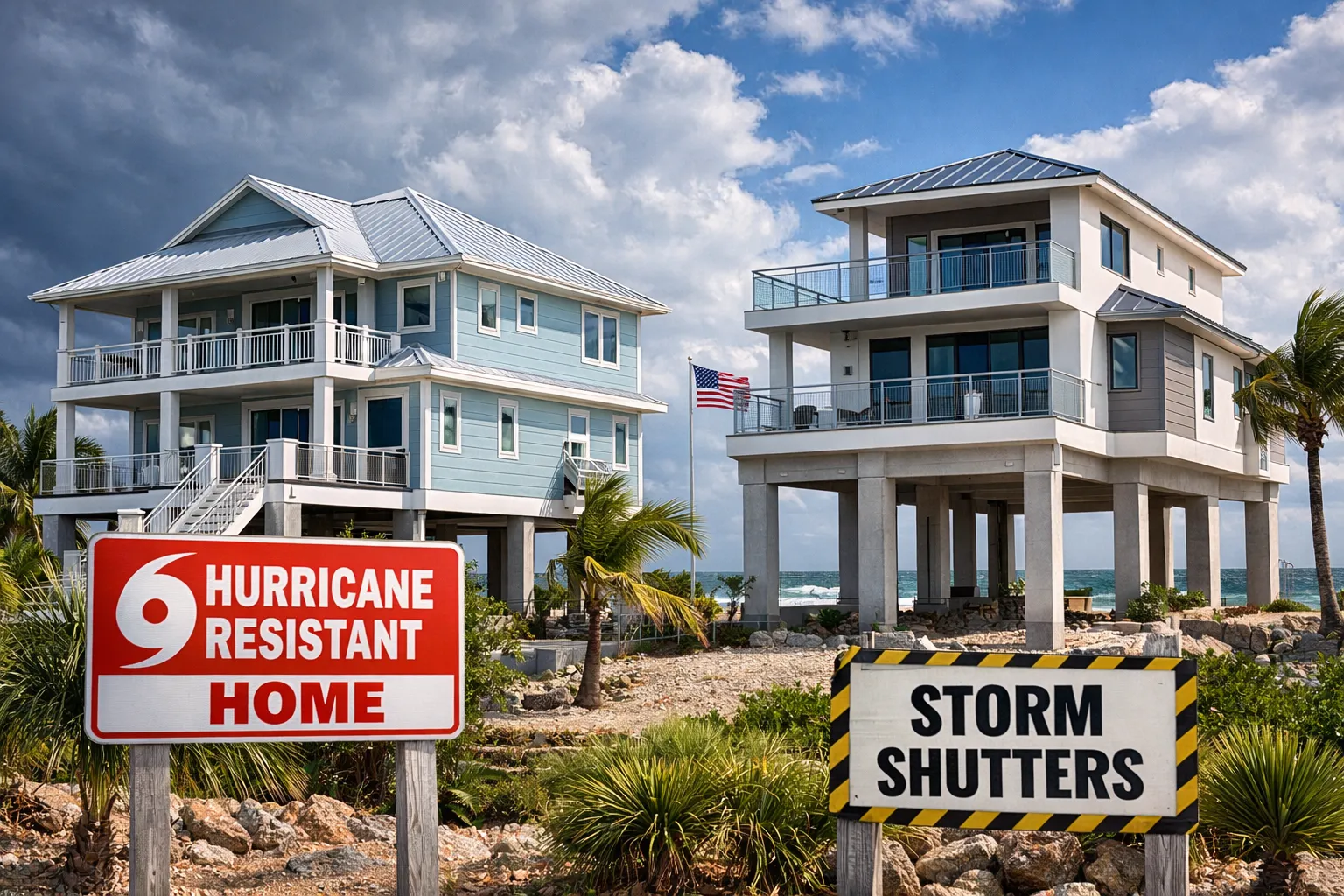
That scenario isn’t a fantasy for a growing number of Florida buyers. It’s the very reason hurricane-grade homes have moved from a niche upgrade to a must-have priority across the state. Whether you’re relocating from out of state, buying a vacation property near the coast, or trading up from a home that scared you last storm season, understanding what actually makes a home hurricane-resilient—and how to buy one—is the most important research you’ll do before signing.
Florida recorded over $100 billion in insured hurricane losses in the decade from 2012 to 2022. That number has reshaped the market completely. Sellers are highlighting hurricane upgrades in listings. Appraisers are factoring them in. And buyers who skip this due diligence are finding themselves stuck with insurance quotes that eat their monthly budget alive. This guide cuts through the noise and gives you a clear, practical path to finding and buying a hurricane-grade home in Florida.
Why Buyers Are Excited — and What’s Driving the Rush
There’s a very specific kind of relief that comes with owning a hurricane-grade home, and buyers who’ve experienced their first storm season in one describe it the same way every time: quiet confidence. Not false bravado — actual structural confidence, backed by engineering standards and verified materials. That emotional payoff is real, and it’s only part of why demand for these homes has climbed sharply across Florida’s coastal and inland markets alike.
Florida’s insurance crisis has done more to accelerate interest in hurricane-hardened homes than any marketing campaign could. With standard homeowners insurance premiums averaging over $4,000 per year statewide—roughly three times the national average—buyers have quickly discovered that homes meeting Miami-Dade or Florida Building Code hurricane standards can qualify for substantial discounts, sometimes 20 to 40 percent. On a $400,000 coastal property, that’s potentially $1,000 or more back in your pocket every year for the life of ownership.
Resale dynamics have shifted, too. Florida buyers are more educated than ever about construction standards, and homes with documented hurricane upgrades—impact windows, reinforced roof-to-wall connections, whole-house shutters—are commanding premiums at resale. You’re not just buying a safer home; you’re buying a more liquid one. In a market where insurance-related sales collapses have become a real risk, a hurricane-grade home is genuinely easier to sell.
What “Hurricane Grade” Actually Means
The term gets used loosely in real estate listings, so it’s worth being precise. A truly hurricane-grade home in Florida meets the Florida Building Code (FBC) hurricane standards, which were substantially tightened after Hurricane Andrew in 1992 and again after the 2004–2005 storm seasons. Homes built after 2002 in most Florida counties must meet these updated codes, but that doesn’t mean all post-2002 construction is equal—the quality of execution matters as much as the code requirement.
The four core components that define a hurricane-grade home are impact-rated windows and doors; a reinforced roof system with hurricane straps connecting the roof to the walls; a hip roof design (which performs significantly better than gable roofs in high winds); and continuous load path construction, which means the structural forces from a hurricane are transferred from roof to wall to foundation in an unbroken chain. Homes with all four, especially those meeting Miami-Dade County’s standards — widely considered the toughest in the country — represent the gold standard for hurricane resilience in Florida.
“Most buyers focus on impact windows because they’re visible and easy to verify. But roof-to-wall connections are where real storm damage originates. A home with Miami-Dade-rated windows and a poorly strapped roof is still a liability. Get a wind mitigation inspection — it tells you the complete story.”
— Licensed Florida home inspector with 18 years of post-storm assessment experience
Step-by-Step: How to Buy a Hurricane Grade Home in Florida
- 1. Get pre-approved with an insurance-aware lender. Before you tour a single home, talk to a Florida-based mortgage lender who understands the insurance landscape. Some properties are becoming hard to insure, which affects financing. Know your numbers before you fall in love with a listing.
- 2. Define your hurricane standard threshold. Decide upfront: are you looking for post-2002 FBC-compliant construction, or do you specifically want Miami-Dade-rated features? The latter will cost more but offers measurably better protection and the best insurance discounts.
- 3. Search with specific filters. Ask your real estate agent to filter for homes with documented wind mitigation reports, impact windows, and hip roof construction. Many MLS listings in Florida now include these as searchable features. If a listing says “hurricane shutters” without specifying impact glass or rated shutters, dig deeper—accordion shutters and panel shutters vary significantly in protection level.
- 4. Request the wind mitigation inspection report. Florida law requires sellers to disclose material defects, but a wind mitigation report isn’t always part of that disclosure. Ask for it. If one doesn’t exist, make getting a fresh wind mitigation inspection a condition of your offer. A certified inspector checks roof covering, roof deck attachment, roof-to-wall connections, roof shape, opening protection, and building code compliance — and the report can directly lower your insurance quote.
- 5. Get insurance quotes before closing. This is non-negotiable in Florida right now. Get at least three insurance quotes based on the specific property before you remove your financing contingency. Premiums that shock you after closing are a real and avoidable problem.
- 6. Review the permit history. Any hurricane upgrades—impact window installation, roof replacement, addition of hurricane straps—should have permits on file with the county. Unpermitted work may not be recognized by your insurer and can create complications at resale. Check the county property appraiser’s website or ask your agent to pull the permit history.
- 7. Close with a certified copy of the wind mitigation report. Keep this in your files. You’ll submit it to your insurance carrier for the premium discount, and you’ll want it available when you eventually sell.
Cost Breakdown: What to Budget For
| Item | Estimated Cost | Notes |
|---|---|---|
| Wind mitigation inspection | $75–$150 | One-time: submit to insurer for discount |
| Impact window upgrade (existing home) | $8,000–$25,000+ | Varies by home size and window count |
| Hurricane strap retrofit | $800–$2,500 | Older homes without straps require a licensed contractor |
| Accordion shutter installation | $15–$25/sq ft opening | Lower cost than full-impact windows |
| Roof replacement (hip design) | $15,000–$40,000 | Cost varies dramatically by home size and materials |
| Annual insurance premium (standard) | $3,500–$6,000+ | Florida coastal average; non-hurricane-grade home |
| Annual insurance premium (hurricane grade) | $2,000–$3,800 | With documented wind mitigation credits applied |
| Premium over comparable non-rated home | 5–15% higher purchase price | Varies significantly by market and documentation |
Area Spotlight: Where to Buy a Hurricane Grade Home in Florida
Not all Florida markets are equal when it comes to available hurricane grade inventory, builder quality standards, or insurance accessibility. Here are six areas where buyers are finding strong combinations of hurricane resilience, livability, and relative insurance stability.
Sarasota / Manatee
Naples / Collier County
Port St. Lucie
Palm Beach Gardens
Cape Coral
Lakeland / Polk County
Comparison: Hurricane Upgrade Levels Side by Side
| Protection Level | Features | Typical Insurance Discount | Best For |
|---|---|---|---|
| Basic | Panel shutters, standard roof, pre-2002 construction | 0–5% | Budget buyers: upgrade plan in place |
| Intermediate | Accordion shutters, post-2002 FBC roof, some straps | 10–20% | Value buyers prioritizing safety over aesthetics |
| Hurricane Grade | Impact windows/doors, hip roof, hurricane straps, continuous load path | 20–35% | Buyers seeking peace of mind and insurance savings |
| Miami-Dade Standard | All of the above + Miami-Dade rated products, reinforced garage door, concrete block | 30–45% | Coastal buyers, luxury market, maximum resilience |
Pros and Cons: The Honest Trade-Offs
Pros
Cons
Common Mistakes to Avoid
- Trusting listing language like “hurricane shutters” or “storm ready” without verifying what type and rating — accordion shutters, panel shutters, and impact glass all offer very different levels of protection.
- Skipping the wind mitigation inspection because the home looks modern. Build year alone doesn’t tell the full story — quality of construction and materials matters as much as age.
- Assuming hurricane protection covers flood damage. Wind and flood are separate perils, separate insurance policies, and separate risk evaluations. A hurricane-grade home can still flood.
- Waiting until after you’re under contract to get insurance quotes. In Florida’s current market, some properties are uninsurable or cost-prohibitive to insure — you want to know that before you’re emotionally committed.
- Overlooking unpermitted upgrades. An impact window installation done without a permit may not be recognized by your insurer for discounting purposes, and it may create problems at your next resale.
- Focusing only on the building, not the location. Being inside a hurricane-grade home that sits in a Category A flood evacuation zone is still a serious safety situation during a major storm. Know your zone.
Frequently Asked Questions
What makes a home officially “hurricane grade” in Florida?
How much can I actually save on insurance with a hurricane grade home?
Can I upgrade an older Florida home to hurricane grade?
Does a hurricane grade home protect against flooding, too?
How do I verify hurricane features before making an offer?
Ready to Find Your Hurricane Grade Home in Florida?
Start by connecting with a Florida real estate agent who specifically understands wind mitigation reports and construction standards — not just someone who can open a lockbox. Ask them to filter your search for documented hurricane-grade features and have your insurance quotes ready before you make an offer. The right home in Florida isn’t just one you love the look of. It’s one you can trust when the radar starts spinning.