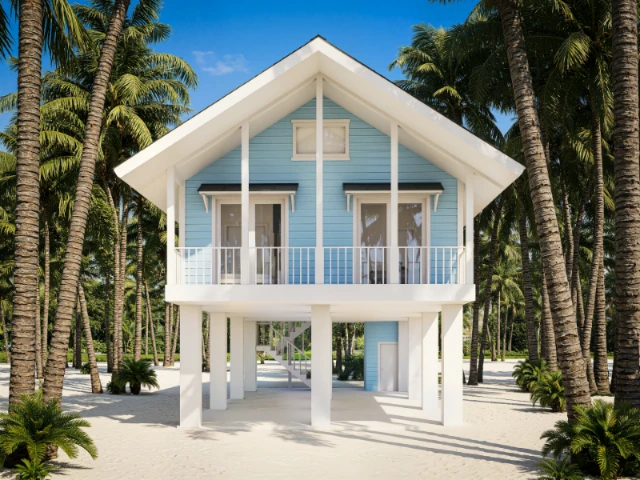
Wind pressure becomes destructive when openings fail. Broken windows allow internal pressurization that can blow roofs off.
Protection options
Impact-rated laminated glass windows
Hurricane-rated exterior doors
Reinforced garage doors
Permanent or deployable shutters
Florida building codes require impact protection in many coastal zones — and for good reason.
Step 5: Create a Continuous Load Path
One of the most important engineering principles in hurricane-resistant homes is the continuous load path. This means the roof, walls, and foundation are physically connected, so wind forces transfer safely to the ground.
Key components
This system prevents structural separation — the main cause of catastrophic failure in storms.
Step 6: Use Water-Resistant Exterior Systems
Hurricane-resistant homes must survive both wind and water.
Exterior protection strategies
Waterproof wall membranes
Moisture-resistant sheathing
Sealed roof underlayment
Elevated mechanical systems
These features reduce mold, rot, and long-term moisture damage after storms.
Step 7: Follow Florida Hurricane Building Codes
Florida has some of the strictest coastal building codes in the United States. These codes already incorporate hurricane-resistant design principles.
Key regulated factors include:
Working with experienced coastal builders ensures full compliance and maximum safety.
Step 8: Plan for Insurance and Long-Term Value
Hurricane-resistant construction isn’t just about safety — it’s a financial decision.
Benefits include:
Lower storm damage repair costs
Reduced insurance premiums
Higher resale value
Faster recovery after storms
Investor confidence in coastal property
Many Florida buyers actively seek storm-resistant homes today.
Common Mistakes to Avoid When Building in Florida
Even new homes sometimes fail hurricanes due to poor design choices.
Avoid:
Gable roofs in high-wind zones
Standard garage doors
Low elevation coastal slabs
Non-rated windows
Weak roof-wall connections
True hurricane resistance requires a system approach, not isolated upgrades.
Why More Florida Homes Are Being Built Hurricane-Resistant
Florida coastal construction is evolving. Buyers and investors increasingly demand resilient housing due to:
Hurricane-resistant homes are becoming the new standard in coastal Florida.
Final Thoughts: Building Safer Coastal Homes
Living in Florida’s coastal regions doesn’t have to mean living with constant hurricane risk. Modern construction methods allow homes to withstand extreme wind, impact, and flooding far better than traditional designs.
When properly built with reinforced materials, elevated foundations, impact protection, and engineered roofing systems, hurricane-resistant homes provide both safety and long-term investment value.
For homeowners, buyers, and investors, choosing hurricane-resistant construction is not just a building decision — it’s a resilience strategy for coastal living.
Get Expert Guidance for Hurricane-Resistant Homes in Florida
If you’re planning to build or invest in a hurricane-resistant home along the Florida coast, working with experienced coastal construction specialists is essential.
Florida Steel Homes
16104 4th St E, Redington Beach, FL 33708
📞 786-610-6398
📧 info@FloridaSteelHomes.com
Their expertise in reinforced coastal construction and storm-resistant housing helps Florida homeowners build safer, stronger, and longer-lasting homes designed for hurricane zones.