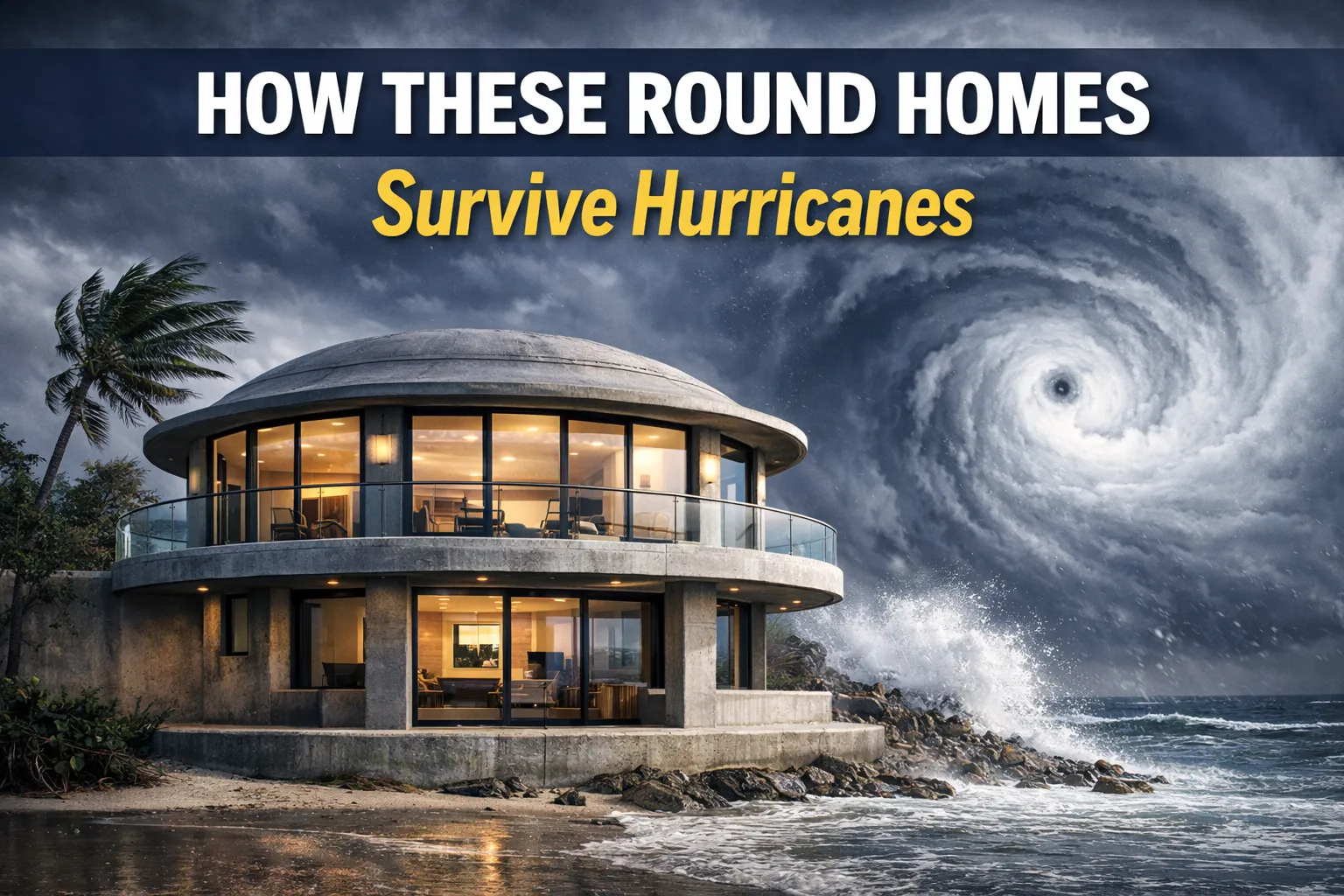
While the shape of a home plays a major role in storm resistance, construction materials are equally important. Many modern hurricane-resistant homes are built using reinforced concrete, steel reinforcement, and impact-resistant glass.
Reinforced concrete provides exceptional strength and durability. It can withstand high wind loads and resist structural damage better than traditional wood-frame construction. Steel reinforcement inside the concrete further strengthens the structure, helping the building remain stable even during intense storms.
Impact-resistant windows are another important feature. During hurricanes, flying debris can easily shatter ordinary glass. Hurricane-rated windows are designed to absorb impact without breaking, preventing wind from entering the home and creating internal pressure.
In coastal locations, many homes are also built with elevated foundations. Raising the structure above ground level protects the living space from storm surge and coastal flooding, which often accompany hurricanes.
Energy Efficiency: A Surprising Benefit of Circular Homes
Beyond storm protection, round homes can also offer energy-efficiency advantages. Because circular homes have less exterior wall area compared to square homes of similar size, they naturally lose less indoor cooling or heating through the walls.
This can be especially beneficial in Florida’s warm climate, where air conditioning is used frequently. Reduced surface area means less heat entering the home, which helps maintain a comfortable indoor temperature.
The interior layout of round homes can also improve airflow. Open floor designs and curved walls allow air to circulate more freely throughout the house, which can further improve cooling efficiency and comfort.
Why Coastal Homebuyers Are Considering Round Homes
Coastal property buyers today are becoming more aware of how important storm-resistant construction is. Repairing hurricane damage can be extremely expensive, and repeated storms can quickly add up to major maintenance costs.
Because of this, many buyers are exploring home designs that prioritize durability and resilience. Round homes provide a practical solution by combining aerodynamic architecture with strong construction materials. While the design may look different from traditional homes, its ability to handle high winds makes it an appealing option for long-term coastal living.
For families planning to invest in property near the ocean, choosing a home designed to withstand severe weather can provide peace of mind during hurricane season.
Final Thoughts
Hurricanes will always remain a powerful force in coastal regions like Florida. However, thoughtful architectural design can significantly reduce the damage these storms cause.
Round homes demonstrate how shape, engineering, and materials can work together to create a stronger structure. Their aerodynamic design allows wind to flow around the building rather than crash directly into it. Curved roofs reduce uplift pressure, while reinforced construction materials help the home maintain structural integrity.
For coastal homeowners seeking safer, more resilient housing, round homes offer a smart approach to building in hurricane-prone environments.
Get in Touch
If you are planning to build a hurricane-resistant home in Florida, working with experienced builders can help you choose the right structure and materials for coastal conditions.
Florida Steel Homes
16104 4th St E
Redington Beach, FL 33708
Phone: 786-610-6398
Email: info@FloridaSteelHomes.com