Most Florida homes are built to resist hurricanes, not survive them completely unharmed. Modern Florida building codes are among the strictest in the world, but “hurricane proof” is a myth—unless you build with the right materials. Steel-frame construction offers a significant advantage over traditional wood-frame homes.
Florida Homes Hurricane Proof — Build Stronger, Not Cheaper
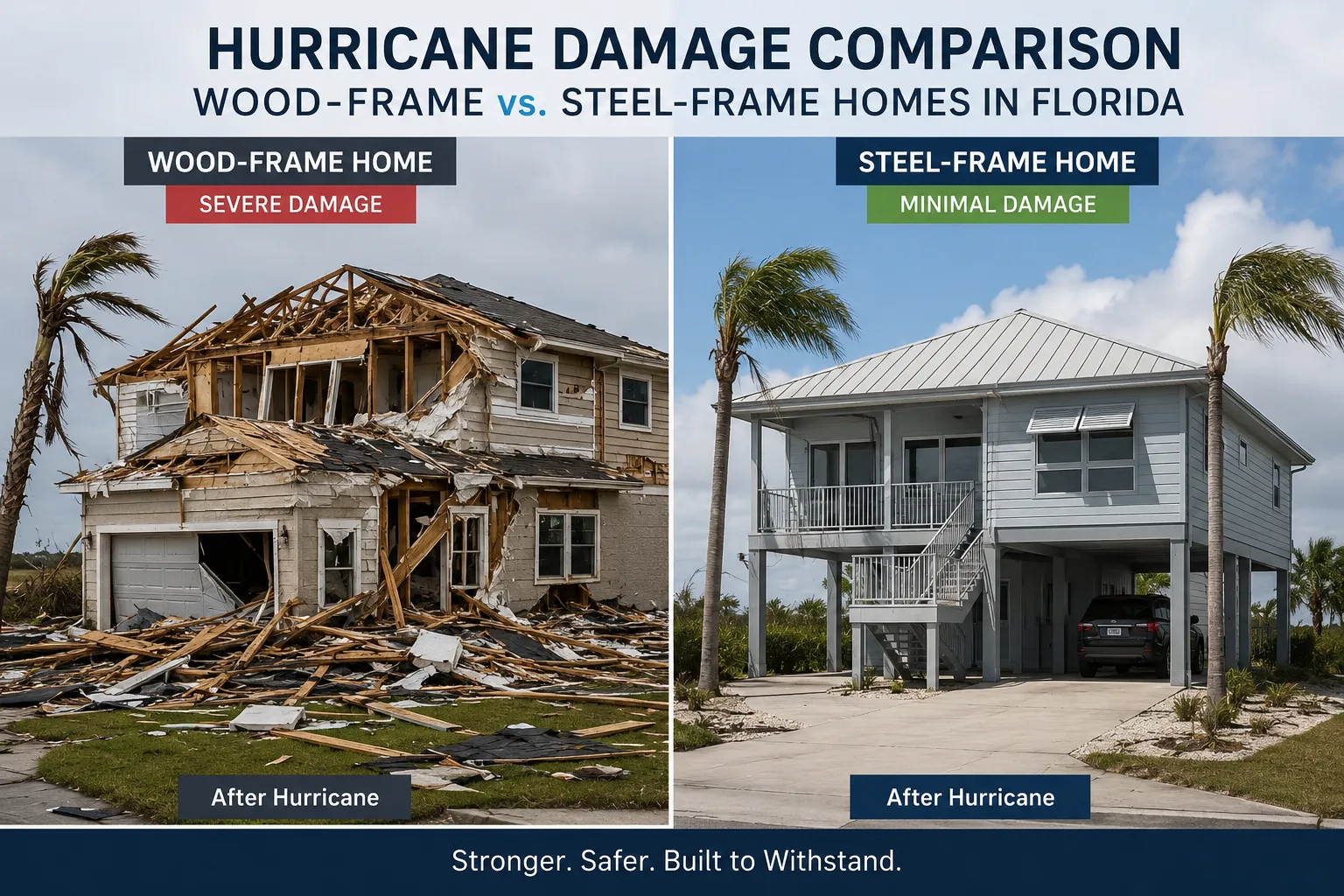
If you live in Florida or you’re thinking about buying or building here, this question has probably crossed your mind—especially during hurricane season. And honestly? It’s one of the most important questions you can ask.
The short answer: most Florida homes are not hurricane-proof. They’re hurricane-resistant—and there’s a meaningful difference between those two things.
Let’s break down exactly what that means, what current building codes do (and don’t) protect you from, and what options actually exist if you want a home that can stand its ground in a major storm.
The Truth About “Hurricane-Proof” Homes in Florida
After Hurricane Andrew devastated South Florida in 1992, the state completely overhauled its building codes. What came out of that disaster is now considered some of the toughest residential construction regulations in the country.
But here’s what most people don’t realize: building codes set a minimum standard, not a maximum protection level. A home built to code is designed not to collapse and to preserve life during a storm. It’s not necessarily designed to come through without significant damage.
That distinction matters a lot — especially when you’re talking about a Category 4 or 5 storm bearing down on the Gulf Coast.
What Florida Building Codes Actually Require
Since 2002, the Florida Building Code (FBC) has required homes to withstand wind speeds of at least 130–170 mph, depending on the zone. In coastal areas, requirements are even stricter.
Here’s what current code-compliant construction typically includes:
- Impact-resistant windows and doors that can take wind-borne debris
- Reinforced roof-to-wall connections using hurricane straps or clips
- Concrete block or reinforced framing in high-risk zones
- Proper attic ventilation to reduce uplift pressure
These are real protections. A home built to the 2026 Florida code is dramatically safer than one built in the 1980s. But they still leave gaps — particularly for older homes and those built with traditional wood framing.
Why Most Homes Still Take Damage
Wood rots. Nails loosen. Connections weaken over time. Even a home that was fully code-compliant on the day it was built can develop vulnerabilities within 10–15 years if not properly maintained.
More importantly, wood-frame construction has inherent limitations that no amount of code can fully fix. Wood absorbs moisture, warps under pressure, and is susceptible to termite damage—all of which quietly undermine structural integrity long before a storm hits.
The roof is almost always where homes fail first. Once the roof goes, water intrusion causes catastrophic interior damage, even if the walls stay standing.
What Makes a Home Truly Hurricane Resistant?
A genuinely storm-resistant home in Florida needs more than code compliance. It needs:
1. The Right Frame Material
Steel doesn’t rot, warp, or get eaten by termites. Steel-frame construction dramatically outperforms wood in wind resistance and long-term structural integrity.
2. Continuous Load Path Design
This means the forces from wind are transferred smoothly from the roof, through the walls, into the foundation—with no weak points. Many wood-frame homes lack this continuity.
3. Impact-Rated Openings Everywhere
Every window, door, and garage door needs to be rated for the specific wind zone. One missed opening can allow pressure to build inside and blow the roof off.
Steel vs. Wood Frame: The Real Comparison
| Feature | Wood Frame | Steel Frame |
|---|---|---|
| Wind resistance | Moderate | High |
| Moisture/rot risk | High | None |
| Termite vulnerability | High | None |
| Lifespan | 30–50 years | 70–100+ years |
| Insurance rates | Higher | Often lower |
| Hurricane performance | Variable | Consistently better |
The numbers tell a clear story. For Florida homeowners who want genuine peace of mind, steel framing isn’t a luxury—it’s a logical choice.
How Florida Steel Homes Are Different
Florida Steel Homes builds residential homes using steel-frame construction engineered specifically for Florida’s storm environment. Every home is designed with continuous load path principles, impact-rated openings, and materials that won’t degrade in the humidity and salt air that wood struggles with.
Located in Redington Beach, FL, they work with homeowners across the state who’ve decided that “good enough” isn’t enough when a hurricane is on the way.
If you’ve watched storm after storm take out neighborhoods of wood-frame homes while the one steel-frame structure on the block stood untouched—you already understand why this matters.
Ready to Build a Home That Actually Handles What Florida throws at it?
If you’re serious about real hurricane resistance — not just minimum code compliance — it’s worth talking to a builder who specializes in storm-engineered construction.
Florida Steel Homes builds homes designed to stand up to Florida’s worst weather. Reach out today:
📞 786-610-6398 📧 info@FloridaSteelHomes.com 📍 16104 4th St E, Redington Beach, FL 33708