Florida’s building codes are among the toughest in the country, but truly “hurricane proof” homes are rarely built due to extreme costs, land use challenges, and a complex mix of politics and builder economics. While 100% storm-proof construction exists, most Florida homeowners never get it — and here’s exactly why.
What Makes a Home Truly Hurricane Proof Homes in Florida?
Every time a hurricane churns through the Gulf or barrels up the Atlantic coast, the same question surfaces — why doesn’t Florida just build homes that can survive this? It’s a fair question. Florida gets hit harder than almost any other state, and yet neighborhoods still get flattened year after year.
The answer isn’t simple. It’s a mix of money, politics, builder culture, and what “hurricane proof” actually means in the real world.
The Question Everyone Asks After Hurricane Season
After watching footage of roofs peeling off in Fort Myers or windows shattering in Tampa Bay, it genuinely feels like someone dropped the ball. People are frustrated — and rightfully so.
But here’s the thing: Florida has made major improvements. The 2001 Florida Building Code overhaul, triggered by the devastation of Hurricane Andrew in 1992, was a turning point. Still, “better than before” and “truly hurricane proof” are two very different things.
So why doesn’t Florida require the strongest possible construction across the board? Let’s break it down.
📬 Have questions about storm-resistant home construction in Florida?
Contact the experts at Florida Steel Homes — info@FloridaSteelHomes.com | 16104 4th St E, Redington Beach FL 33708
What “Hurricane Proof” Actually Means
First, let’s be honest: no structure is completely hurricane-proof. Engineers and builders use the term hurricane resistant“—designed to withstand specific wind speeds and impact forces without catastrophic failure.
A home built to survive a Category 5 storm (sustained winds of 157+ mph) looks very different from a standard wood-frame house. We’re talking:
- Reinforced concrete or steel framing
- Impact-rated windows and doors
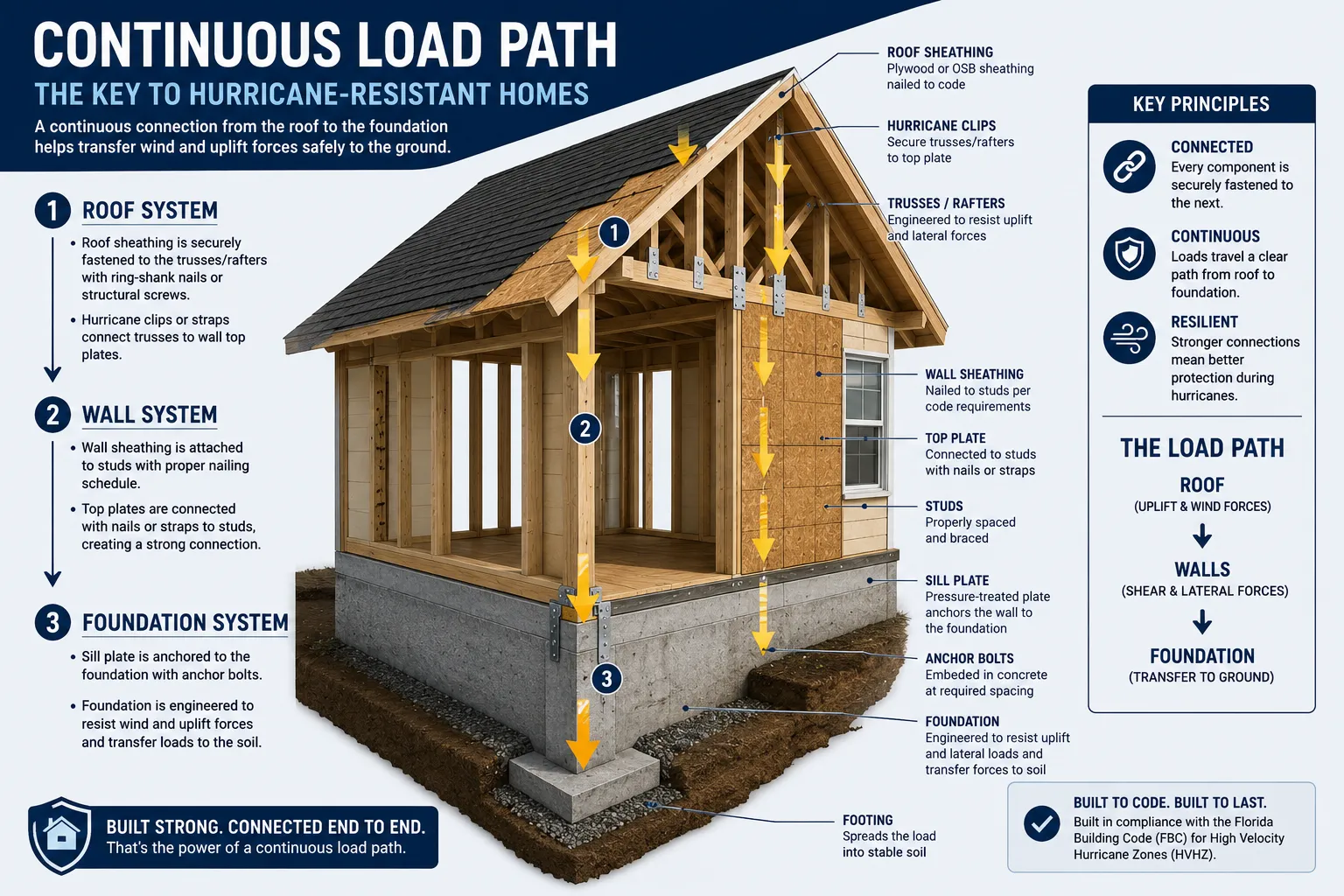
- Continuous load path construction (so the roof stays connected to the walls and foundation under extreme uplift pressure)
- Elevated foundations in flood-prone zones
The technology exists. So why isn’t it everywhere?
Why Florida Doesn’t Mandate Fully Storm-Proof Construction
This is where it gets uncomfortable. The answer comes down to three things: cost, political will, and builder lobbying.
Cost Is the First Wall
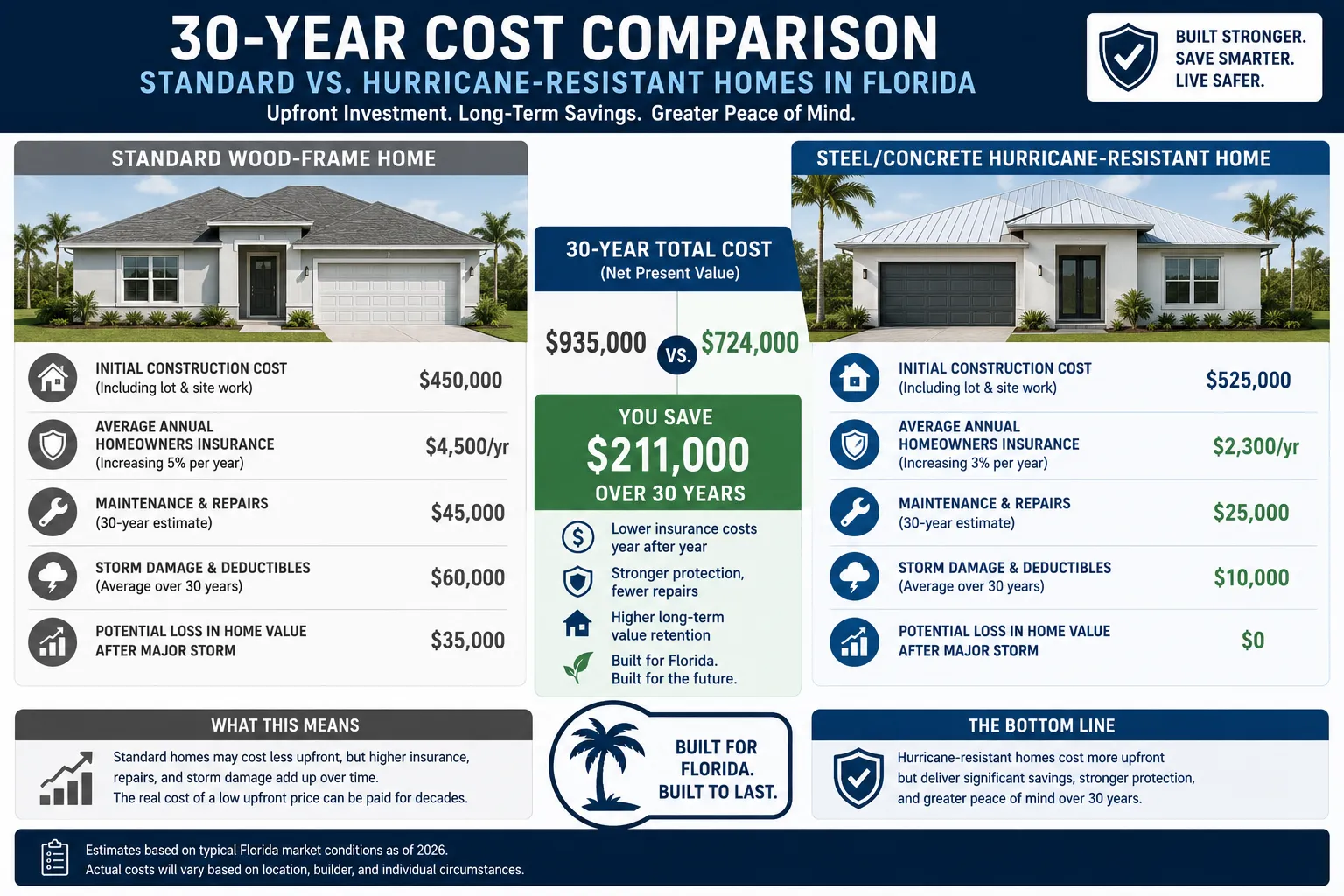
A fully storm-hardened home — think reinforced concrete or cold-formed steel construction — can cost 30–50% more than a standard wood-frame build. In a state where housing affordability is already a crisis, mandating that level of construction across the board would push homeownership out of reach for many Florida families.
Builder Industry Influence
Florida’s construction lobby is powerful. Homebuilders have consistently pushed back against stricter mandates, arguing that current codes are sufficient and that additional requirements drive up costs unnecessarily. The result? Incremental improvements rather than a complete rethink of how Florida builds.
Local Government Inconsistency
Florida’s 67 counties and hundreds of municipalities don’t all enforce codes the same way. Some coastal communities in Pinellas County or Sarasota have stricter local requirements, while inland areas may have less rigorous enforcement — even when the risk gap isn’t as wide as people assume.
The Cost Problem Nobody Wants to Talk About
Here’s a number that puts it in perspective: the average new single-family home in Florida costs around $350,000–$400,000 in 2026. Upgrading to full hurricane-resistant steel or concrete construction could add $80,000–$150,000 to that price tag.
For most buyers, that’s a dealbreaker — even when the long-term savings on repairs and insurance are factored in.
But here’s what most people don’t realize: the math often favors storm-resistant construction over 20–30 years. Insurance premiums in Florida have skyrocketed. After Hurricane Ian alone, dozens of insurers pulled out of the state entirely. A home with documented storm resistance can qualify for dramatically lower premiums — sometimes saving $5,000–$10,000 per year.
What Florida’s Building Codes Actually Require
Florida’s current building code does require significant wind resistance—especially in High-Velocity Hurricane Zones (HVHZ) like Miami-Dade and Broward Counties. Requirements include:
- Impact-resistant windows and doors or approved storm shutters
- Roof-to-wall connectors (hurricane straps or clips)
- Wind speed design requirements based on geographic location
- Garage door wind resistance ratings
The problem? These standards are designed to prevent loss of life and major structural collapse — not to guarantee the home is move-in ready after a direct hurricane hit. There’s a big difference between “survivable” and “undamaged.”
Steel Homes vs. Traditional Construction: A Real Comparison
Comparison Table: Wood Frame vs. Steel Frame vs. Concrete Block
| Feature | Wood Frame | Steel Frame | Concrete Block (CBS) |
|---|---|---|---|
| Hurricane Resistance | Moderate | High | High |
| Mold & Rot Resistance | Low | High | Medium |
| Fire Resistance | Low | High | High |
| Construction Cost | Lower | Medium-High | Medium-High |
| Insurance Premium Impact | Standard | Lower | Lower |
| Lifespan | 50–80 years | 80–100+ years | 80–100+ years |
| Termite Vulnerability | High | None | Low |
| Resale Value in FL | Standard | Growing premium | Strong |
Steel-frame homes in particular are gaining ground in Florida’s coastal communities. They don’t rot, they don’t attract termites (a huge issue in South Florida), and they’re engineered to flex — not break — under wind load.
Pros & Cons of Hurricane-Resistant Construction in Florida
Pros
- Dramatically reduced storm damage — repairs after hurricanes can cost tens of thousands for standard homes
- Lower insurance premiums — potentially thousands saved per year in Florida’s brutal insurance market
- Peace of mind — genuinely life-changing when a storm is 48 hours out
- Higher resale value — Florida buyers increasingly pay a premium for documented storm resistance
- Longer lifespan — steel and concrete homes simply last longer in Florida’s humid, salt-air environment
Cons
- Higher upfront cost — 30–50% more than standard construction
- Fewer contractors with expertise — not every builder in Florida works with steel or advanced concrete construction
- Longer permitting in some counties — non-standard construction can face additional review
- Perceived aesthetics — some buyers still associate storm-resistant homes with “bunker” aesthetics (though modern designs have changed this dramatically)
What You Can Do Right Now
If you’re building, buying, or renovating in Florida, here’s practical advice:
- Request a wind mitigation inspection on any home you’re buying — it reveals exactly how storm-resistant the structure is.
- Ask your builder specifically what wind speed the home is designed to withstand — and get it in writing.
- Consider steel framing if you’re building new—the premium is real, but so is the long-term value.
- Compare insurance quotes between a standard frame and a storm-resistant build before deciding — the difference can be eye-opening.
- Check your county’s specific requirements—Miami-Dade and Broward HVHZ rules are stricter than most of Florida, and some coastal communities have additional requirements.
Ready to Build Smarter in Florida?
If you’ve made it this far, you’re serious about protecting what matters. The answer to why doesn’t Florida build hurricane proof homes isn’t just politics or money — it’s also a lack of awareness about what’s actually possible.
Florida Steel Homes builds storm-resistant steel-frame homes along Florida’s Gulf Coast, engineered for the way this state’s weather actually behaves. If you’re tired of wondering whether your home will survive the next named storm, it’s time to have a real conversation.
📧 Email: info@FloridaSteelHomes.com 📍 Location: 16104 4th St E, Redington Beach FL 33708
Talk to a specialist who builds for Florida’s reality — not the national average.