A Category 5 wind rated home Florida is designed to withstand some of the strongest hurricane-force winds on Earth, often exceeding 157 mph. These homes use reinforced steel framing, impact-resistant materials, and advanced engineering techniques to provide superior protection, lower maintenance, and greater peace of mind for Florida residents.
Category 5 Wind Rated Home Florida
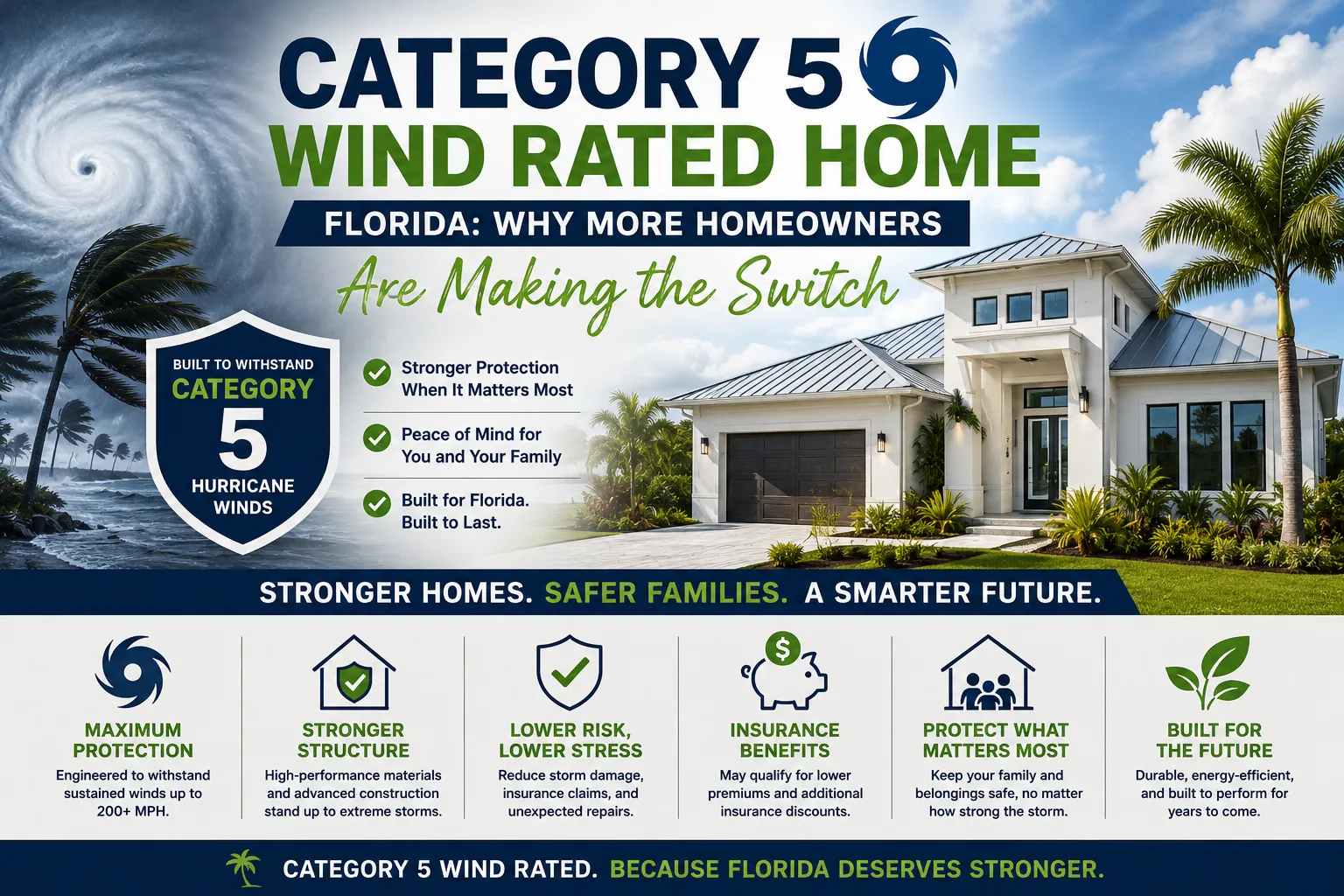
If you’ve lived through a major Florida hurricane, you already know the feeling. The forecasts get worse, the winds start howling, and suddenly your home becomes your biggest concern.
That is exactly why interest in a Category 5 wind rated home Florida has grown rapidly in recent years. As hurricanes become more intense and insurance costs continue to rise across Florida in 2026, homeowners are looking for stronger, safer housing options.
The good news? Modern engineering has made it possible to build homes specifically designed to resist some of the most extreme weather conditions Florida can experience.
What Is a Category 5 Wind Rated Home?
A Category 5 wind rated home is a structure engineered to withstand wind speeds associated with Category 5 hurricanes, which begin at 157 mph on the Saffir-Simpson Hurricane Wind Scale.
What Does “Wind Rated” Actually Mean?
Wind ratings are based on engineering calculations, building codes, and structural testing. A home with a Category 5 wind rating is designed so critical structural components remain intact during extreme storm events.
Why Is This Important in Florida?
Florida experiences more hurricane activity than almost any other state in the U.S. Coastal areas such as Redington Beach, Tampa Bay, Naples, Sarasota, and Miami face particularly high wind exposure.
Are Category 5 Homes Hurricane-Proof?
No home is completely hurricane-proof. However, a properly designed Category 5 rated home can significantly reduce structural damage and improve occupant safety during severe storms.
The next question most homeowners ask is how these homes achieve such impressive protection.
Why Florida Homeowners Are Paying More Attention to Wind Ratings
Rising Hurricane Risks
Recent hurricane seasons have reminded Floridians that storm intensity can increase rapidly. Many homeowners are now prioritizing resilience over traditional construction methods.
Insurance Considerations
Insurance carriers increasingly evaluate construction quality when determining risk. While savings vary, stronger homes may qualify for certain mitigation credits.
Long-Term Property Protection
Repairing hurricane damage can cost tens or even hundreds of thousands of dollars. Investing in stronger construction often helps reduce future repair expenses.
How Category 5 Rated Homes Are Built
The strength of these homes comes from a complete structural system rather than a single feature.
Reinforced Steel Framing
Many Category 5-rated homes use galvanized steel framing instead of traditional wood.
Steel offers several advantages:
- Greater structural strength
- Resistance to rot and termites
- Reduced warping over time
- Improved load distribution during storms
Continuous Load Path Design
Engineers create a continuous connection from the roof all the way to the foundation.
This allows wind forces to travel safely through the structure rather than causing weak points that can fail during a hurricane.
Advanced Foundation Systems
Strong foundations help prevent uplift and shifting caused by extreme winds and storm surge conditions.
Key Features That Make These Homes Stronger
Impact-Resistant Windows and Doors
Flying debris is one of the biggest causes of hurricane damage.
Impact-rated windows help protect the building envelope even when struck by high-speed debris.
Hurricane-Rated Roofing Systems
Modern hurricane-resistant roofs use enhanced fastening systems and specialised materials designed to stay attached under extreme wind loads.
Engineered Connections
Metal straps, clips, anchors, and connectors strengthen critical structural joints throughout the home.
Category 5 Homes vs Traditional Homes
| Feature | Category 5 Wind Rated Home | Traditional Home |
|---|---|---|
| Wind Resistance | Extremely High | Moderate |
| Structural Strength | Engineered for severe hurricanes | Standard code requirements |
| Impact Protection | High | Varies |
| Maintenance | Typically lower | Often higher |
| Storm Resilience | Excellent | Moderate |
| Long-Term Durability | High | Depends on materials |
Pros
- Better hurricane protection
- Increased durability
- Potential insurance advantages
- Reduced maintenance
- Greater peace of mind
Cons
- Higher initial construction cost
- Specialized engineering requirements
- Limited availability in some markets
Are Category 5 Homes Worth the Investment?
For many Florida homeowners, the answer is yes.
Best For
- Coastal property owners
- Long-term residents
- Families seeking maximum storm protection
- Buyers concerned about future hurricane risks
May Not Be Necessary For
- Short-term investment properties
- Areas with lower wind exposure
- Buyers with extremely limited construction budgets
From my experience reviewing hurricane-resistant construction projects, homeowners often focus only on the upfront cost. What gets overlooked is the value of avoiding major storm repairs, displacement costs, and stress after a hurricane.
What Should You Check Before Buying or Building?
Verify Engineering Documentation
Ask for wind load calculations and engineering certifications.
Understand Local Building Codes
Florida building requirements vary by location and wind zone.
Work With Experienced Builders
Not every contractor specializes in hurricane-resistant construction.
Look Beyond Marketing Claims
A home advertised as “hurricane resistant” is not automatically engineered for Category 5 wind performance.
FAQ
What wind speed can a Category 5 wind rated home withstand?
Most are engineered for wind speeds associated with Category 5 hurricanes, typically starting at 157 mph and potentially higher, depending on the design.
Are steel homes better for hurricanes in Florida?
Steel-framed homes often provide greater structural strength and resistance to storm-related damage compared to conventional wood framing.
Do Category 5 homes cost more?
Yes, construction costs are typically higher initially. However, many homeowners view the additional cost as a long-term investment in durability and protection.
Can a Category 5 home survive every hurricane?
No structure can guarantee zero damage in every scenario. Properly engineered homes significantly improve resistance to extreme weather events.
Are these homes available throughout Florida?
Yes. Many builders now offer hurricane-resistant homes across Florida, especially in coastal and high-wind regions.
Contact Florida Experts
If you’re considering a hurricane-resistant or Category 5 wind-rated home in Florida and want professional guidance, contact the following:
Florida Steel Homes
📞 786-610-6398
📧 info@FloridaSteelHomes.com
📍 16104 4th St E, Redington Beach, FL 33708
A consultation can help you understand available construction options, wind ratings, and the best approach for your property.