Building a hurricane-resistant home in Florida doesn’t always mean spending huge amounts of money. With smart planning, strong structural materials, impact-resistant windows, elevated foundations, and proper roof design, homeowners can significantly reduce storm damage while keeping construction costs under control. The key is to focus your budget on structural safety rather than on luxury features.
If you live in Florida or are planning to buy property near the coast, hurricanes are not just a seasonal headline — they are a real risk that affects homes every year.
Build a Hurricane-Proof Home Without Breaking The Bank
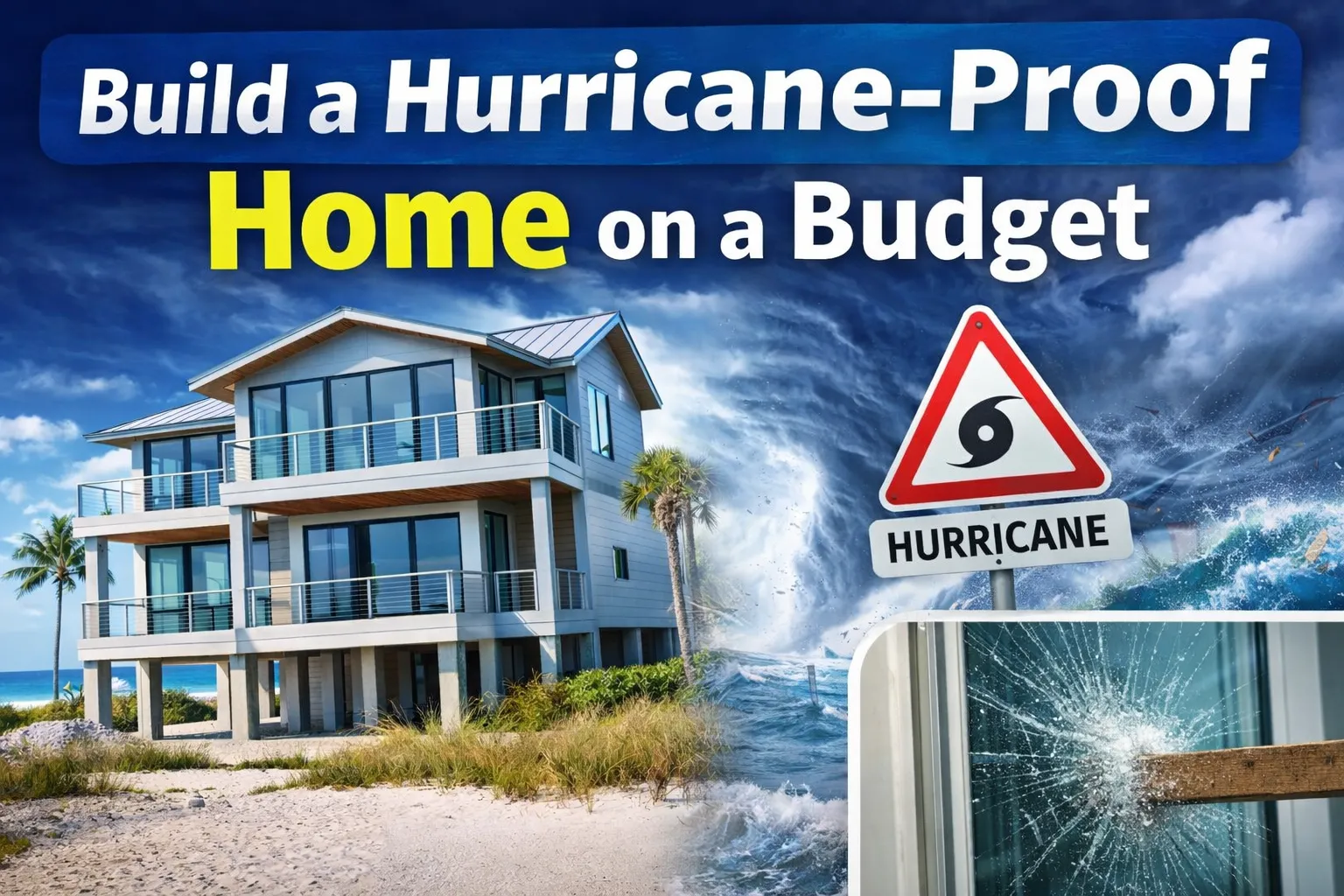
Many homeowners face the same painful situation after a major storm:
• Roof damage
• Broken windows
• Flooded interiors
• Extremely expensive repairs
Some families end up rebuilding or repairing their homes multiple times. Naturally, many people assume that building a hurricane-proof home must cost a fortune. But in reality, the smartest approach is not to spend more money — it’s to spend money in the right places.
With the right design choices and materials, you can build a hurricane-resistant home that protects your family and investment without blowing your budget.
Let’s walk through how to do it.
Why Florida Homes Need Hurricane-Resistant Construction
Florida’s coastal areas face strong winds, heavy rain, and storm surges during hurricane season. Wind speeds during major storms can exceed 150 mph, which puts enormous pressure on roofs, walls, and windows.
Traditional construction methods sometimes fail under this stress, which is why many homeowners are now choosing stronger building techniques.
A hurricane-resistant home focuses on three key goals:
• Prevent structural collapse
• Reduce wind and debris damage
• Protect the interior from water intrusion
When these three elements are handled correctly, homes survive storms far better.
Step 1: Start with a Strong Structural Frame
The structural frame is the most important part of a hurricane-resistant home. If the frame fails, everything else fails with it. Many older homes rely on wood framing, which can weaken over time due to moisture, termites, or strong winds.
A better long-term solution is using stronger structural systems.
Good cost-effective options include:
• Reinforced concrete block construction
• Light-gauge steel framing
• Structural steel supports
Steel framing has become especially popular in hurricane-prone areas because it:
• Resists strong winds
• Does not rot or warp
• Lasts longer than wood
• Requires less maintenance over time
Although the initial construction cost may be slightly higher than traditional wood, homeowners often save money in the long run due to reduced repairs and insurance benefits.
Step 2: Build a Wind-Resistant Roof System
In many hurricane damage reports, the roof is usually the first component to fail. Once the roof is compromised, wind and rain enter the house and cause widespread interior damage. Fortunately, there are several affordable strategies to strengthen your roof.
Choose a Hip Roof Design
Hip roofs slope on all four sides. This design allows wind to flow over the house rather than pushing directly against flat surfaces. Because of this aerodynamic shape, hip roofs are considered much more hurricane-resistant than traditional gable roofs.
Install Hurricane Straps
Hurricane straps connect the roof structure to the walls of the house. They are inexpensive but extremely effective in preventing roof uplift during high winds. Many builders consider them one of the most cost-effective storm protection upgrades available.
Consider Metal Roofing
Metal roofing has become increasingly popular for hurricane-resistant homes.
Advantages include:
• High wind resistance
• Long lifespan
• Lightweight design
• Lower maintenance costs
While metal roofs may cost slightly more upfront, they typically last far longer than traditional shingles.
Step 3: Protect Windows and Doors from Flying Debris
During hurricanes, debris such as branches, roof tiles, and outdoor objects can become dangerous projectiles. Standard windows often shatter instantly when struck.
This allows wind pressure to build inside the house, which can cause roofs to lift or walls to collapse. Impact-resistant windows provide strong protection against this type of damage.
However, if you’re trying to control your construction budget, there are still effective alternatives.
Affordable options include:
• Storm shutters
• Reinforced window panels
• Polycarbonate protective covers
These solutions help protect glass surfaces without requiring full window replacement.
Step 4: Elevate the Home to Reduce Flood Risk
Wind is only one part of hurricane damage.
Flooding from storm surge is often even more destructive.
Homes built at low ground levels in coastal areas face a much higher risk of water damage.
Elevating the structure is one of the smartest long-term decisions homeowners can make.
Common elevation methods include:
• Pier foundations
• Elevated concrete foundations
• Stilt-style coastal home designs
Benefits of elevating your home include:
• Reduced flood damage risk
• Potentially lower insurance costs
• Increased property value
• Improved long-term durability
Many modern coastal homes in Florida now follow this approach.
Step 5: Choose Durable Exterior Materials
Your home’s outer shell must withstand strong winds, rain, and debris.
Choosing durable exterior materials helps protect the structure and reduce maintenance costs.
Popular hurricane-resistant materials include:
• Fiber cement siding
• Reinforced concrete walls
• Stucco over concrete block
• Steel framing systems
These materials are known for their strength and durability in coastal climates.
They also tend to require less repair over time compared to traditional wood siding.
Step 6: Use Smart Architectural Design
Sometimes the most effective hurricane protection strategies are simply smart design choices.
For example:
Large roof overhangs can catch strong winds and increase structural stress.
Complex architectural shapes create pressure points where wind can cause damage.
Homes with simple shapes tend to perform better during storms.
Design recommendations include:
• Keep the house shape simple
• Limit large roof overhangs
• Reduce unnecessary exterior openings
• Ensure proper drainage around the property
These decisions don’t necessarily increase construction costs but can significantly improve hurricane resistance.
Step 7: Reduce Insurance Costs Through Better Construction
One benefit many homeowners don’t realize is that hurricane-resistant homes may qualify for insurance discounts.
Insurance providers often offer lower premiums for homes with strong wind-mitigation features, such as:
• Impact windows
• Reinforced roofing systems
• Hurricane straps
• Elevated foundations
Over time, these savings can offset part of the construction investment.
A Practical Example
Consider two homeowners building houses along the Florida coast.
The first focuses mainly on aesthetics and interior design but uses standard construction methods.
The second prioritizes storm-resistant materials and structural safety.
After a strong hurricane, the first home may require extensive repairs.
The second home may only need minor maintenance.
In the long run, the safer home often ends up costing far less.
Final Thoughts
Building a hurricane-resistant home does not require an unlimited budget.
What matters most is making smart construction decisions that prioritize structural strength and storm protection.
By focusing on:
• Strong framing materials
• Wind-resistant roof systems
• Protected windows and doors
• Elevated foundations
• Durable exterior materials
Florida homeowners can build safer homes that withstand extreme weather conditions while still keeping construction costs manageable.
If you’re planning to build a hurricane-resistant home in Florida, professional guidance can help ensure the structure meets coastal safety standards.
Get in touch
786-610-6398
info@FloridaSteelHomes.com
16104 4th St E, Redington Beach, FL 33708
Frequently Asked Questions
What is the most affordable way to build a hurricane-resistant home?
Using reinforced concrete block construction, installing hurricane straps, and choosing a hip roof design are among the most cost-effective ways to improve hurricane resistance.
Are steel-frame homes stronger during hurricanes?
Yes. Steel framing provides excellent structural strength and is highly resistant to wind damage compared to traditional wood framing.
Do hurricane-resistant homes reduce insurance costs?
Many insurance companies offer lower premiums for homes with wind-mitigation features such as impact windows, reinforced roofs, and elevated foundations.
Can existing homes be upgraded for hurricane protection?
Yes. Homeowners can install storm shutters, reinforce roof connections, upgrade windows, and improve drainage systems to increase hurricane resistance.