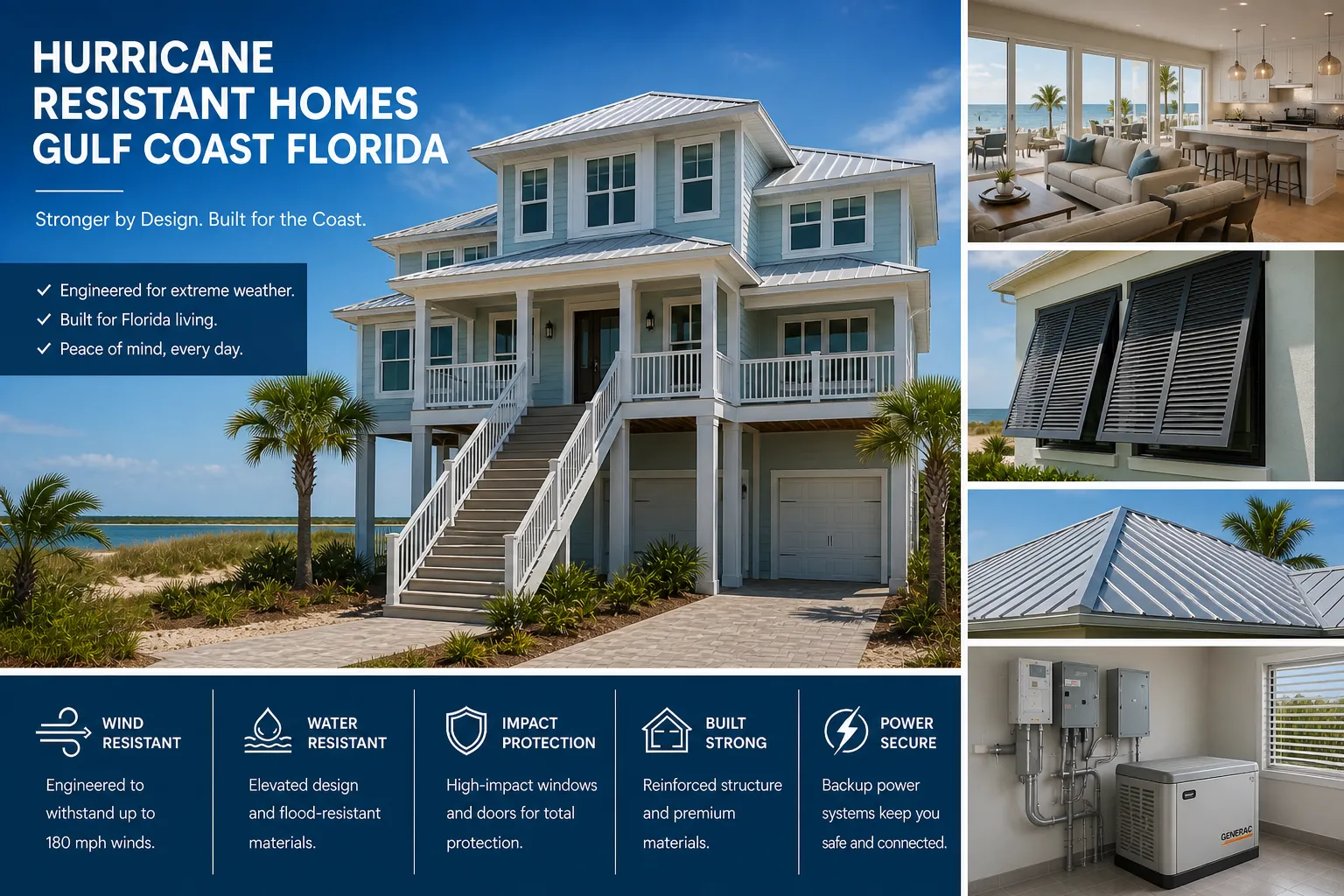
Gulf Coast, Florida, homebuyers are choosing steel and reinforced construction to survive hurricane season with far less damage. The upfront cost is higher, but insurance savings and peace of mind make it worth it. Here’s what you need to know before you buy or build.
Hurricane Resistant Homes in the Gulf Coast, Florida
The week after Hurricane Ian, a contractor friend of mine drove through Fort Myers Beach and said he couldn’t tell where the streets ended, and the debris began. Homes that had stood for 30 years were simply gone—foundations bare, slabs exposed to the sky. But every few blocks, something strange: a house still standing. The roof is intact, the windows unbroken, and the landscaping scattered, but the structure is solid. Those weren’t lucky homes. They were built differently, on purpose, by people who understood what Gulf Coast Florida actually asks of a building.
That image sticks with you when you’re shopping for a home down here. And more buyers than ever are letting it guide their decisions. Hurricane-resistant homes on Florida’s Gulf Coast have moved from a niche category to one of the fastest-growing buyer priorities in the region—and once you understand what separates a home that survives from one that doesn’t, it’s hard to look at a listing the same way again.
📞 Want to talk to someone who builds homes like this for a living? Call Florida Steel Homes at 786-610-6398 or email info@FloridaSteelHomes.com 16104 4th St E, Redington Beach, FL 33708
Why Buyers Are Genuinely Excited — Not Just Cautious
Here’s the thing nobody tells you about hurricane-resistant construction: it doesn’t just reduce fear, it changes how you feel about owning a home entirely. Buyers who’ve gone through the process describe a kind of quiet confidence they didn’t expect. They sleep differently during storm watches. They don’t compulsively refresh the National Hurricane Center website in August. One homeowner in Pinellas County told me she used to start packing two weeks before any named storm. Now she doesn’t.
There’s a financial layer to that confidence, too. Homes built to Miami-Dade impact standards — or framed in steel with proper load path engineering — can qualify for wind insurance discounts that genuinely shift the math. Some Gulf Coast homeowners are saving $4,000 to $7,000 a year on premiums compared to a standard wood-frame home nearby. Spread that over a decade and the “premium” you paid for better construction starts to look less like a cost and more like a down payment on a decade of savings.
What the Construction Actually Looks Like
Not every builder who uses the word “storm-ready” means the same thing, so it’s worth understanding what separates real hurricane resistance from marketing language. Here’s an honest comparison of the most common approaches:
| Construction Type | Wind Resistance | Flood Resilience | Cost vs. Standard | Insurance Benefit |
|---|---|---|---|---|
| Steel Frame (light gauge) | Excellent | Good with elevation | +10–20% | High |
| Insulated Concrete Form (ICF) | Excellent | Very Good | +15–25% | High |
| Reinforced Masonry (CBS) | Very Good | Good | +5–15% | Moderate |
| Standard Wood Frame (post-2002 code) | Moderate | Moderate | Baseline | Standard |
Steel-framed homes have earned a particularly strong following on the Gulf Coast, and not just because of wind performance. Steel doesn’t absorb moisture, doesn’t rot, and doesn’t give termites anything to work with — all problems that quietly destroy traditional wood-frame construction in Florida’s humid, salt-heavy coastal air. A properly engineered steel home with impact windows, fortified roof connections, and correct elevation can hold up against sustained winds above 150 mph. That’s not a marketing claim — that’s what the engineering specs say.
Three Things to Check Before You Commit
Ask for a wind mitigation report on any existing home you’re considering. This document tells you exactly how the home is connected at the roof, what the opening protection looks like, and when it was built relative to Florida’s updated building codes. Homes built before 2002 may predate the code changes that made a real difference — and that gap shows up in both performance and insurance rates.
Pay attention to elevation above and beyond the structure. A home can be built like a fortress and still flood to the ceiling. Pull the FEMA flood map for the parcel, ask what the finished floor elevation is relative to the base flood elevation, and understand that every additional foot above BFE meaningfully reduces your flood insurance cost. It’s not glamorous, but it matters more than almost anything else in a storm surge event.
Look closely at how the roof connects to the walls — this is where most homes fail. Basic clip connections are the code minimum, but hurricane straps rated for your wind zone are considerably stronger. If a builder or seller can’t tell you specifically what’s holding the roof down, that’s a gap worth filling before you sign anything.
Talk to Someone Who Builds These Homes Every Day
Florida Steel Homes builds steel-framed, hurricane-engineered homes specifically for life on Florida’s Gulf Coast. If you’re serious about owning something that stands up to whatever comes off the Gulf, they’re worth a conversation.
Call 786-610-6398, email info@FloridaSteelHomes.com, or stop by at 16104 4th St E, Redington Beach, FL 33708. No sales pitch — just straight answers from people who know this coastline and know how to build for it.