Not every Florida community gets destroyed during hurricanes. Some neighborhoods survive with little to no damage because of elevation, smarter planning, and stronger construction. These real examples show what actually works when a major storm hits.
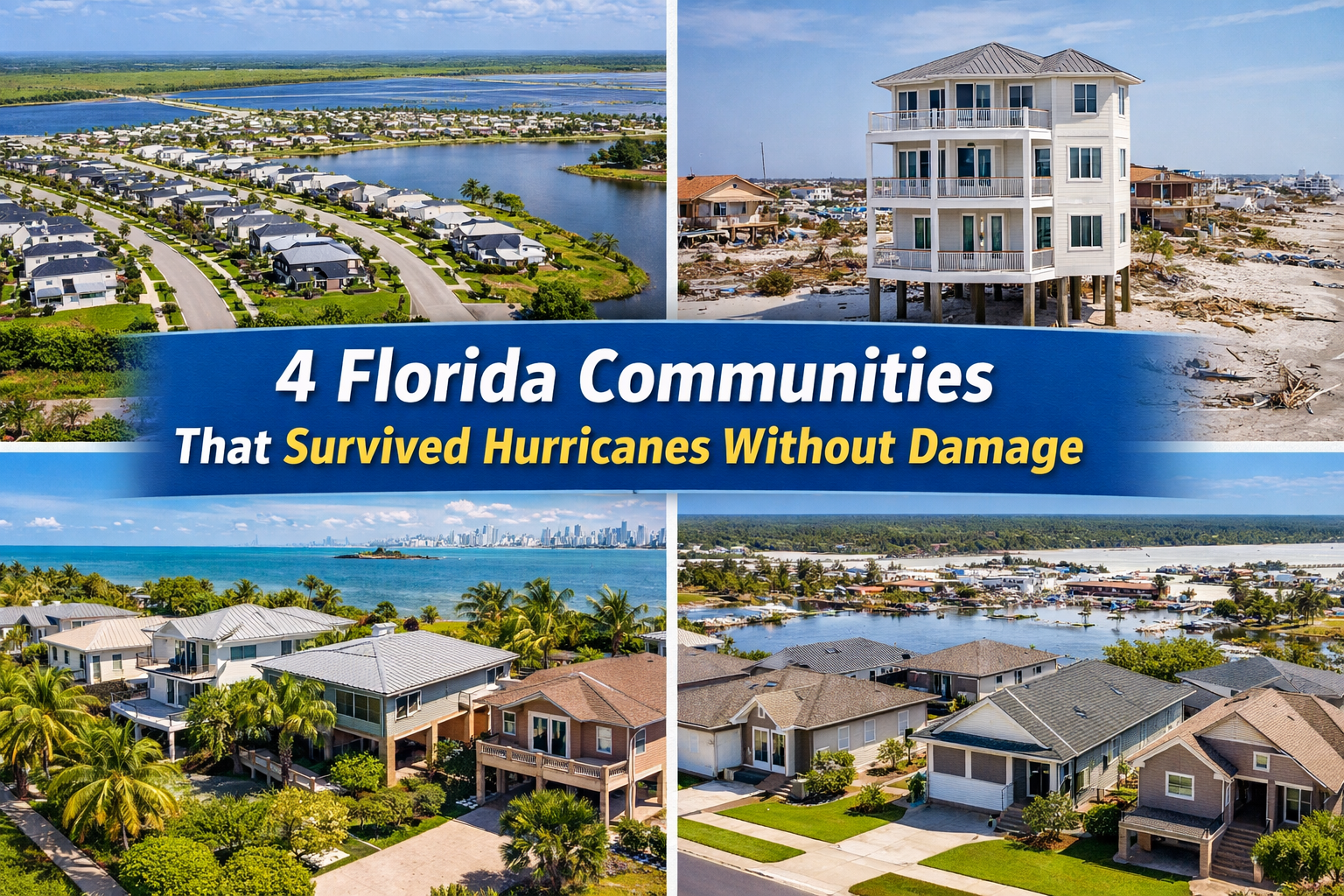
4 Florida Communities That Survived Hurricanes Without Damage
When a major hurricane hits Florida, the expectation is usually the same—widespread damage, flooded streets, torn roofs, and long recovery periods. But that’s not always the case. Some communities manage to come through powerful storms with minimal or almost no damage.
The difference isn’t luck. It comes down to how and where these communities were built, the materials used, and how seriously storm resilience was taken from day one. If you’re planning to buy or build in Florida, these examples can completely change how you think about safety.
1. Babcock Ranch – A Community Built for Storm Resilience
Babcock Ranch became one of the most talked-about communities after Hurricane Ian because it remained largely intact while surrounding areas experienced severe destruction. What makes this community different is that it was designed with resilience as a priority, not an afterthought.
The homes are built on higher ground, which significantly reduces flood risk, and the entire area includes a well-planned stormwater management system that helps move water away quickly during heavy rainfall. Another major advantage is underground power infrastructure, which prevents widespread outages caused by falling poles and lines.
The buildings themselves follow strict Florida codes designed to withstand high wind speeds, making them far more durable during extreme weather events. This community proves that when resilience is built into the foundation, survival is not a coincidence.
2. Mexico Beach – The “Sand Palace” That Defied Hurricane Michael
Mexico Beach saw catastrophic destruction during Hurricane Michael, yet one home—famously known as the “Sand Palace”—stood strong while nearly everything around it was destroyed. This wasn’t accidental. The home was built using reinforced concrete, deep pilings anchored into the ground, and an elevated design to stay above storm surge levels.
Impact-resistant windows and doors helped protect against flying debris, which is one of the leading causes of structural failure during hurricanes. The construction focused heavily on wind resistance, allowing it to withstand extreme pressure that caused neighboring homes to collapse. This example highlights an important lesson: even in the most vulnerable coastal locations, the right building approach can dramatically improve survival outcomes.
3. Key Biscayne (Selected Elevated Homes) – Elevation Made the Difference
Key Biscayne has experienced multiple hurricanes over the years, and while some areas faced flooding and damage, certain elevated homes remained almost untouched. These properties were built above base flood elevation levels, which kept them out of reach of storm surge water.
In hurricane-prone areas, flooding often causes more destruction than wind, and elevation directly addresses that risk. Homes that combined elevation with reinforced construction, such as concrete structures and hurricane-rated windows, performed significantly better. The takeaway here is simple but powerful—location alone doesn’t determine damage; how high and how well a home is built matters just as much.
4. Pensacola (Hurricane Sally Survivors) – Strong Codes in Action
During Hurricane Sally, parts of Pensacola experienced flooding and structural damage, but many newer homes built under updated Florida building codes remained in excellent condition. These homes were constructed with modern materials, reinforced roofing systems, and better fastening techniques that help keep the structure intact during high winds.
Impact-resistant windows and doors prevented internal pressure buildup, which is a common reason homes fail during hurricanes. In addition, improved drainage planning in some neighborhoods helped reduce standing water and long-term damage. This shows that updated construction standards are not just regulations—they are real-world protection systems that can significantly reduce risk.
What These Communities Teach Florida Homebuyers
One of the biggest misconceptions is that any home in Florida is equally vulnerable to hurricanes. That’s simply not true. The communities that survived with little to no damage share a few critical traits. Elevation plays a major role in preventing flood damage, especially in coastal areas. Strong building materials such as reinforced concrete and steel provide better resistance against extreme winds.
Smart infrastructure, including underground utilities and proper drainage systems, reduces secondary damage. Most importantly, strict adherence to modern building codes ensures that homes are designed to handle real hurricane conditions, not just pass inspections. When these factors come together, the difference in outcomes becomes obvious.
Why Buyers Are Paying More Attention Than Ever
After recent hurricanes, buyers in Florida are no longer just asking about price or location—they’re asking how well a home can survive a storm. This shift is changing the market. Communities that prioritize resilience are becoming more attractive, not just for safety but also for long-term value. Insurance costs, repair risks, and peace of mind all play into this decision. A home that can withstand a major hurricane isn’t just a safer investment—it’s a smarter one.
Final Thought
Hurricanes are inevitable in Florida, but destruction doesn’t have to be. The communities that survived without damage didn’t rely on luck—they relied on better decisions. If you’re considering buying or building a home, focusing on elevation, materials, and construction standards can make all the difference when the next storm arrives.