The night Hurricane Helene made landfall, I watched my neighbor’s roof peel off like a banana skin. Our home — a traditional wood-frame build from the ’90s — survived, but barely. Windows shattered. Water came through every crack. It took 11 months to fully repair.
That experience sent me down a rabbit hole of research, building codes, and conversations with engineers and contractors across Florida. The question I kept coming back to: are Florida homes actually hurricane-proof?
The short answer? No home is completely hurricane-proof. But that’s not the full story. The real answer — the one that could save your family — is more nuanced, more hopeful, and more actionable than most people realize.
Let’s break it all down.
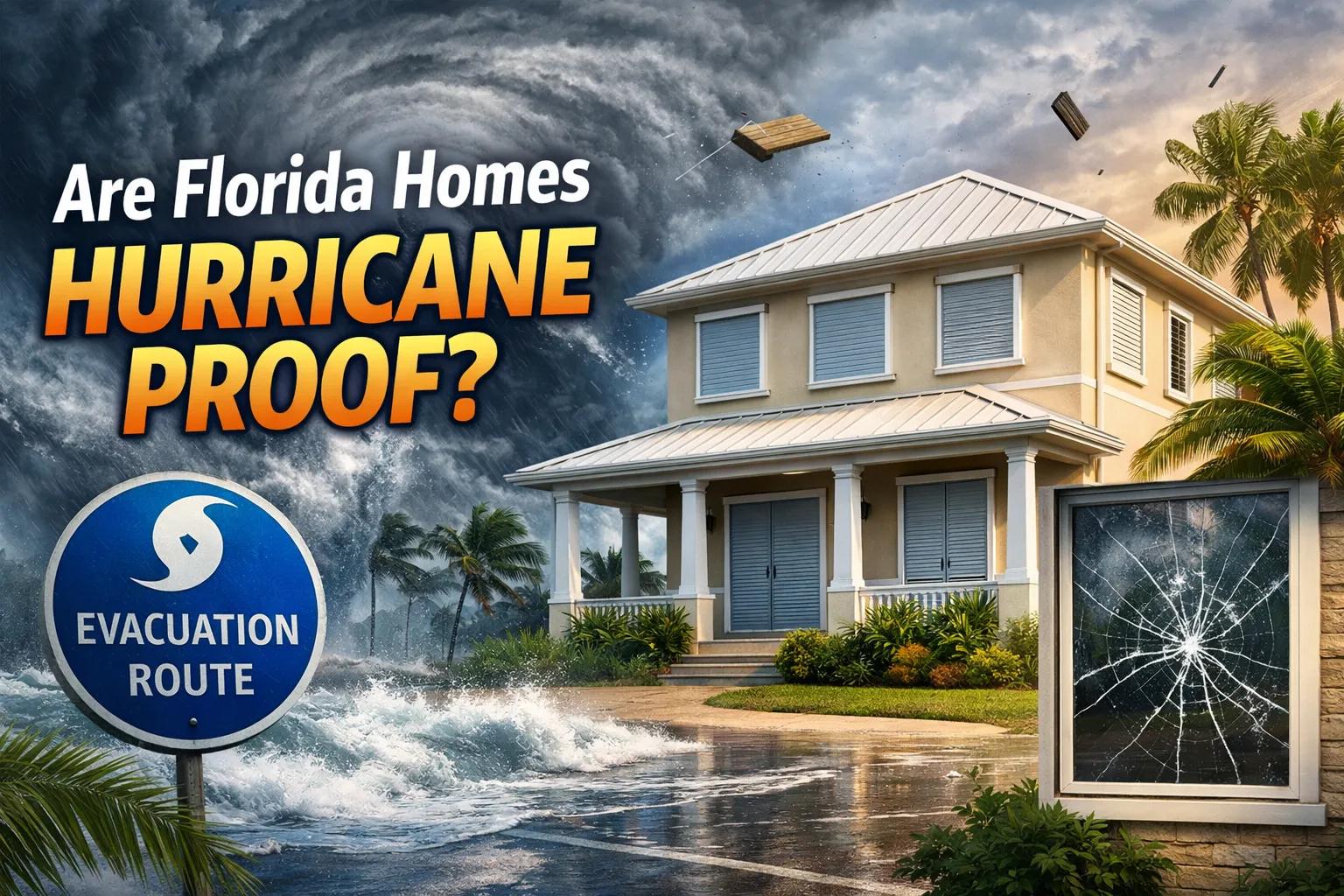
Florida Homes Hurricane Proof: 7 Warnings Before You Build
How Florida’s Building Codes Changed Everything After 1992
Most people don’t realize there’s a clear before-and-after moment in Florida construction history: Hurricane Andrew, August 24, 1992.
Andrew was a Category 5 monster that obliterated more than 125,000 homes in South Florida. The damage wasn’t just from wind — it was from homes that were badly built, poorly inspected, or designed to codes that had no business being called ‘hurricane standards.’
The 2002 Florida Building Code Overhaul
In response to Andrew and later Hurricane Charley (2004), Florida introduced what is now widely considered the toughest residential building code in the United States. According to the Florida Division of Emergency Management (floridadisaster.org), post-2002 homes must be engineered to withstand wind speeds based on their specific county and proximity to the coast.
In Miami-Dade County, for instance, homes must be designed to handle 175 mph wind speeds. Broward County requires 155 mph. These aren’t suggestions — they’re code requirements enforced by licensed inspectors at every stage of construction.
What Happens to Homes Built Before 2002?
Here’s where it gets uncomfortable. If your home was built before 2002 — and millions of Florida homes were — you may be living in a structure that doesn’t meet current hurricane-resistant standards.
Pre-2002 homes are statistically 2-3 times more likely to suffer major structural damage in a Category 3 or higher storm, according to the Insurance Institute for Business and Home Safety (IBHS).
The single most important upgrade for older homes? A secondary water barrier on the roof deck and hurricane straps connecting rafters to wall framing. These two upgrades alone can reduce structural roof damage by up to 70%.
Why ‘Built to Code’ Doesn’t Always Mean ‘Storm Proof’
Even post-2002 construction has a ceiling. Codes set minimums, not maximums. A home that meets the minimum code for a 155 mph zone isn’t ‘rated’ to survive a direct hit from a Category 5 storm without some damage.
What modern code does guarantee is that your home is significantly more likely to stay structurally intact — protecting lives — even if finishes, windows, and roof materials take a beating.
The Material Difference: Wood, Concrete Block, and Steel Frame Compared
Most Florida homes are built with one of three primary structural systems. Each performs very differently when the wind hits 150 mph.
Wood Frame: The Standard — and Its Weaknesses
Wood frame construction is the most common residential building method in the U.S. It’s affordable, familiar, and faster to build. But wood has real vulnerabilities in hurricane conditions.
Wood rots. It warps under moisture exposure. And critically, it’s the preferred food source of Formosan termites, which are absolutely rampant across Florida. A termite-compromised wall stud in a hurricane is a structural failure waiting to happen.
Wind ratings for wood-frame homes typically max out around 90-110 mph for standard construction, though engineered wood systems can go higher when properly installed.
Concrete Block (CBS): Better, But Not Bulletproof
Concrete Block Structure (CBS) homes dominate South Florida — and for good reason. Concrete doesn’t rot, resists termites, and handles wind better than standard wood framing.
But CBS construction has blind spots. The roof connection is often a weak point: even a solid concrete block home can lose its entire roof in a Category 4+ storm if the roof-to-wall connections aren’t engineered to modern standards.
Many older CBS homes also lack proper hurricane strapping, waterproof coatings on the block, and code-compliant impact windows, which turns them from ‘hurricane resistant’ into ‘wind and rain collector.’
Steel Frame: The Highest Standard for Storm Resistance
Steel frame construction is gaining serious traction in Florida — and the physics explain why. Steel is non-combustible, termite-proof, doesn’t rot or warp, and when engineered correctly, can be certified to handle wind speeds exceeding 185 mph.
Companies like Florida Steel Homes (floridasteelhomes.com) build homes certified for Category 5 hurricane protection, with elevated foundation systems designed specifically for storm surge and flood zones. Their construction process includes full-service project management and licensed Florida contractors who specialize in this type of build — a critical differentiator, since steel frame construction requires specialized knowledge that not every builder has.
One feature worth noting: steel frame homes can be elevated more easily than CBS construction, which is critical in FEMA-designated flood zones. Elevation doesn’t just protect from storm surge — it can dramatically reduce your flood insurance premiums as well.
Home Construction Comparison: Hurricane Performance
| Feature | Wood Frame | Concrete Block | Steel Frame |
| Max Wind Rating | 90-110 mph | 130-150 mph | 185+ mph (Cat 5) |
| Termite Resistance | Poor | Moderate | Excellent |
| Flood/Elevation Options | Limited | Moderate | Excellent |
| Lifespan | 50-75 years | 75-100 years | 150+ years |
| Insurance Premium Impact | Highest | Moderate | Lowest |
| Mold/Moisture Risk | High | Moderate | Low |
| Build Time | 6-12 months | 8-14 months | 4-6 months |
What Actually Makes a Home Hurricane Resistant? The 6 Critical Features
Whether you’re buying, building, or retrofitting, these six elements are what separate a home that survives a major hurricane from one that doesn’t.
1. Impact-Resistant Windows and Doors
This is the most misunderstood hurricane protection feature. People often think hurricane shutters are the gold standard — and they were, 20 years ago. Today, impact-resistant glass (also called hurricane glass or laminated glass) provides equivalent protection without the hassle of deploying shutters during a rapidly approaching storm.
Miami-Dade certified impact windows must withstand a 9-pound 2×4 fired at 34 mph AND sustained wind pressure equivalent to a Category 5 hurricane. When a window fails in a storm, it creates instant positive pressure inside the home, dramatically increasing the chance of roof uplift. Keeping your envelope intact is everything.
2. Roof-to-Wall Connections (Hurricane Straps)
Hurricane Andrew didn’t just break windows. It ripped roofs entirely off structures whose walls remained intact. The culprit? Inadequate roof-to-wall connections.
Modern code requires galvanized hurricane straps at every rafter-to-wall-plate connection — minimum every 4 feet, though better builders install them closer. These metal straps are the literal link between your roof and your home. Without them, a 150 mph wind event turns into a roofless event.
A qualified home inspector can check your current strap installation. The Florida Hurricane Loss Mitigation Program offers rebates of up to $10,000 for qualifying upgrades — check myfloridalicense.com for current program details.
3. Elevated Foundation
Storm surge is responsible for roughly 50% of all hurricane fatalities, yet it’s the risk most homeowners underestimate. A Category 4 storm can push a wall of water 10-15 feet high inland.
Elevated construction — typically on concrete pilings or a raised stem wall — keeps your living space above flood level. FEMA’s National Flood Insurance Program (FEMA.gov/flood-insurance) uses base flood elevation (BFE) calculations to determine required elevations in flood zones. Building even 1-2 feet above BFE can reduce your flood insurance premium by 30-40%.
4. Sealed Roof Deck (Secondary Water Barrier)
Even if your roof structure survives, water intrusion through damaged shingles or tiles during a hurricane is almost guaranteed in a direct hit. A secondary water barrier — typically a self-adhering modified bitumen membrane installed under the roofing material — creates a waterproof layer that prevents rain from entering your home even if you lose shingles.
This one upgrade alone is estimated to prevent the majority of interior water damage claims following a hurricane, according to IBHS research.
5. Garage Door Reinforcement
The garage door is the single largest, most vulnerable opening in most Florida homes. A garage door failure creates a massive opening for wind and rain, and can cause sudden and catastrophic pressurization of the entire structure.
Require either a wind-rated garage door (minimum 120 mph) or a bracing system for your existing door. Miami-Dade product approval codes are your benchmark — if a product has a Miami-Dade NOA (Notice of Acceptance), it’s been tested for real-world hurricane conditions.
6. Comprehensive Building Envelope
The ‘building envelope’ refers to every point where the outside meets the inside — windows, doors, roof deck penetrations, vents, and utility connections. Every unsealed penetration is a potential failure point.
Foam sealant, waterproof tape, and proper flashing around every opening are cheap but absolutely critical elements. A home with a $50,000 impact window package that has an unsealed cable conduit penetration on the roof can still take significant water damage.
The Real Cost of Hurricane-Resistant Construction — and Why It Pays Off
One of the most common concerns I hear from Florida homeowners is: ‘Does hurricane-resistant construction cost significantly more?’ The answer depends heavily on what you’re comparing.
Upfront Cost vs. Lifetime Cost
A standard CBS home in Florida might run $150-180 per square foot for basic construction. A steel frame home with full hurricane-resistant features typically runs $180-220 per square foot — a 15-25% premium upfront.
But here’s what that comparison misses: lifetime costs.
Hurricane damage claims average $50,000-$100,000 per event for homes that sustain major damage. Insurance premiums for non-impact-resistant, non-steel homes in coastal Florida counties are now averaging $6,000-$12,000+ per year — and rising annually. A steel frame home with certified hurricane resistance can qualify for premium discounts of 30-60%, saving potentially $2,000-$5,000 per year in insurance costs alone.
Over a 20-year mortgage period, those insurance savings alone can exceed the entire upfront construction cost premium.
Energy Efficiency and Solar: The Hidden Financial Win
Modern hurricane-resistant steel homes, particularly those built with insulated steel panels or tight building envelopes, dramatically outperform older CBS and wood-frame construction on energy efficiency.
When you add a solar panel installation — which Florida Steel Homes currently includes free with qualifying home packages — monthly electricity bills can drop to as low as $35. In a state where average household electric bills run $130-170/month, that’s $100+ in monthly savings.
A home that is storm-resistant, energy-independent, and insurance-discounted isn’t just safer. It’s genuinely more affordable over time than a cheaper, less protected alternative.
Resale Value in a Storm-Aware Market
Florida’s real estate market has changed permanently post-2022. Buyers increasingly ask about hurricane ratings, wind mitigation reports, and flood zone status. A home with documented Category 5 certification and impact-resistant construction commands a measurable premium in today’s market.
Insurance costs have become such a driver of buyer decisions that in some coastal markets, buyers are willing to pay $30,000-$50,000 more for a home that demonstrably costs $200/month less to insure.
Pros & Cons: Hurricane-Resistant Steel Homes in Florida
| PROS of Hurricane-Resistant Steel Homes | CONS / Things to Consider |
| ✅ Certified Category 5 wind resistance | ❌ Upfront cost can be higher than older wood-frame builds |
| ✅ 150+ year structural lifespan | ❌ Requires licensed contractors familiar with steel construction |
| ✅ No termite treatments needed | ❌ Steel can conduct heat — good insulation is essential |
| ✅ Lower insurance premiums over time | ❌ Fewer builders specialize in steel (choose carefully) |
| ✅ Mold and moisture resistance | ❌ Not all lenders are familiar with steel home financing |
| ✅ Eligible for solar + backup power | ❌ Aesthetic customization requires expert design planning |
Step-by-Step: What to Do If You Want a Hurricane-Resistant Home in Florida
Whether you’re building new or upgrading an existing home, here’s a practical action plan:
- Get a Wind Mitigation Inspection First — A licensed Florida inspector will assess your current home’s hurricane resistance features and provide a formal Wind Mitigation Report. This report is submitted to your insurer and directly impacts your premium. Cost: $75-150. Potential annual savings: hundreds to thousands.
- Identify Your Flood Zone — Use FEMA’s Flood Map Service Center (msc.fema.gov) to identify your exact flood zone designation. This determines elevation requirements and flood insurance costs for any new construction or major renovation.
- Research Pre-2002 Upgrade Programs — If your home was built before the 2002 code overhaul, investigate Florida’s My Safe Florida Home program, which offers grants for hurricane retrofitting, including roof covering replacement, opening protection, and bracing systems.
- Consult with a Steel Frame Specialist for New Construction — If you’re building new, get at least one consultation with a steel frame builder. The difference in long-term cost, safety, and insurance profile may surprise you. Look for licensed Florida contractors with specific hurricane-resistant construction experience.
- Lock in Your Budget Before Finalizing Design — This is advice that applies especially to custom builds. Know your total budget before detailed architectural drawings begin. Construction surprises mid-project are expensive; surprises in hurricane season are catastrophic.
- Verify All Products Have Miami-Dade or Florida Product Approval — For any hurricane protection product — windows, doors, garage doors, roofing materials — verify the product has a current Florida Building Code or Miami-Dade County Notice of Acceptance. Products with these approvals have been independently tested under real-world hurricane simulation.
- Request a Detailed Project Management Plan — The best hurricane-resistant builders handle everything from permitting to final inspection. Understand the timeline, milestone schedule, and what triggers additional costs before you sign any contract.
Conclusion: The Question Isn’t ‘Are Florida Homes Hurricane Proof?’ — It’s ‘Is Yours?’
The truth is, Florida has the most stringent residential building codes of any hurricane-exposed state in America. If you’re building a new home today with a quality licensed contractor, using current code-compliant materials and systems, you’re getting a structure that is dramatically more storm-resistant than anything built before 2002.
But ‘more resistant’ isn’t the same as ‘hurricane proof.’ No home will emerge from a direct Category 5 hit without any damage. What matters is whether your home protects lives, stays structurally intact, and avoids the catastrophic losses — both human and financial — that older, under-built homes routinely suffer.
Steel frame construction, elevated foundations, impact windows, hurricane straps, and a properly sealed building envelope represent the best combination of protection currently available to Florida homeowners. When those elements work together in a well-engineered home, you’re not just surviving hurricanes — you’re making them significantly less terrifying.