Concrete hurricane-proof homes are becoming one of the safest housing options for Florida coastal areas. Reinforced concrete construction offers exceptional strength against extreme winds, flying debris, and storm surge. For Florida homeowners and coastal property buyers, building with concrete can reduce storm damage, lower long-term maintenance costs, and increase property durability. With proper design, reinforced walls, impact-resistant windows, and elevated foundations, a concrete home can provide strong protection during hurricanes.
Your Concrete Hurricane Proof House Awaits in Florida
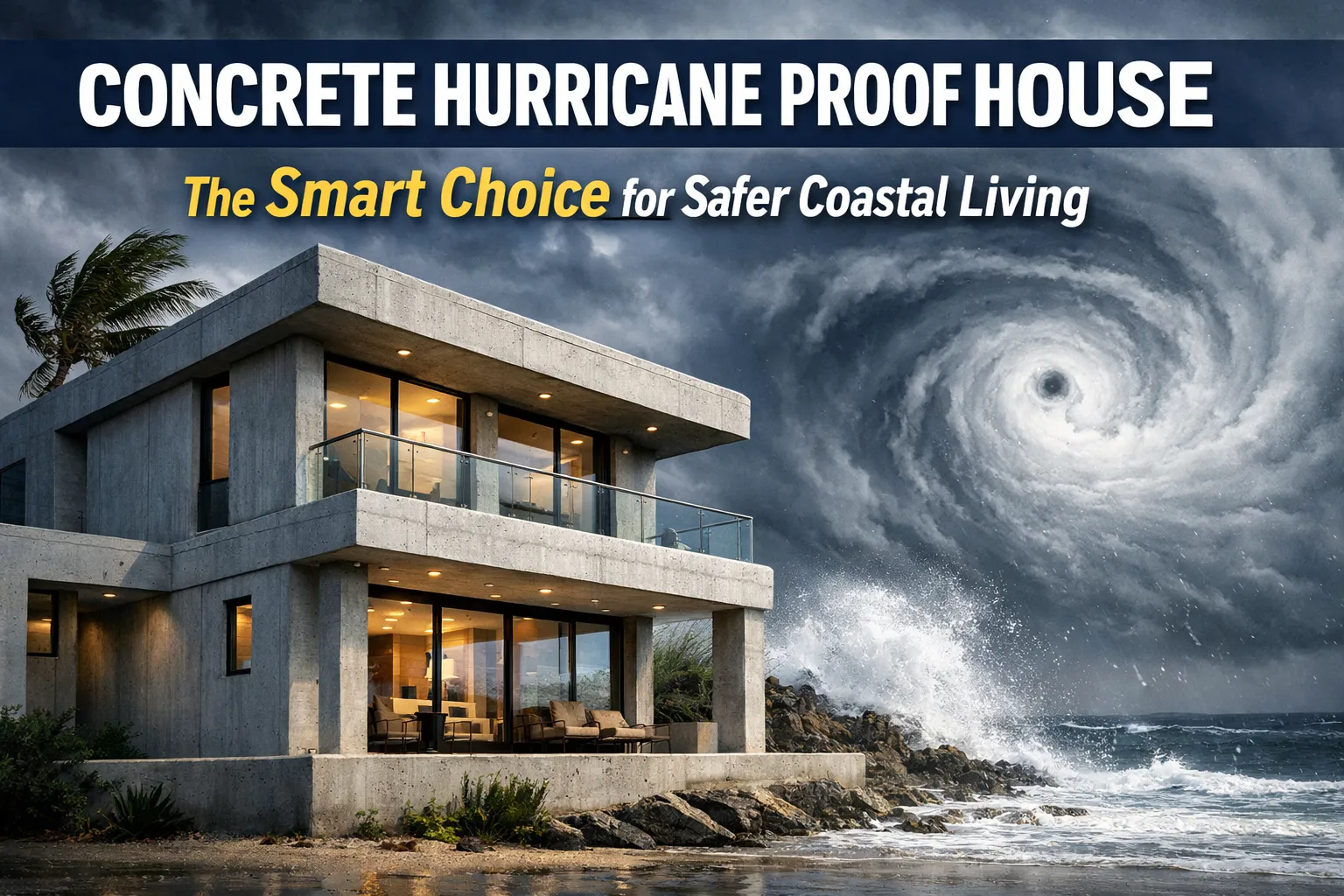
If you live in Florida or are planning to buy property near the coast, hurricanes are always part of the conversation. Beautiful ocean views and coastal living come with a real challenge: extreme weather events. Every year, hurricanes bring strong winds, heavy rain, and storm surge that damage thousands of homes across the state.
Many homeowners experience the same frustrating cycle:
• Storm arrives
• Property suffers damage
• Repairs cost thousands of dollars
Over time, these repeated repairs become more expensive than building stronger from the beginning.
Because of this, many Florida homeowners and coastal property buyers are now choosing concrete hurricane-resistant homes. These homes are designed to handle intense storms while protecting the long-term value of the property.
Let’s explore why concrete homes are becoming a preferred choice for safer coastal living.
Why Concrete Homes Are Better for Hurricane Zones
Hurricanes can produce wind speeds that exceed 150 miles per hour. In extreme storms, flying debris and pressure changes can cause major structural damage. Traditional wood-frame homes can sometimes struggle under these conditions. Concrete construction, however, creates a much stronger structure.
Reinforced concrete walls form a solid shell around the home, which helps resist wind pressure and protect the interior during storms.
Some major advantages of concrete homes include:
• High wind resistance
• Strong protection against debris impact
• Better moisture resistance
• Reduced long-term maintenance
These features make concrete homes especially valuable in hurricane-prone areas like coastal Florida.
Reinforced Concrete Walls: The Core Strength of the Home
A hurricane-resistant concrete home usually relies on reinforced concrete block walls or poured concrete construction. These walls are strengthened using steel reinforcement bars, which add structural stability.
Concrete Block Construction
Concrete block homes are very common in Florida because they perform well in coastal climates. These blocks are stacked together and reinforced with steel bars and concrete grout.
Benefits include:
• Strong structural support
• Resistance to termites and rot
• Long-lasting durability
• Minimal maintenance over time
Poured Concrete Construction
Some modern homes use poured concrete walls instead of concrete blocks. This method creates a continuous solid wall structure, which can increase strength and reduce weak points in the structure. Although poured concrete may increase the upfront construction cost slightly, it often provides excellent long-term durability.
Impact-Resistant Windows and Doors
Even when a home has strong concrete walls, windows and doors remain important areas to protect. During hurricanes, flying debris such as tree branches or construction materials can strike windows at high speeds. Standard windows may shatter easily, allowing wind pressure and rain to enter the home. Impact-resistant windows are designed to withstand heavy impacts without breaking apart.
Advantages include:
• Protection against flying debris
• Reduced risk of interior wind pressure
• Better safety during storms
• Possible insurance discounts
Some homeowners also install storm shutters for additional protection.
Elevating the Home to Reduce Flood Damage
Wind damage is not the only threat during hurricanes. Storm surge flooding can cause severe destruction in coastal areas. For this reason, many hurricane-resistant homes are built with elevated foundations. Elevating a home helps keep living areas above potential flood levels.
Common elevation solutions include:
• Raised concrete slab foundations
• Pier and beam foundations
• Coastal stilt-style construction
Benefits of elevation include:
• Reduced flood damage risk
• Improved drainage around the property
• Potentially lower flood insurance costs
Many modern coastal homes now follow these elevation strategies.
Roof Design for Hurricane Resistance
Even with strong concrete walls, the roof remains a critical part of hurricane protection. A poorly designed roof can still fail during extreme wind conditions.
Two important features improve roof performance.
Hip Roof Design
Hip roofs slope on all four sides, which allows wind to move over the structure more easily. This aerodynamic design reduces pressure compared to traditional gable roofs.
Hurricane Roof Straps
Hurricane straps connect the roof system to the walls of the home. These connectors help prevent roof uplift during strong winds. Although small and inexpensive, these straps provide significant structural reinforcement.
Cost vs Long-Term Value
Many homeowners initially worry that concrete homes may cost much more to build.
While construction costs can sometimes be slightly higher than wood framing, the long-term financial benefits are significant.
Concrete homes typically offer:
• Lower maintenance costs
• Increased durability
• Reduced storm damage risk
• Potential insurance savings
For homeowners living in hurricane zones, avoiding repeated storm repairs can save substantial money over time.
A Simple Example
Imagine two homes built near the Florida coast. One is a traditional wood-frame home. The other uses reinforced concrete construction. After a major hurricane, the wood-frame home may experience roof damage, broken walls, and severe interior flooding. The concrete home, however, is far more likely to remain structurally stable with minimal damage. This difference shows why many homeowners now consider stronger construction methods when building near the coast.
Final Thoughts
Concrete hurricane-resistant homes provide one of the most reliable solutions for safe living in Florida’s coastal regions. With reinforced concrete walls, impact-resistant windows, elevated foundations, and properly designed roofs, these homes can better withstand powerful storms.
For Florida homeowners and coastal property buyers, investing in stronger construction today can prevent costly damage in the future. Building with durability and storm protection in mind helps protect both your home and your long-term investment.
If you are planning to build a hurricane-resistant home along the Florida coast, professional guidance can help ensure the home meets modern safety standards.
Get in touch
786-610-6398
info@FloridaSteelHomes.com
16104 4th St E, Redington Beach, FL 33708