Florida Steel Homes

Florida living is beautiful — ocean views, warm climate, and coastal lifestyle. But anyone who owns or plans to buy property along the Florida coast knows one reality: hurricanes are not rare events. They are expected risks.

After every major storm, you’ll notice something striking. Some homes are severely damaged or destroyed, while others remain structurally intact with minimal impact. The difference is not luck. Its construction.

If you’re a Florida homeowner, coastal buyer, or property investor, building a hurricane-proof home is one of the smartest long-term decisions you can make. In this guide, I’ll walk you through exactly how hurricane-resistant homes in Florida are designed and built — step by step.

Hurricane-Proof Home: 8 Powerful Smart Ways to Build

Hurricane-Proof Home: 8 Smart & Strong Ways to Build


Why Florida Homes Need Hurricane-Resistant Construction

Florida faces some of the strongest coastal storms in North America. Wind speeds in major hurricanes can exceed 150 mph, and storm surge flooding can raise water levels several feet above ground.

Traditional wood-frame construction often fails under these conditions due to:

Hurricane-resistant homes are designed differently. They behave like a unified structural shell that resists wind, impact, and water simultaneously.

Step 1: Choose the Right Structural Material

The foundation of hurricane resistance begins with the main structural material.

Best materials for hurricane-resistant homes in Florida

1. Reinforced concrete (poured or block)

  • Extremely strong against wind loads

  • Fire and moisture resistant

  • Long lifespan in coastal climates

2. ICF (Insulated Concrete Forms)

  • Concrete core with insulation layers

  • High wind resistance (200+ mph capable)

  • Excellent energy efficiency

3. Structural steel framing

  • Non-rot, non-termite material

  • High strength-to-weight ratio

  • Ideal for elevated coastal homes

These materials dramatically outperform traditional wood framing in hurricane zones.

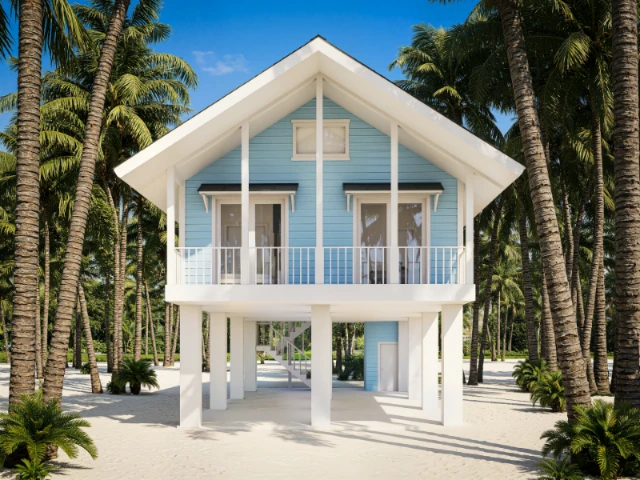
Step 2: Elevate the Home Above Flood Level

Flooding and storm surge cause massive damage in coastal Florida. Elevation is critical.

Elevation strategies

  • Raised slab foundations

  • Pier or pile foundations

  • Elevated living floors

  • Breakaway lower walls

Homes built above Base Flood Elevation (BFE) experience less flood damage dramatically and often qualify for lower insurance premiums.

Step 3: Design an Aerodynamic Roof System

Roof failure is the most common cause of hurricane destruction. Once the roof lifts, the entire structure is compromised.

Hurricane-resistant roof features

  • Hip roof design (sloped on all sides)

  • 30°–40° pitch for wind deflection

  • Metal or reinforced concrete roofing

  • Continuous load path anchoring

A properly engineered roof reduces uplift forces dramatically compared to gable roofs.

Step 4: Install Impact-Rated Windows and Doors

Wind pressure becomes destructive when openings fail. Broken windows allow internal pressurization that can blow roofs off.

Protection options

  • Impact-rated laminated glass windows

  • Hurricane-rated exterior doors

  • Reinforced garage doors

  • Permanent or deployable shutters

Florida building codes require impact protection in many coastal zones — and for good reason.

Step 5: Create a Continuous Load Path

One of the most important engineering principles in hurricane-resistant homes is the continuous load path. This means the roof, walls, and foundation are physically connected, so wind forces transfer safely to the ground.

Key components

  • Hurricane straps and clips

  • Anchor bolts

  • Reinforced wall connections

  • Steel tie-downs

This system prevents structural separation — the main cause of catastrophic failure in storms.

Step 6: Use Water-Resistant Exterior Systems

Hurricane-resistant homes must survive both wind and water.

Exterior protection strategies

  • Waterproof wall membranes

  • Moisture-resistant sheathing

  • Sealed roof underlayment

  • Elevated mechanical systems

These features reduce mold, rot, and long-term moisture damage after storms.

Step 7: Follow Florida Hurricane Building Codes

Florida has some of the strictest coastal building codes in the United States. These codes already incorporate hurricane-resistant design principles.

Key regulated factors include:

  • Wind load ratings

  • Impact protection zones

  • Flood elevation requirements

  • Structural anchoring standards

Working with experienced coastal builders ensures full compliance and maximum safety.

Step 8: Plan for Insurance and Long-Term Value

Hurricane-resistant construction isn’t just about safety — it’s a financial decision.

Benefits include:

  • Lower storm damage repair costs

  • Reduced insurance premiums

  • Higher resale value

  • Faster recovery after storms

  • Investor confidence in coastal property

Many Florida buyers actively seek storm-resistant homes today.

Common Mistakes to Avoid When Building in Florida

Even new homes sometimes fail hurricanes due to poor design choices.

Avoid:

  • Gable roofs in high-wind zones

  • Standard garage doors

  • Low elevation coastal slabs

  • Non-rated windows

  • Weak roof-wall connections

True hurricane resistance requires a system approach, not isolated upgrades.

Why More Florida Homes Are Being Built Hurricane-Resistant

Florida coastal construction is evolving. Buyers and investors increasingly demand resilient housing due to:

  • Rising storm intensity

  • Insurance market changes

  • Coastal property value protection

  • Climate risk awareness

  • Building code evolution

Hurricane-resistant homes are becoming the new standard in coastal Florida.

Final Thoughts: Building Safer Coastal Homes

Living in Florida’s coastal regions doesn’t have to mean living with constant hurricane risk. Modern construction methods allow homes to withstand extreme wind, impact, and flooding far better than traditional designs.

When properly built with reinforced materials, elevated foundations, impact protection, and engineered roofing systems, hurricane-resistant homes provide both safety and long-term investment value.

For homeowners, buyers, and investors, choosing hurricane-resistant construction is not just a building decision — it’s a resilience strategy for coastal living.

Get Expert Guidance for Hurricane-Resistant Homes in Florida

If you’re planning to build or invest in a hurricane-resistant home along the Florida coast, working with experienced coastal construction specialists is essential.

Florida Steel Homes
16104 4th St E, Redington Beach, FL 33708
📞 786-610-6398
📧 info@FloridaSteelHomes.com

Their expertise in reinforced coastal construction and storm-resistant housing helps Florida homeowners build safer, stronger, and longer-lasting homes designed for hurricane zones.

Leave a Reply

Your email address will not be published. Required fields are marked *