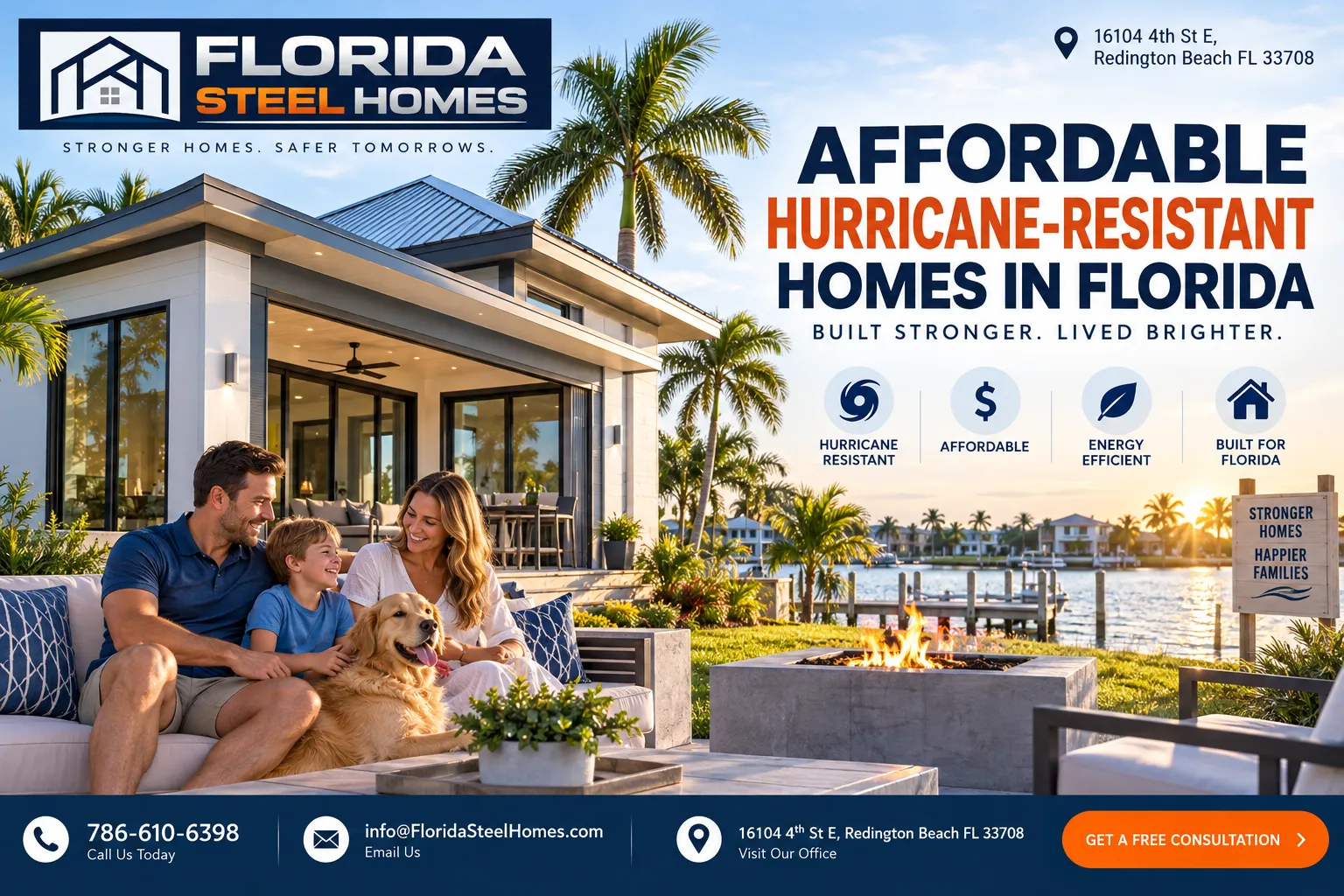
For decades, hurricane-resistant construction carried a reputation as a luxury reserved for high-end coastal properties. That reputation is outdated. Advances in materials, prefabrication, and building techniques have made storm-resilient homes accessible to a much wider range of budgets — without compromising on the protection families need when a major storm makes landfall. Builders like Florida Steel Homes, based in Redington Beach, FL, have built their entire business model around this idea — offering a range of hurricane-proof steel homes designed to fit different family sizes and budgets.
Affordable Hurricane-Resistant Homes in Florida
Why Hurricane Resistance Shouldn’t Be Optional
Hurricanes bring three distinct threats: extreme wind, wind-driven rain, and airborne debris. A home built to standard code minimums may survive a moderate storm, but it can suffer catastrophic damage in a Category 3 or higher event. Beyond the immediate danger, storm damage carries long-term financial consequences — repair costs, rising insurance premiums, and lost property value. Building resilience in from the start is almost always cheaper than rebuilding after the fact.
What Makes a Home Affordable and Resistant
Cost-effective storm resilience comes down to smart choices in a few key areas rather than expensive add-ons everywhere.
1. Structural Framing
Steel and reinforced concrete framing systems have become significantly more affordable in recent years, particularly when produced through prefabricated or panelised construction. These systems:
- Resist wind speeds well beyond typical wood-frame ratings
- Won’t rot, warp, or attract termites, reducing long-term maintenance costs
- Can be erected faster than traditional framing, cutting labour expenses
Florida Steel Homes, for example, builds its models on a full steel-core structure rather than traditional wood framing, which is a big part of how it keeps homes durable while managing costs over the life of the property.
2. Roof Design and Materials
The roof is the single most vulnerable part of a home during a hurricane. Affordable resilience improvements include:
- Simple hip roofs (four sloped sides) instead of complex gable designs, which perform better in high winds
- Hurricane straps and clips connecting the roof to the wall structure
- Impact-rated shingles or metal roofing, which often outlast standard materials and lower insurance costs over time
3. Windows and Doors
Impact-rated windows have dropped in price as demand has grown, and they eliminate the need for storm shutters — saving money on a separate protective system while improving everyday energy efficiency.
4. Elevation and Foundation
In flood-prone areas, elevating a home on pilings protects it from storm surge. While this adds upfront cost, it can dramatically reduce flood insurance premiums, often recovering the investment within several years. Many coastal builders, including Florida Steel Homes, offer elevated pile-foundation models specifically for beachfront and flood-zone lots.
Budget-Friendly Building Strategies
- Standardised floor plans: Pre-engineered home models — smaller two-bedroom layouts up through larger four-bedroom designs — reduce design and engineering costs compared to fully custom builds. Florida Steel Homes, for instance, offers a lineup of five pre-designed models:
| Model | Bed / Bath | Size | Starting Price |
|---|---|---|---|
| Lighthouse | 2 Bed – 2 Bath | 1,412 sq ft | From $419,364 |
| Breeze | 3 Bed – 2 Bath | 1,500 sq ft | From $445,500 |
| SeaMist | 3 Bed – 3 Bath | 1,550 sq ft | From $460,350 |
| Sunrise | 3 Bed – 3 Bath | 2,000 sq ft | From $594,000 |
| Oceancrest | 4 Bed – 4 Bath | 2,500 sq ft | From $742,500 |
This kind of tiered lineup — from a compact 2-bed entry model to a larger 4-bed family home — lets buyers choose a size that fits their budget without paying custom-design premiums, while every model still shares the same hurricane-resistant steel-core construction.
- Right-sizing the home: A well-designed, efficient layout can meet a family’s needs while keeping both construction and long-term costs manageable.
- Bundled resilience features: Ordering impact windows, reinforced framing, and roofing systems together as a package is often cheaper than adding them individually later.
- Insurance savings: Many insurers offer meaningful discounts for wind-mitigation features, which can offset a portion of the upfront investment over time.
Comparing Common Construction Types
| Construction Type | Typical Wind Resistance | Relative Cost | Maintenance |
|---|---|---|---|
| Standard wood frame | Meets local code minimum | Lowest upfront | Higher over time (rot, pests) |
| Reinforced wood frame | Improved with straps/clips | Low-moderate | Moderate |
| Steel frame | High | Moderate | Low, long-term durable |
| Insulated concrete form (ICF) | Very high | Moderate-high | Very low |
| Poured concrete | Highest | Highest | Very low |
Steel and reinforced-concrete hybrid construction often hits the sweet spot: significantly better performance than wood framing, at a cost premium that’s smaller than many homeowners expect — especially once insurance savings and reduced maintenance are factored in.
Questions to Ask Before You Build
- What wind speed rating is this home engineered for?
- Does the design meet or exceed local hurricane building codes?
- What wind-mitigation features qualify for insurance discounts?
- Is the foundation appropriate for the property’s flood zone?
- What is the expected timeline and total turnkey cost, including finishes?
The Bottom Line
Hurricane-resistant construction no longer has to mean a dramatically higher price. By focusing spending on the elements that matter most — framing, roof design, and impact-rated openings — and taking advantage of efficient building methods, homeowners in storm-prone regions can build a home that protects their family and their investment without stretching far beyond a standard construction budget.
Companies like Florida Steel Homes show that a range of entry-level to larger family-sized models can all be built on the same hurricane-resistant foundation, giving buyers real choice at different price points. The upfront cost difference is often recovered many times over in avoided damage, lower insurance premiums, and reduced maintenance across the life of the home.