If you own a home in Florida — or you’re planning to build one — the ground under the state’s construction rules is shifting. Between new permitting laws, tighter wind-load standards, and a brand-new edition of the Florida Building Code on the way, 2025-2026 is one of the most consequential regulatory windows Florida homeowners have seen in years.
Florida Building Code 2025-2026
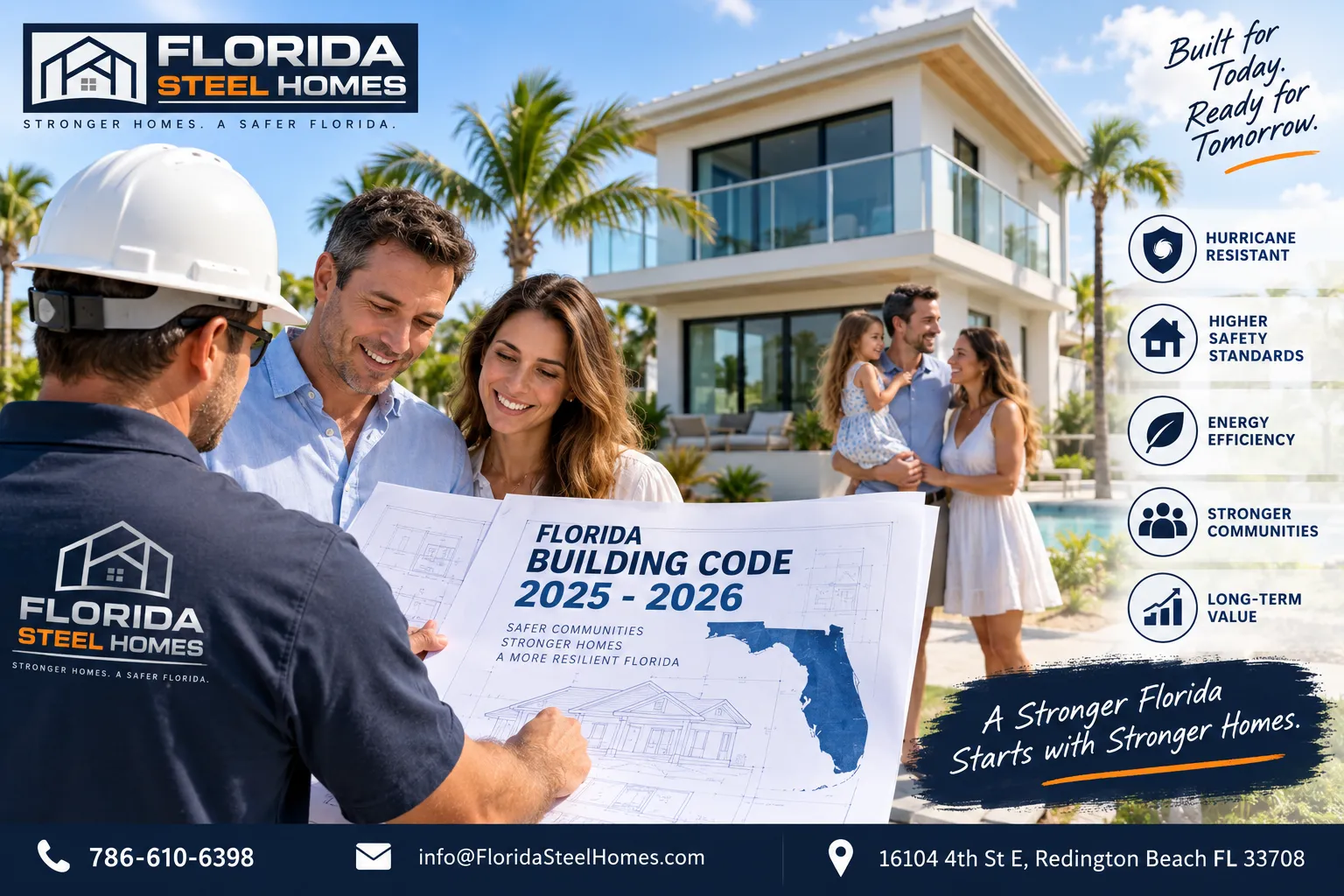
Here’s the short version: Florida’s 8th Edition (2023) Building Code is still the active statewide code through most of 2026, but the 9th Edition (2026) is already in development and is scheduled to take effect around December 31, 2026. Layered on top of that are new state laws that change how fast your permit gets approved, how your roof gets built, and how often your home gets inspected.
If you’re building new, remodelling, or simply trying to hurricane-proof an existing property, understanding these changes now can save you a redesign, a rejected permit, or a much bigger repair bill later.
1. Where the Florida Building Code Stands Right Now
The Florida Building Code (FBC) is maintained by the Florida Building Commission under Florida Statute 553.73 and updates on a three-year cycle, tied to the International Codes (I-Codes).
- 8th Edition (2023)—effective December 31, 2023, based on the 2021 I-Codes and ASCE 7-22 wind-load standards. This is the code your project is measured against today.
- 9th Edition (2026) — was posted for public/technical review in December 2025 and is on track to become effective December 31, 2026, based on the 2024 I-Codes. Because state law requires at least six months between publication and enforcement, the exact date can shift slightly, but late 2026 is the working target.
Why this matters for homeowners: if your permit is submitted close to the transition date, your project could get caught between two code editions — and a product or wall assembly that passes today may need a higher design-pressure rating under the 9th Edition. Timing your permit application matters.
2. The Big Changes Homeowners Should Actually Care About
A. Faster Permits, New Deadlines (House Bill 267)
Effective January 1, 2025, HB 267 puts hard deadlines on local building departments:
- Single-family permits under $15,000 must be approved within 5 business days or are automatically deemed approved.
- Emergency-zone permits signed by a licensed architect or engineer must be issued within 2 business days.
- Permit validity was extended to at least 180 days, or until the next code edition takes effect — whichever gives you more time.
B. Fire Safety Permit Speed-Up (House Bill 551)
Fire alarm and fire sprinkler permits now must be issued within 2 business days, with inspections required within 3 business days of a request — relevant if you’re adding a system during a renovation.
C. Roofing Rules Just Changed Significantly
The 8th Edition brought two changes homeowners feel directly:
- Peel-and-stick (self-adhering) underlayment is now permitted in Miami-Dade and Broward counties — previously restricted, this gives homeowners a faster, more weather-resistant re-roofing option.
- Two layers of underlayment are now required for asphalt shingle and metal roofs in high-wind zones, tightening water-intrusion protection.
- The 9th Edition is expected to go further, with proposals to allow partial roof recovery instead of full tear-off and to potentially eliminate the long-standing “25% roof replacement” rule—a change that could reshape roofing costs statewide.
D. Wind-Borne Debris Region May Expand
In late 2025, the Building Commission considered widening the wind-borne debris region — the zone where impact-rated windows, doors, and shutters are legally required. If adopted, more homeowners outside the traditional coastal-only zones could suddenly need hurricane-rated openings on their next permit.
E. Stricter Wind-Load Engineering (ASCE 7-22 → moving toward 2024 I-Codes)
Redrawn wind-speed maps and tighter components-and-cladding calculations mean structural engineering for new builds is getting more conservative — especially for anything near the coast.
F. Milestone Inspections & Recertification
Ageing condos and certain residential structures continue to face expanded milestone inspection and recertification deadlines, a direct legislative response to structural failures in recent years.
Bottom line: codes are tightening in almost every direction — faster paperwork, but stricter structural and roofing standards. Homeowners building or renovating in the next 12-18 months should assume the bar for wind resistance is only going up, not down.
3. What This Means If You’re Planning to Build or Rebuild
If you’re weighing a rebuild after storm damage, a new coastal home, or even a backyard ADU, these code changes point toward one practical conclusion: build to tomorrow’s standard, not today’s minimum. A structure engineered only to squeak past the current 8th Edition may already need retrofitting once the 9th Edition’s tighter wind-load maps take effect.
This is exactly where steel-framed, hurricane-proof construction has an advantage. Steel structures typically exceed both current ASCE 7-22 wind-load requirements and the anticipated 9th Edition standards with a significant margin — meaning you’re not just meeting code, you’re building ahead of it.
Not sure whether your current home or your build plans meet the incoming code? Florida Steel Homes reviews plans against both the active 8th Edition and the upcoming 9th Edition requirements before you break ground.
📞 786-610-6398
✉️ info@FloridaSteelHomes.com
4. Hurricane-Proof Steel Homes: Building Ahead of the Code, Not Behind It
Florida Steel Homes designs and builds hurricane-proof homes engineered around steel framing — a construction method built to withstand extreme wind loads well beyond what current code minimums demand. As Florida’s wind-speed maps get redrawn and the wind-borne debris region potentially expands, steel construction gives homeowners a structural buffer against the next round of tightening rules, not just the current one.
For homeowners looking at smaller footprints — a guest house, a rental unit, a coastal retreat, or a standalone accessory dwelling — we also build hurricane-proof tiny homes in Florida. These compact steel structures deliver the same wind-rated, storm-resilient engineering as our full-size builds, at a smaller scale and lower cost — ideal for property owners who want real hurricane protection without a full custom-home budget.
Whether it’s a full hurricane-proof residence or a hurricane-proof tiny home, every build is engineered to current ASCE 7-22 wind standards with the 9th Edition’s tighter requirements already factored in.
Ready to see what a code-ready steel build looks like for your property?
📍 16104 4th St E, Redington Beach, FL 33708
📞 786-610-6398
✉️ info@FloridaSteelHomes.com
5. Frequently Asked Questions
Q: Is the Florida Building Code changing in 2026? A: Yes. The 9th Edition of the Florida Building Code is expected to take effect around December 31, 2026, replacing the current 8th Edition (2023). It will be based on the 2024 International Codes and continue to reference updated wind-load standards.
Q: Will my building permit be affected by the code transition? A: Possibly. Permits submitted close to the code-change date should be reviewed carefully — the edition in effect when your permit is processed generally governs your project, so timing matters.
Q: Do I need impact windows under the new Florida code? A: Impact-rated windows and doors are currently required within the wind-borne debris region. The Building Commission has discussed expanding this region, which could bring more homes under the requirement in the future.
Q: Are steel homes considered hurricane-proof under Florida code? A: Steel-framed construction is engineered to meet and typically exceed Florida’s current ASCE 7-22 wind-load requirements, making it one of the most resilient options available for both full-size homes and hurricane-proof tiny homes.
Q: How fast can I get a residential permit approved in Florida now? A: Under House Bill 267, single-family permits under $15,000 must be approved within 5 business days or are deemed automatically approved.
6. Talk to a Florida Hurricane-Proof Home Specialist
Code changes are complicated, but the goal is simple: a home that stands up to Florida’s next storm season and the next one after that. Florida Steel Homes builds hurricane-proof homes and hurricane-proof tiny homes engineered to outperform current and upcoming Florida Building Code standards.
Florida Steel Homes
📍 16104 4th St E, Redington Beach, FL 33708
📞 786-610-6398
✉️ info@FloridaSteelHomes.com
Get a free code-compliance review of your build plans before you file your permit.