Florida homeowners know the drill: every June through November, the state braces for hurricane season. After back-to-back storm seasons and rising insurance premiums, more Floridians are asking the same question — how do I build a home that can actually survive a Category 4 or 5 hurricane?
Hurricane-Proof Homes in Florida
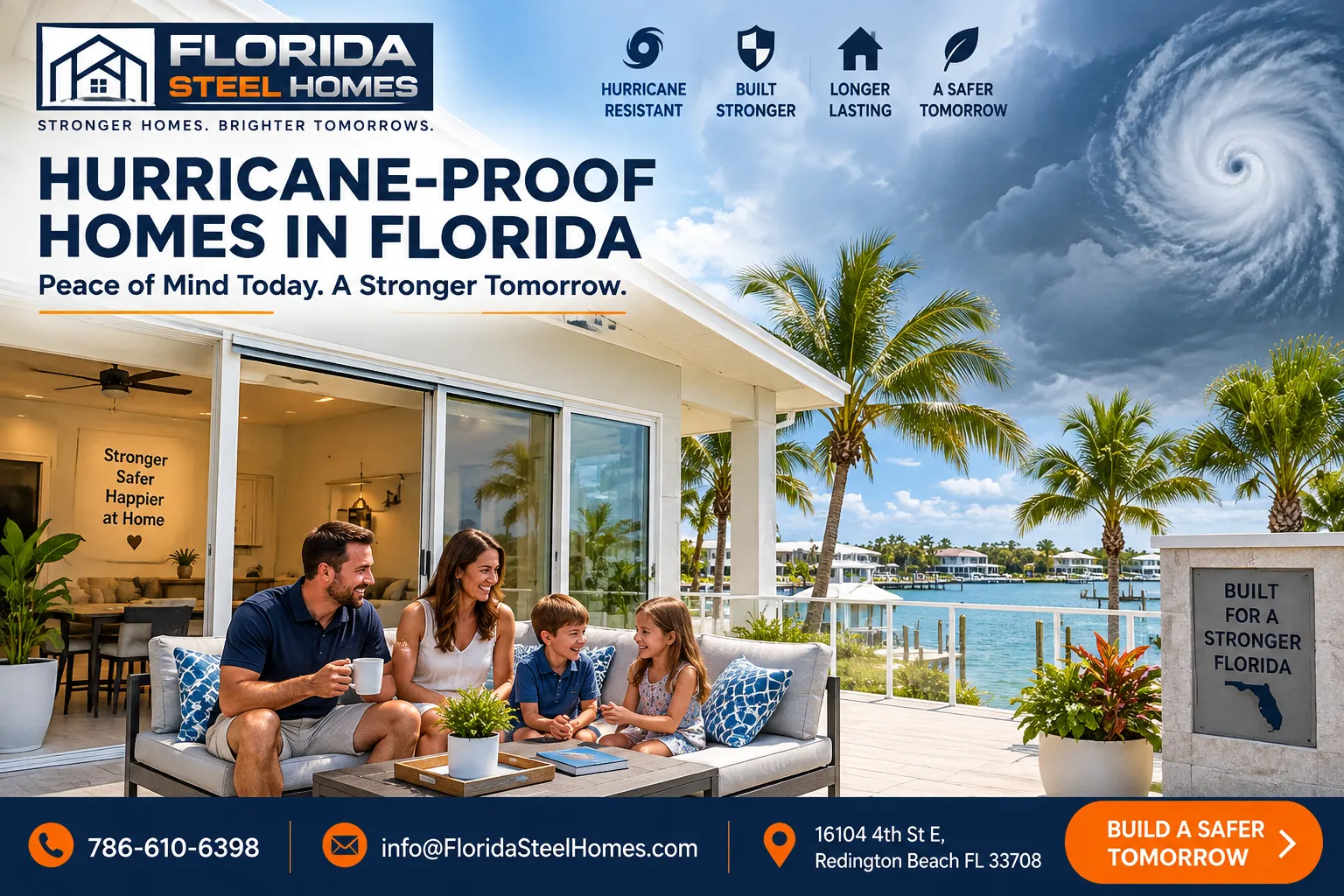
The answer, increasingly, is steel. In 2026, hurricane-proof steel homes have moved from a niche option to the fastest-growing category of resilient construction in Florida, and Florida Steel Homes is one of the builders leading that shift, delivering engineered steel homes—including compact, hurricane-proof tiny homes—across the state.
If you’re researching hurricane-resistant construction this year, here’s what actually matters, what to look for in a builder, and why steel is outperforming traditional wood-frame and even concrete-block construction.
Why “Hurricane-Proof” Actually Matters in Florida Right Now
No home is 100% indestructible, but there’s a real, measurable difference between a standard wood-frame house and an engineered steel structure when 150+ mph winds hit.
- Wind resistance: Steel-framed homes are engineered to withstand winds up to 180+ mph, well above Florida’s building code minimums in most coastal counties.
- Insurance savings: Florida insurers increasingly offer premium discounts for homes with reinforced steel framing, impact-rated windows, and certified wind-mitigation features.
- Flood and moisture resistance: Unlike wood, steel doesn’t rot, warp, or attract termites — a major issue in Florida’s humid climate.
- Longevity: A properly engineered steel home can outlast a traditional wood-frame home by decades with minimal maintenance.
With FEMA and Florida’s Building Commission continuing to push resilience standards for 2026 construction, steel isn’t just a preference anymore — it’s becoming the practical standard for anyone building near the coast.
Thinking about upgrading to a storm-resistant home this year? Call Florida Steel Homes at 786-610-6398 for a free wind-resistance consultation.
What Makes a Home Truly Hurricane-Proof? Key Features to Look For
When evaluating builders in 2026, don’t just ask if a home is “hurricane-rated” — ask how. Here’s the checklist serious buyers should use:
1. Steel Frame Construction
Cold-formed or structural steel framing resists bending, warping, and structural failure far better than wood under sustained high-wind pressure.
2. Impact-Rated Windows and Doors
Look for windows and doors rated for large missile impact (per Florida Building Code, High-Velocity Hurricane Zone standards), not just “hurricane shutters” as an add-on.
3. Reinforced Roof-to-Wall Connections
Most hurricane roof failures happen at the connection points. Certified hurricane straps and continuous load paths from roof to foundation are non-negotiable.
4. Elevated & Reinforced Foundations
In flood-prone zones, elevation combined with a reinforced steel foundation system protects against both wind and storm surge.
5. Fire and Corrosion-Resistant Materials
Steel homes built for Florida should use galvanised or coated steel designed specifically to resist salt-air corrosion, especially for coastal and Gulf-front properties.
6. Engineering Certifications
A legitimate hurricane-proof builder will provide wind-load engineering reports and Florida Product Approval documentation — not just marketing claims.
The Rise of Hurricane-Proof Tiny Homes in Florida
One of the biggest trends in 2026 is the demand for hurricane-proof tiny homes in Florida — compact, steel-engineered structures that combine storm resilience with affordability and flexibility.
These tiny homes appeal to a wide range of buyers:
- Coastal property owners wanting a durable guest house or rental unit
- Retirees and downsizers who want low-maintenance, storm-safe living
- Investors building resilient short-term rental units near the coast
- Families adding an ADU (accessory dwelling unit) that can double as a hurricane-safe shelter
Because tiny homes have a smaller footprint, engineered steel framing can make them exceptionally strong relative to their size — often exceeding the wind resistance of much larger conventional homes, at a fraction of the build cost and time.
Florida Steel Homes designs and builds hurricane-proof tiny homes engineered specifically for Florida’s wind zones and flood requirements — from single-unit guest cottages to multi-unit resilient communities.
Curious what a hurricane-proof tiny home would cost for your property? Email info@FloridaSteelHomes.com for a custom quote.
Top Qualities to Look for in a Hurricane-Proof Home Builder in 2026
Not every “storm-resistant” builder delivers the same level of protection. Here’s what separates the top builders this year:
| What to Check | Why It Matters |
|---|---|
| Florida-specific wind-zone engineering | Coastal zones require different specs than inland areas. |
| Steel supply chain & fabrication control | In-house fabrication means tighter quality control. |
| Transparent wind-rating documentation | Avoid vague “hurricane-resistant” marketing without data. |
| Experience with tiny homes & ADUs | Not all builders scale down engineering correctly. |
| Local presence & permitting knowledge | Faster permitting, fewer code violations |
| Post-storm track record | Ask for homes that have survived actual hurricanes. |
Florida Steel Homes checks each of these boxes, with local expertise rooted right on the Gulf Coast in Redington Beach — meaning the team understands the exact wind and flood conditions your property will face, not generic statewide assumptions.
Steel vs. Concrete Block vs. Wood Frame: A Quick Comparison
| Feature | Wood Frame | Concrete Block (CBS) | Engineered Steel |
|---|---|---|---|
| Wind resistance | Moderate | Good | Excellent |
| Termite/moisture resistance | Poor | Good | Excellent |
| Build speed | Fast | Slow | Fast (prefab options) |
| Long-term maintenance | High | Moderate | Low |
| Insurance discount potential | Low-Moderate | Moderate | High |
| Tiny home / ADU flexibility | Moderate | Low | High |
Steel construction increasingly wins on the metrics that matter most in 2026: durability, insurance savings, and long-term cost of ownership.
Want a side-by-side cost and durability comparison for your property? Call 786-610-6398 — Florida Steel Homes offers free consultations.
Frequently Asked Questions
What wind speed can a hurricane-proof steel home withstand? Most engineered steel homes built by specialists like Florida Steel Homes are designed to withstand sustained winds of 150–180+ mph, depending on the specific engineering spec and local wind zone.
Are hurricane-proof tiny homes legal in Florida? Yes. Tiny homes and ADUs are permitted in most Florida counties and municipalities, subject to local zoning and building codes. A local builder familiar with Florida permitting can guide you through compliance.
Do steel homes cost more than traditional homes? Upfront costs can be comparable to or lower than concrete block construction, especially with prefabricated steel systems, and long-term savings on insurance and maintenance often offset any difference.
Can a hurricane-proof home lower my homeowner’s insurance? Yes. Wind-mitigation features — impact windows, reinforced roof connections, and certified steel framing — commonly qualify for insurance discounts under Florida’s wind-mitigation credit programs.
How long does it take to build a hurricane-proof tiny home in Florida? Because many components are prefabricated off-site, hurricane-proof steel tiny homes can often be completed in a matter of weeks to a few months, significantly faster than traditional stick-built construction.
Build With a Florida-Based Hurricane Home Specialist
Florida’s storm seasons aren’t getting easier, and cutting corners on construction isn’t an option when your home — or your family — is on the line. Whether you’re planning a full hurricane-proof residence or a compact, storm-rated tiny home for your property, working with a builder who understands Florida’s specific wind and flood zones makes the difference.
Florida Steel Homes
📍 16104 4th St E, Redington Beach, FL 33708
📞 786-610-6398
Reach out today for a free consultation on hurricane-proof homes and hurricane-proof tiny homes built specifically for Florida’s climate.