Florida homeowners used to face a tough trade-off: build something strong enough to survive hurricane season, or build something beautiful. Steel home construction has erased that trade-off. Today’s hurricane-resistant steel homes look nothing like the bunkers people imagine – they’re sleek, light-filled, and built for coastal living while quietly engineered to handle 150+ mph winds.
Here’s what modern hurricane-proof design actually looks like in Florida right now and how steel makes it possible.
Hurricane Proof House Designs: 150+ MPH, Zero Compromise
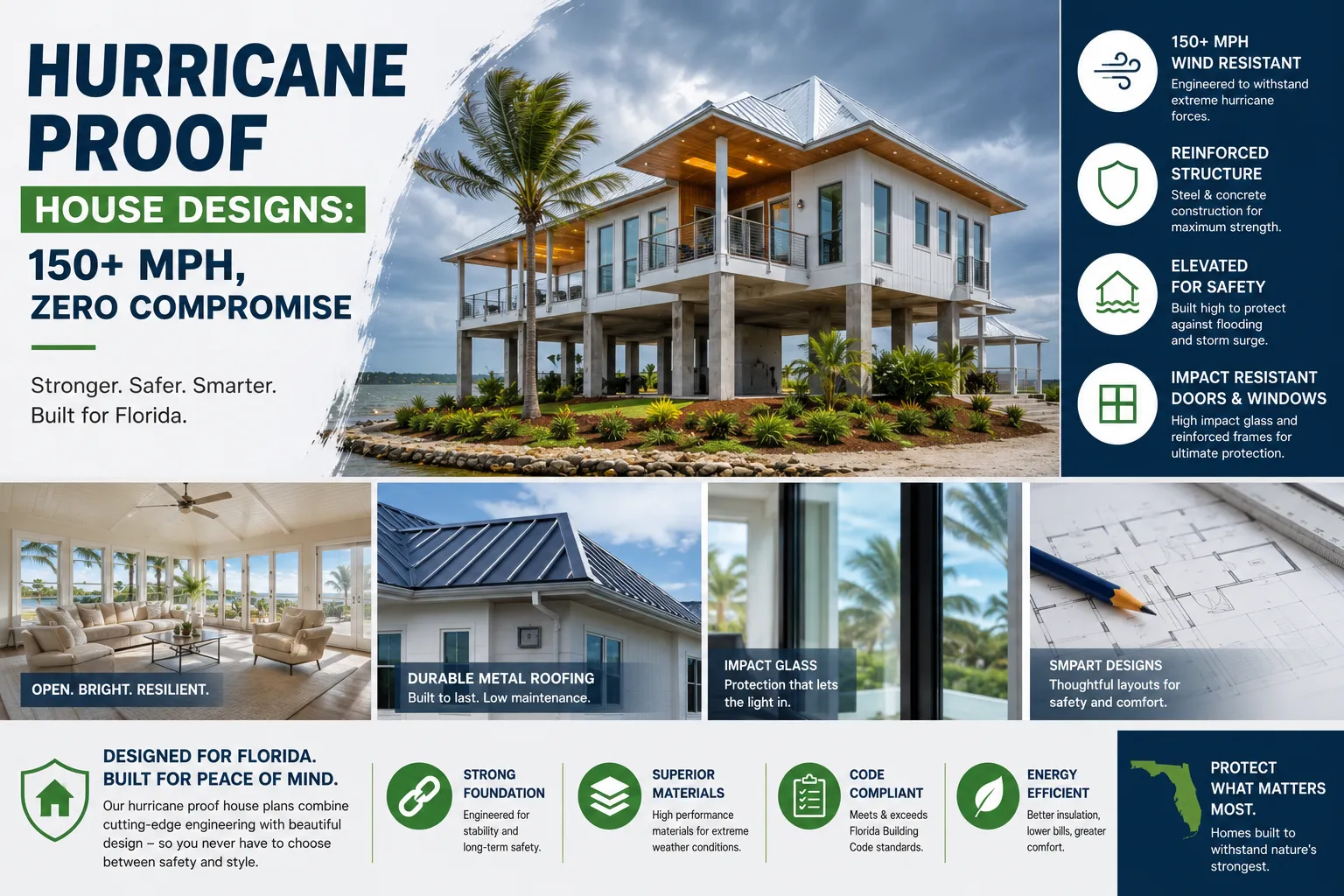
Why Steel Is the Backbone of Hurricane-Resistant Design
Steel-framed homes outperform traditional wood framing in almost every category that matters during a storm:
- Wind resistance — Steel frames are engineered to meet or exceed Florida Building Code wind-load requirements, often rated for 150-180 mph sustained winds.
- No rot, no warping, no termites — Steel doesn’t absorb moisture, which means the frame stays true for decades in Florida’s humidity.
- Non-combustible — An added safety layer wildfires and electrical fires can’t compromise.
- Design flexibility — Steel allows for longer clear spans, which means fewer interior load-bearing walls, bigger windows, and open floor plans that wood framing can’t easily achieve.
That last point is the key to modern style. Because steel doesn’t need the bulky support structure that wood does, architects can design homes with expansive glass walls, cantilevered rooflines, and open-concept interiors — all while staying storm-rated.
Design Elements That Blend Strength and Style
1. Impact-Rated Glass Walls
Floor-to-ceiling impact windows and sliding glass doors are now standard in high-end hurricane-resistant homes. Laminated glass with steel-reinforced framing lets in coastal light without becoming a weak point in the structure.
2. Standing-Seam Metal Roofs
Metal roofing isn’t just hurricane-rated — it’s become a defining look of modern Florida architecture. Clean horizontal lines, matte finishes, and low-slope or butterfly rooflines give steel homes a distinctly contemporary silhouette.
3. Poured Concrete and Steel Hybrid Foundations
Elevated foundations paired with steel piling systems protect against storm surge and flooding, especially in coastal and flood-zone lots, while creating opportunities for dramatic under-house parking, outdoor living space, or guest suites.
4. Minimalist Facades with Deep Overhangs
Board-formed concrete, smooth stucco, and warm wood-look siding panels (fibre cement, not real wood) create a clean, modern aesthetic. Deep roof overhangs and covered lanais protect windows and doors while adding architectural depth.
5. Open, Flexible Interiors
Because steel framing supports longer spans, interiors can flow freely – open kitchens, great rooms, and disappearing glass walls that merge indoor and outdoor living, a hallmark of Florida’s modern coastal style.
6. Hidden Storm Protection
Motorised, retractable hurricane shutters now integrate into the architecture itself rather than looking bolted on, preserving clean lines when shutters are stored away.
Common Questions About Hurricane-Proof Steel Homes
Are steel homes actually hurricane-proof? No home is 100% “proof” against every storm, but properly engineered steel homes built to Florida’s High-Velocity Hurricane Zone (HVHZ) codes are dramatically more resistant to wind, water, and structural failure than traditional wood-frame construction.
Do steel homes cost more than wood-frame homes? Steel framing can carry a higher upfront material cost, but it often evens out through lower insurance premiums, reduced maintenance, and a longer structural lifespan.
Can a steel home still look like a traditional Florida house? Yes. Steel framing is a structural choice, not a style — it can be finished with stucco, siding, or wood-look panels to match any aesthetic, from coastal contemporary to classic Florida ranch.
Will insurance rates be lower for a steel hurricane-resistant home? Many insurers offer reduced premiums for homes with wind-mitigation features such as steel framing, impact windows, and hurricane-rated roofing, as these features lower claim risk.
Building Smart for Florida’s Next Storm Season
The best hurricane-resistant homes aren’t the ones that look like storm shelters — they’re the ones engineered from the frame up to handle Florida’s weather while still feeling like a place you want to live. Steel construction makes that possible: strong enough for code, flexible enough for design, and built to last well beyond the next storm.
If you’re planning a new build or rebuild in Florida and want a home that’s engineered for hurricanes without compromising on modern design, our team can walk you through steel framing options suited to your lot, budget, and style.
Call us at (786) 610-6398 to talk with a Florida steel home specialist.