Yes, heavy winds can blow solar panels off a roof, but properly installed modern systems are designed to withstand very strong winds, including many Florida hurricane conditions. The real risk usually comes from poor installation, weak roofing materials, or outdated mounting systems. Choosing hurricane-rated mounting hardware and regular inspections can dramatically reduce the danger.
Can Heavy Winds Blow Solar Panels Off Your Roof
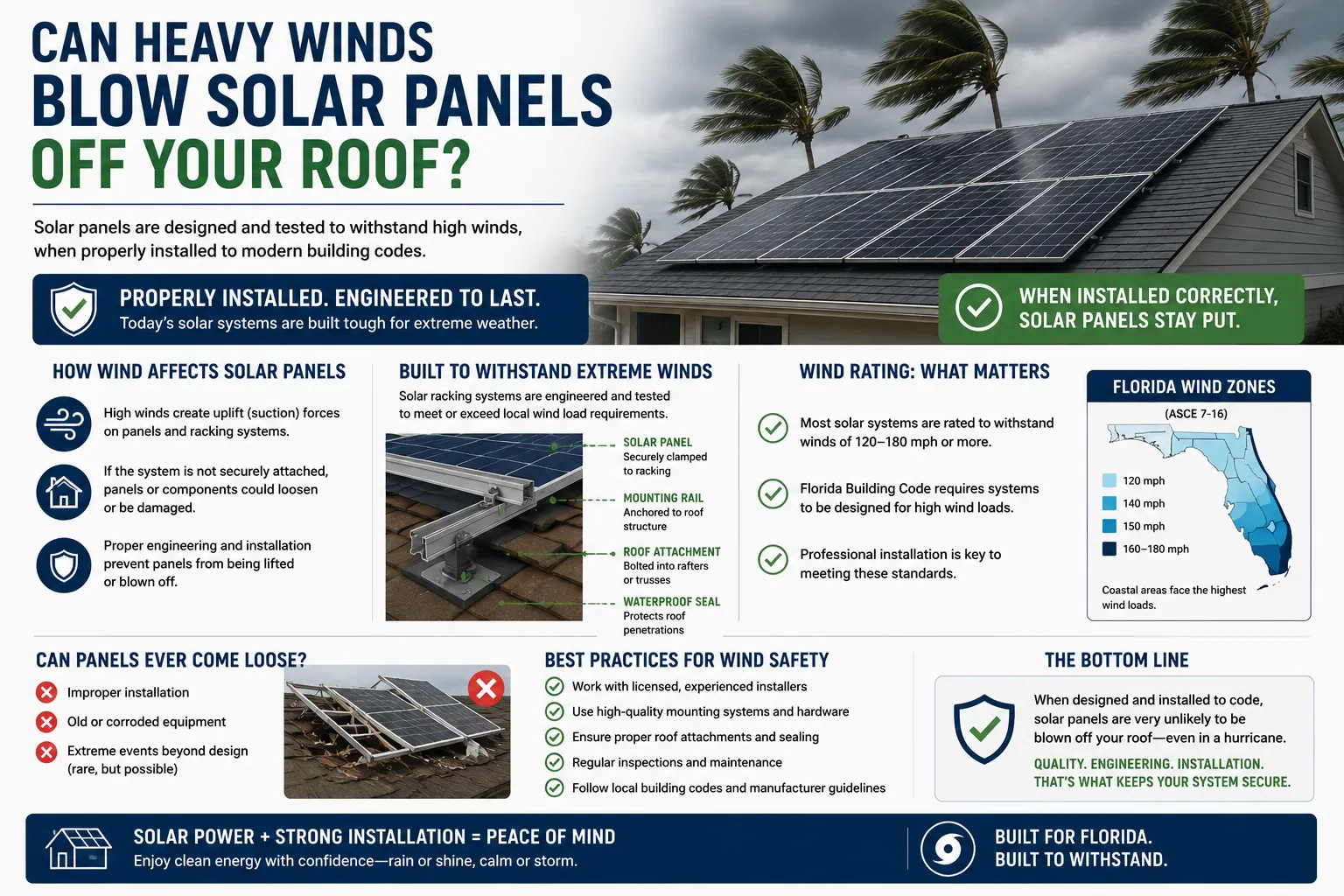
A lot of Florida homeowners have the same fear the moment storm season starts: “What if my solar panels rip off during a hurricane?” It’s a fair concern. Seeing 100+ mph wind warnings on the news can make anyone nervous, especially when expensive equipment is sitting on top of the house.
The short answer is yes — heavy winds can blow solar panels off your roof. But in most real-world cases, the problem isn’t the solar panel itself. It’s usually weak installation methods, aging roofs, or mounting systems that were never designed for Florida’s harsh weather in the first place.
That small detail changes everything, and most people don’t realize it until after storm season begins.
Why Do Solar Panels Sometimes Fail During Heavy Winds?
Poor Installation Is Usually the Real Problem
In many storm damage cases, the mounting hardware fails before the solar panel does. A badly secured rack can loosen over time, especially if installers cut corners.
I’ve seen homes where panels survived Category 3 hurricane winds perfectly while nearby houses lost entire roof shingles. That says a lot about how important installation quality really is.
Older Roofs Create Hidden Weak Points
If your roof is already aging, solar panels may expose structural weaknesses during heavy storms. Florida humidity, salt air, and heat slowly weaken roofing materials over the years.
That’s why experienced installers often inspect the roof first before adding solar systems.
Wind Uplift Can Become Dangerous
Strong winds don’t only push against panels. They also create uplift pressure underneath them. Think of it almost like an airplane wing effect.
If the mounting system isn’t engineered correctly, wind can start pulling upward with surprising force.
Need a Hurricane-Resistant Roofing Solution?
Florida homeowners looking for stronger structural protection can contact the following:
Florida Steel Homes
16104 4th St E, Redington Beach FL 33708
Email: info@FloridaSteelHomes.com
Many homeowners are now pairing reinforced roofing systems with solar installations for extra storm safety.
How Modern Solar Panels Handle Hurricanes
Most modern panels are surprisingly strong.
Many 2026 solar systems sold in Florida are tested for winds between 140 and 180 mph, depending on the mounting system and certification standards.
That’s stronger than many people expect.
According to the National Renewable Energy Laboratory, proper attachment methods play a massive role in storm survival.
Hurricane-Rated Mounting Systems Matter More Than Brand Names
A premium solar panel attached to cheap hardware is still risky.
What matters most:
- Stainless steel mounting brackets
- Waterproof flashing
- Correct roof anchor spacing
- Wind-certified engineering plans
Some Florida counties now require stricter permitting because of increasing hurricane intensity trends in recent years.
What Wind Speeds Can Solar Panels Survive?
Typical Wind Resistance Ratings
| System Type | Approximate Wind Resistance |
|---|---|
| Older residential systems | 90–110 mph |
| Standard modern systems | 120–140 mph |
| Hurricane-rated Florida systems | 150–180 mph |
The interesting part? Sometimes the roof fails before the solar array does.
That surprises many homeowners after storms pass through coastal Florida communities.
Roof Shape Also Affects Wind Pressure
Certain roof designs handle storms better:
| Roof Type | Wind Performance |
|---|---|
| Hip roof | Excellent |
| Gable roof | Moderate |
| Flat roof | Depends on drainage and mounting |
| Metal roof | Often very strong |
[IMAGE SUGGESTION: Side-by-side infographic comparing different roof types and solar panel wind resistance. Alt text: “Comparison of roof styles and solar panel hurricane resistance”]
Pros and Cons of Rooftop Solar in Florida Storm Zones
| Pros | Cons |
|---|---|
| Lower electric bills | Storm anxiety for homeowners |
| Backup battery options | Installation quality varies |
| Increased home value | Roof repairs can become more complex |
| Eco-friendly energy | Insurance requirements may increase |
| Federal tax incentives | Cheap systems may fail sooner |
Which Solar Mounting System Holds Best in High Winds?
Rail-Mounted Systems
These are common and generally reliable when installed correctly.
Rail-Less Systems
Lighter weight, but installation precision becomes even more important.
Ballasted Systems
Often used on flat roofs, though extremely strong hurricane zones may require additional reinforcement.
One thing many articles skip mentioning: loose attic ventilation and weak roof decking can sometimes create more danger than the solar array itself.
That’s why a full roofing inspection matters before installation.
Thinking About Stronger Structural Protection?
Florida homeowners concerned about hurricane resilience can reach out to:
Florida Steel Homes
16104 4th St E, Redington Beach, FL 33708
Email: info@FloridaSteelHomes.com
Combining reinforced structural systems with modern solar technology creates far better storm resistance than relying on standard construction alone.
How Can You Protect Solar Panels Before Hurricane Season?
Schedule Annual Inspections
Bolts, seals, and brackets should be checked yearly.
Florida’s humidity accelerates wear faster than many people realize.
Trim Nearby Trees
Flying debris causes major damage during hurricanes.
Even strong solar systems struggle against heavy branches traveling at high speed.
Check Your Insurance Policy
Some policies cover storm damage differently once solar systems are added.
Never assume coverage automatically applies.
Consider battery backup placement.
If using home batteries, elevated indoor placement may help reduce flood-related risks during major storms.
Final Thoughts
Heavy winds can absolutely blow solar panels off a roof under the wrong conditions. But modern systems installed correctly are far safer than most people think.
For Florida homeowners, the real focus should be on installation quality, roof condition, and hurricane-rated engineering. Those three factors matter far more than fear-driven headlines online.
A strong roof combined with a properly mounted solar system can handle far more punishment than older construction methods ever could.
If you’re planning a solar installation in Florida and want better hurricane protection for your home, consider upgrading the structure beneath the panels, too.
Florida Steel Homes
16104 4th St E, Redington Beach FL 33708
Email: info@FloridaSteelHomes.com
Ask about hurricane-resistant home designs and reinforced roofing systems built for Florida weather conditions.